

You would think that it would take a lot for a pair of seasoned journalists who have covered wars, genocide, global and Vatican politics, to become teary.
But that’s exactly what happened to renowned ‘Vaticanista’ Gerard O’Connell who welled up a few times when remembering his and his wife Elisabetta’s good friend, Jorge Mario Bergoglio, or Pope Francis to us.
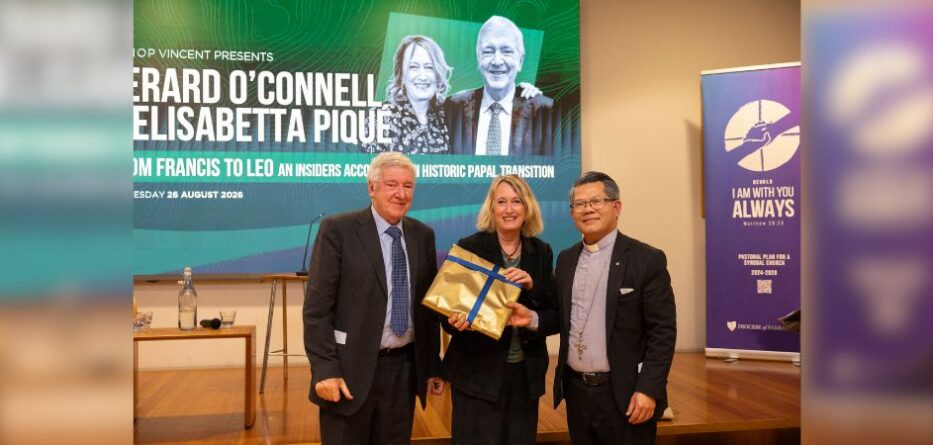
More than 200 people packed St Patrick’s Cathedral Hall, Parramatta, on 26 August to hear O’Connell and Elisabetta Piqué, both long-time Vatican journalists, deliver their public lecture, From Francis to Leo: An Insider’s Account of an Historic Papal Transition.
Focusing on Pope Francis’ ‘last surprise’, the pair enthralled the crowd with insiders’ tales of how Francis, knowingly or unknowingly, paved the way for Cardinal Robert Prevost to be the next pope.
Building respect
The connection between the two began in 2004 when Prevost visited Argentina several times in his role as prior general of the Augustinians. He inaugurated the Augustinian Library of Buenos Aires, one of the most important in Latin America, and in 2006 he celebrated Mass with Cardinal Bergoglio in the parish of St Augustine, where an historic photo of two future popes was taken.
But their relationship didn’t begin well. As Elisabetta explained, they had a disagreement over an issue with a local Augustinian friar, to the point where Prevost was heard to say, “I will never be bishop because I clashed with Francis”.
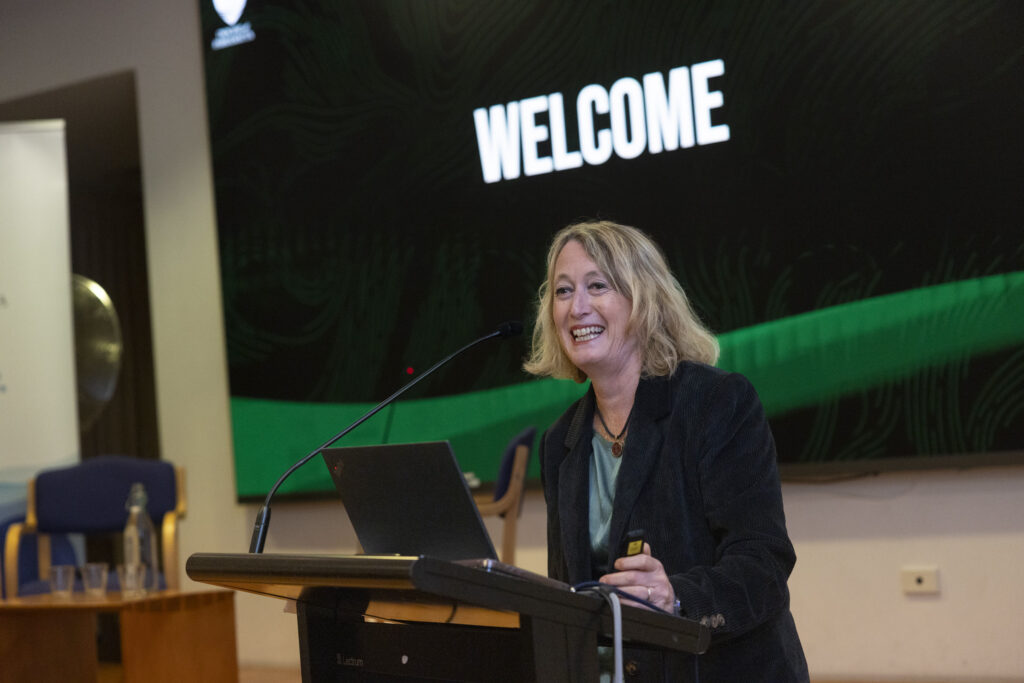
Elisabetta Pique. Image: Gene Ramirez/ CSPD
Yet this clash was “essential” for the respect that Francis developed for Prevost, she said, because Francis “didn’t like yes men”.
Another incident that helped build this respect was Prevost’s support for Francis in a problem he had with the Roman Curia.
Fast forward to the 2013 conclave year. In March, Prevost happened to be in La Plata, Argentina, for a bishop’s consecration – the same time that Francis was elected pope!
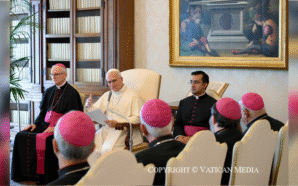
Then in August they were reunited in Rome when Pope Francis accepted an invitation to preside at Mass in the Church of St Augustine to open the general chapter that would elect Prevost’s successor as prior general. Elisabetta said it was there that Pope Francis told Prevost: “Thank you. I will never forget how you helped me in the Curia.”
‘He was so synodal’
If Prevost thought he would have a new life back in Chicago after finishing his tenure as prior general, he was wrong.
The following year Francis sent him back to Peru, O’Connell said, where he’d been a missionary priest for many years. This decision was to lay the foundations for Prevost’s rapid rise to the upper echelons of the Vatican.
In 2015, after a little more than 12 months in Peru, Francis had appointed Prevost as Bishop of Chiclayo, a poor diocese in the north of the country where he was to remain for the next eight years. O’Connell said that during that time Prevost’s style and decision-making were noticed by Francis who could see someone who shared his views, especially on synodality and the importance of the Gospel.
“He was so synodal in the way he ran his diocese,” O’Connell said. “He discussed with people, he put lay men, lay women in positions in the diocese.
“He was doing synod before they spoke of synodality. Francis was hearing all this.”
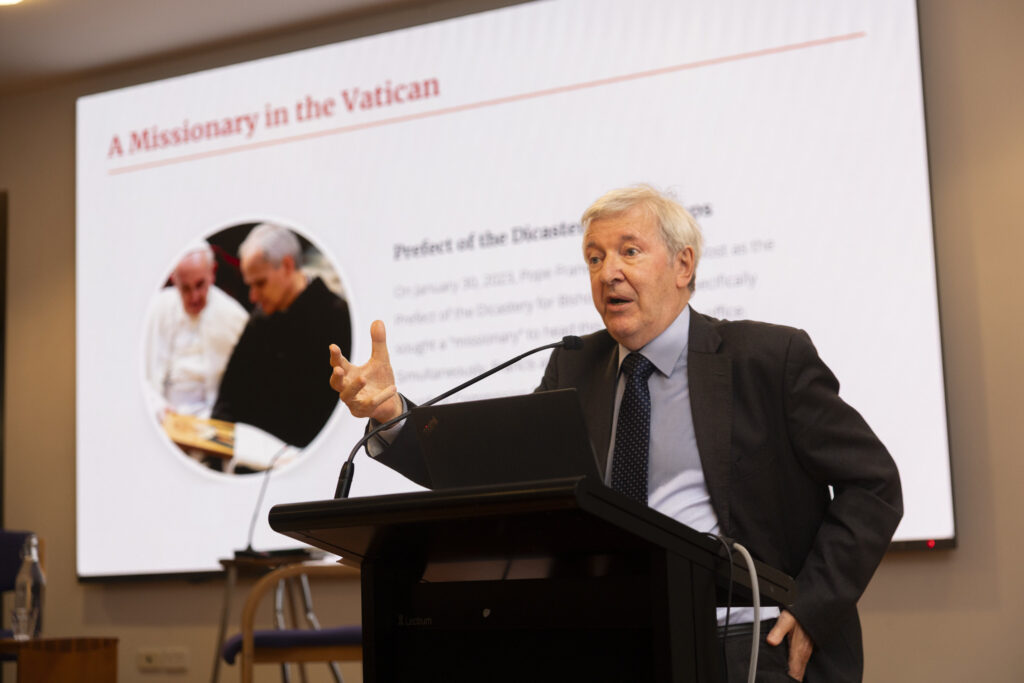
Gerard O’Connell. Image: Gene Ramirez/ CSPD
Then, when Francis again moved Prevost to another diocese in Peru that was in turmoil and Prevost “helped bring calm and peace”, Francis realised that “here’s a bishop who puts evangelisation, the preaching of the Gospel, in the first place”, O’Connell said.
Someone to watch
In 2019, Pope Francis made Prevost a member of the Vatican Congregation for Clergy, then a year later appointed him to the board of the Vatican Congregation for Bishops, which appoints bishops to most dioceses around the world. Three years after that, in 2023, Prevost was elevated to the head of that Congregation.
O’Connell remembers he and Elisabetta meeting Prevost for the first time that same year at the US embassy in Rome, where they talked and ate hot dogs together. “People weren’t rushing up to him,” he said.
But the first big sign that Prevost would be someone to watch came only a few days later when Francis “surprised the world” with a list of 21 new cardinals. The first name that was read out was Prevost.
“Now, as Elisabetta said, a pope cannot really decide who his successor is, but Francis began giving signals,” O’Connell said.
Another such signal was that Prevost was the one chosen to speak on behalf of the other 20 cardinals at their installation.
As a head of a Vatican department Prevost held weekly meetings with Pope Francis and the two got to know each other “very, very well”, O’Connell said.
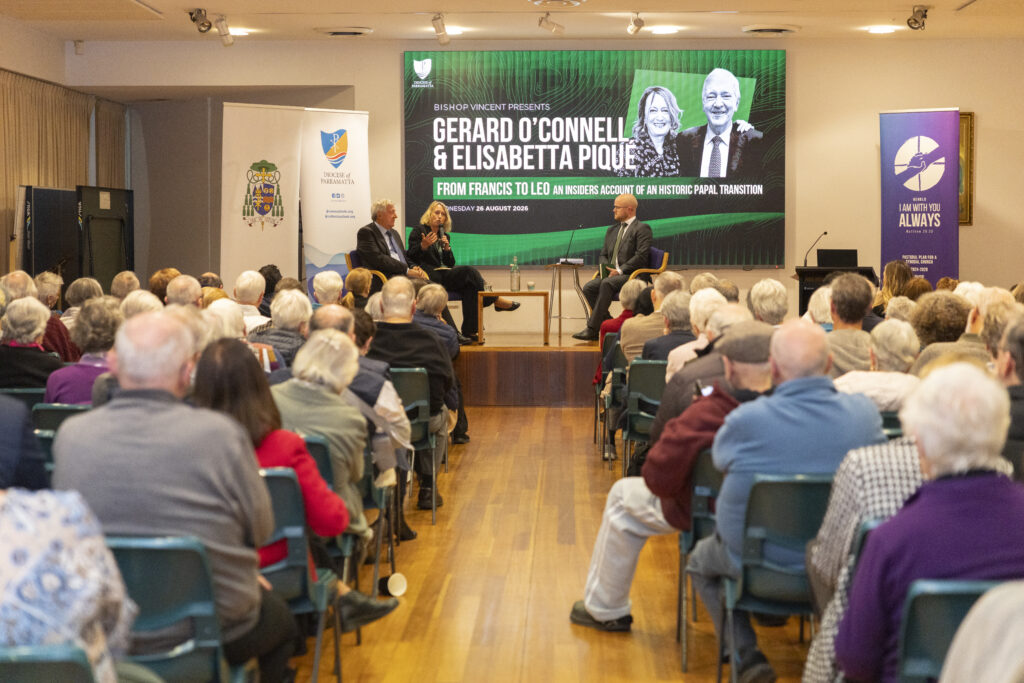
More than 200 people were in the audience at the Cloister Hall, St Patrick’s Cathedral, Parramatta, to hear the talk. Image: Gene Ramirez/ CSPD
But perhaps one of the clearest signs of Pope Francis’s view of who should success him was also one of his last acts as pontiff.
“Eight days before he went into hospital, Francis gave a signal that was so clear,” O’Connell said.
He elevated Prevost to the highest rank of cardinal – a cardinal bishop – of which there are only 12.
“Pope Francis catapulted him from position around 240 [in the order of seniority] to number 12. Many people didn’t know what had happened.”
The result was that when the conclave began Prevost was in a position as one of the front-runners. O’Connell said that the big question the other 133 cardinals had about him was, is he going to continue the main reforms of Pope Francis? Their answer – 108 of the 133 voted for him – showed the level of support for this continuity.
“It is the hand of God in history that the cardinals, who hardly knew each other, in less than 24 hours would elect an American who was totally committed to justice and peace,” O’Connell said.
They were not voting for an American, but “a pope who would follow Pope Francis”.
Gerard O’Connell and Elisabetta Pique were brought to Australia by Laura Avery and the University of Notre Dame’s Global Centre for Catholic Leaders.
Their book, The Election of Pope Leo XIV: The Last Surprise of Pope Francis, is out now.
The Bishop Vincent Presents Lecture Series is an example of the Diocesan Pastoral Plan priority of Formation and Community and the objective to be a Listening Church. Visit Synodality to find out more.