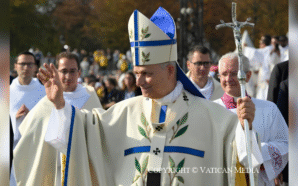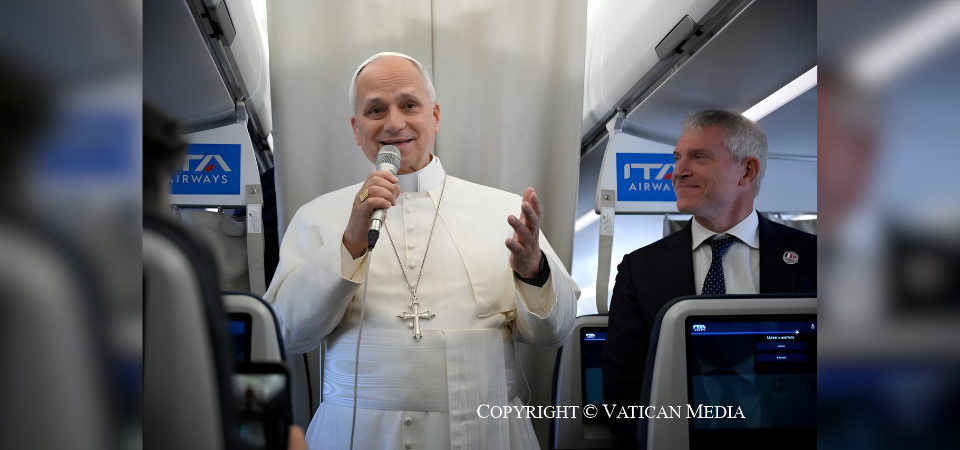


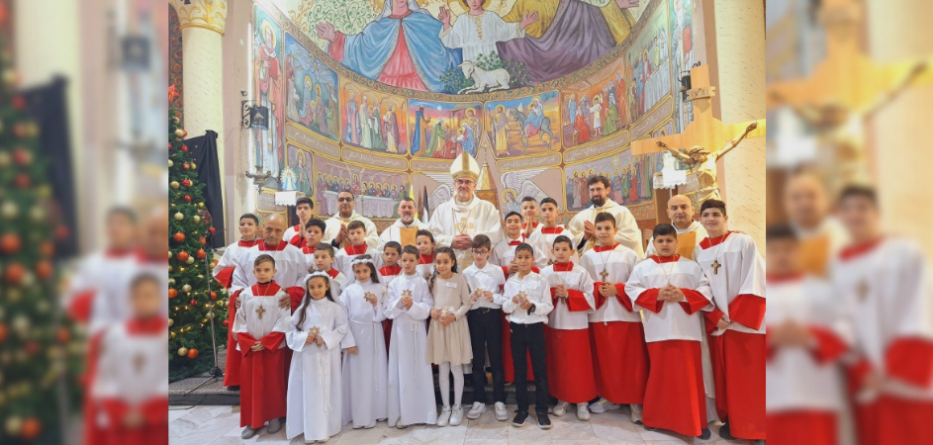
Cardinal Pierbattista Pizzaballa, Latin Patriarch of Jerusalem, published his first pastoral letter on April 25, 2026, marking almost ten years since he was appointed responsible for the Jerusalem diocese by Pope Francis. Titled “They returned to Jerusalem with great joy – A proposal for living the vocation of the Church in the Holy Land”[1], it offers words of hope in the midst of the despair that engulfs the Holy Land. Born near Bergamo, on April 21, 1965, Pizzaballa arrived in Jerusalem in 1990 as a Franciscan friar. He served as the Franciscan Custodian of the Holy Land from 2004 until 2016 as well as serving as Patriarchal Vicar for the Hebrew-speaking Catholics in Israel from 2005 until 2008.
Pizzaballa’s appointment to the Jerusalem diocese came as a surprise to many. The first indigenous Latin Patriarch, Palestinian Michel Sabbah, had been appointed in 1987 by Pope John Paul II. He led the diocese until 2008. His years of service were marked by both unrest and promises of peace: the first Palestinian uprising against Israeli occupation, the so-called peace process that followed, leading to the signing of Israel-Palestine accords, and the stagnation that provoked the second Palestinian uprising. Sabbah was the first patriarch to be a product of the post-Vatican II Church, a man of dialogue and social action. He raised awareness of the ongoing tragedy of the Palestinian people, and became an outspoken advocate for their rights, calling for an end to Israeli occupation and discrimination, promoting equality, justice and peace. He was followed by a Jordanian, Fouad Twal, from 2008 to 2016.
On June 24, 2016, Pope Francis appointed Pizzaballa as Apostolic Administrator sede vacante of the Latin Patriarch of Jerusalem, replacing Patriarch Twal who had reached the age limit. The new patriarch, an expatriate coming after two indigenous hierarchs, was widely believed to be an interim figure until a local could be found, a view that he himself seemed to share during his first years in office.
Pizzaballa inherited a difficult task: a diocese plunged in debt, a Church struggling to find its voice in an age of extremism, Christian faithful tempted by emigration, and an ever-worsening situation as the hopes for peace faded in the shadow of an increasingly ethno-centric Israeli government. Serving first as Apostolic Administrator, he devoted his energies to dealing with the financial crisis in the diocese, ensuring a sounder administration. Although a fluent Hebrew speaker, he had never learnt Arabic and the pastoral life of the local, mostly Arabic-speaking Church remained a challenge. However, during his long years as Custodian, he had begun to discover the reality of Christian Palestinians and Jordanians.
When he was appointed Patriarch in 2020, it became evident that his stay in Jerusalem was not a temporary interlude. He engaged in vigorous pastoral visits to all parts of the diocese, determined to get to know the faithful entrusted to him despite the barriers of language and culture. Parishes spread over four territories are sharply distinguished from one another politically, socially and culturally. Most of these parishes are Arabic-speaking, in Jordan, Palestine and Israel. Among these are faithful who are Palestinians (living in Palestine under occupation, living in Israel as second class citizens of a state defined as Jewish, and in Jordan, as Jordanian citizens, displaced from their Palestinian homeland) as well as Jordanians, many from Christian Bedouin clans. In addition, there are small Hebrew-speaking communities in Israel. Far more numerous are vibrant and precarious communities of migrant workers, refugees and asylum seekers across the entire territory of the diocese, looking to the Church for support. Important too are the many men and women religious, contemplatives and consecrated who serve the Church of Jerusalem from a diversity of lands, cultures and languages.
Although violence was always simmering, October 7, 2023, was a turning point. Pizzaballa was in Rome at that time, having just been made a cardinal by Pope Francis. He, like many others, was deeply shaken by the violence directed by Palestinian insurgents against Israelis in the border areas of the Gaza Strip. He hurried back from Rome and on October 16, 2023, one of his first public acts was to offer himself as a hostage to free Israeli children held in Gaza. As Israeli forces increasingly pounded the Gaza Strip from the air and then entered by land, the violence directed against Gazans shocked many, raising concern among those watching from the sidelines. The pastoral letter is firmly and explicitly rooted in this reality.
Seeing Reality
Jerusalem’s Patriarch cannot sit on the sidelines and bemoan the situation as an outside observer. He is the pastor of communities on all sides of the conflict. The Latin parish in Gaza is the refuge of many Christian Gazans fleeing the Israeli bombs. The parish itself suffered grievous losses in human life and property.
In the West Bank, Christians like Muslims suffer from the attacks of Israeli soldiers and armed settlers, which some states, UN agencies and NGOs consider a genocide. And inside the territories under direct Palestinian rule, the rule of law is overshadowed by anarchy and gang violence. Inside Israel, crime plagues the community and draconian measures are used to police the Palestinian Arab citizens of Israel, curtailing expressions of solidarity with their compatriots in Palestine. Hebrew-speaking Catholics and migrant workers also suffer the consequences of ongoing war and insecurity, some paying with their lives while serving in the Israeli army or as civilian casualties of the violence of war.
The Israeli authorities granted Pizzaballa permission to visit Gaza, hermetically sealed off to the outside world, at least three times in the recent past. A first dramatic visit took place in May 2024, when he took stock of the devastation and the tragic state of the parish. He visited again in July 2025, after an Israeli tank had fired on the Latin church, killing three and wounding others. Finally, he was able to return to Gaza, after a fragile ceasefire had been reached, in December 2025, to celebrate Christmas. Each visit brought a heightened awareness of the destruction and the suffering of those who survived.
Pizzaballa asks if he and the Church have always been courageous enough in speaking out about what they have seen. He states, “Our Church has made its voice heard, attempting to speak a word of truth – honest, clear, with parrhesia (boldness) – even amidst this chaos, often at the cost of misunderstanding. But, I wonder, has this been enough? Or, in this most challenging period, have we at times chosen prudence and sought institutional survival, sacrificing our prophetic witness?”
Contemplating the hatred, Pizzaballa centers his pastoral letter on how Christians should live this conflict. He writes, “how can we, as Christians, as an ecclesial assembly, navigate our way in this situation of conflict – political, military, spiritual – a conflict we fear will continue for years to come? This conflict is an integral part of the life of our Church, as it is of our daily existence.” He continues, “Therefore, the conflict is not something to be overcome, but rather the very place in which our Church is called to carry out its specific mission as a community of believers in Christ. […] Our Christian existence must become a witness to a particular style of living, even amidst conflict, and must find visible and recognizable expression in what we say and do.”
Aware that this is not simply a local conflict, he inserts his reflection into a global context. The local conflict “is the symptom of a much deeper crisis, a global paradigm shift. For decades, the international community, and particularly the Western world, believed in an international order based on rules, treaties, and multilateralism. Not without a hint of hypocrisy, it declared that international law, the Geneva Conventions, and UN resolutions, though imperfect, were necessary instruments to regulate coexistence among peoples, protecting the weakest from the law of the strongest.” Furthermore, he points out: “We are witnessing a renewed reliance on the use of force as a decisive means for resolving disputes, increasingly reduced almost exclusively to its violent and military forms, at the expense of all other avenues grounded in law, dialogue, and responsibility toward civilians.”
Speaking from Jerusalem, Jerusalem’s Patriarch echoes the insistence of the pontiffs, who have thundered against wars. “War has become the object of an idolatrous cult: we no longer sit down at table to avoid conflict, but rather consider war a possible, or even inevitable, outcome. Civilians are no longer simply considered collateral damage, rather this damage is blamed on the enemy’s failure to surrender, or they are seen as instruments used to achieve the goals of war. War serves as an end in itself. Some world powers, who once presented themselves as guarantors of international order, today reveal a different face: they choose sides, not on the basis of justice, but on their own strategic and economic interests. Many institutions – civil, political, religious – thus end up remaining silent and powerless spectators in the face of this new global disorder.”
The first part of his letter offers an astute and unflinching analysis of what he sees. He states unequivocally that this is not the time for “sugar-coated, abstract words – words that lack credibility.” Recognizing that both Palestinians and Israelis claim the status of victim, Pizzaballa points out that “the experience of being a victim can mean different things, depending on the circumstances. […] There is a difference between those who exercise power and those who suffer under it, between those who govern and those who are governed, between those who possess weapons and those who are threatened by them, between those who occupy and those who are occupied. Responsibilities are different. Recognizing this difference is an act of respect for justice and truth.” While acknowledging everyone’s suffering, he points out that the extent to which control over the lives of others is exercised entails different levels of responsibility. Although suffering might indeed be common to both Israelis and Palestinians, this should not be used to justify an equivalence among the various levels of responsibility.
Delineating a particular role for Christians, the Patriarch insists: “In this land, everyone seems to have sacrificed the common good on the altar of partisan interests, albeit in different ways. It seems that everyone thinks only of themselves, of their own survival, of their own security, in a perpetual existential war, on increasingly distant fronts. However, reality imposes the strongest language. This reality, far beyond what we might think, feel, or believe, reminds us that we are destined to find ways to coexist. There is no alternative. […]. It is God who placed us here. We Christians, in particular, have a precise mandate: to be salt and light wherever we are. And this means not giving up on creating opportunities for interaction among different national and religious communities, because, when words are no longer enough, that is when concrete actions are needed.” He proposes that Christians are the defenders of the “common good.” In fact, their continued life in the area depends on this.
Discerning Vocation
The second part of the letter is evocatively entitled “God’s dream named Jerusalem”. Here Pizzaballa manifests his deep love for the Holy City alongside his passion for Scripture. When he arrived in Jerusalem, he enrolled in biblical studies in the Franciscan school in the Old City. Excelling in Hebrew, he continued studies at the Hebrew University of Jerusalem.
How does Scripture illuminate worldly realities? In the Acts of the Apostles, James, the first leader of the Jerusalem Church, provides a model for how to deal with challenging realities in the light of the Word of God. After describing reality, James turns to Scripture for insight, and then derives a pastoral program that propels the Church to act (Acts 15:13-21). Using the Greek “sumfoneo”, blandly translated as “this agrees with the words of the prophets” (Acts 15:15), James correlates reality with the Scriptures, suggesting a symphonic harmony between the reality described and the Scriptures meditated upon. The present head of Jerusalem’s Church follows James in this practice.
He applies this model at a time when Christian politicians and ideologues are flooding the media with their biblical interpretations. These are often used as justification for ideologies of conquest and military might. The Patriarch’s writing offers an important counterpoint. In the light of the reality described, he goes to Scripture to seek a word that can open horizons, propose healing, and inspire hope.
The Patriarch of Jerusalem turns to the last two chapters of the Bible, chapters 21 and 22 in the Book of Revelation, in order to find a vision of Jerusalem that can inspire the imagination. “The vision of the new Jerusalem, ultimately, is not an invitation to escape history, but rather a guide to walking within history. It is a model, a style, a real point of reference for the Christian community and for all those who care about the earthly city.” He writes, “to build the city, to weave authentic relationships among ourselves and our communities, we must begin with an awareness of God’s presence, with the primacy of God, with faith. God must not be excluded. Jerusalem is not just a matter of political boundaries or technical arrangements. Its main identity – the most important characteristic of the city and of the entire Holy Land – is that of being the place of God’s revelation, the place where faiths are at home.”
This magnificent eschatological vision of heavenly Jerusalem descending is contrasted with the wounded, festering reality of a city torn apart. He insists that the Christian does not ignore the wounds or try to look away. “It is there […] that we can test the authenticity of our relationship with God. If our gaze on God does not open us to a gaze on the other who suffers, then we have not truly encountered the God who descends into the City.” Supremely aware of how wounded memory can be mobilized to shut off communities from one another as they clamor for victory, domination and revenge, he writes, “Violence often arises from the inability to reread one’s history in a redeeming way. This occurs when memory becomes a hermetically sealed narrative, constructed against the other and defended as an exclusive possession. […] There is a tendency to want to own the narrative of events, treating it as territory to be defended, while constantly questioning the other’s historical narrative. In doing so, memory no longer helps improve relationships but instead becomes ‘toxic memory’ that pollutes them. Denying the historical memory of the other is a subtle but powerful form of exclusion.”
In this meditation on God’s dream for Jerusalem, he insists that the city be open to all who seek to dwell within it. This is not rootless idealism. “We must not be naïve. There are spaces that must be guarded, places necessary for each community to live and bear witness to its faith. We must not forget that the Holy Land is also the Land of Holy Places, which guards the memory and historical identity of peoples. But borders serve to preserve freedom, not to stifle it. They must not become insurmountable barriers or grounds for exclusion. It is possible to coexist while respecting others’ spaces, considering everyone’s history and differing sensitivities.” In this he sees an important role for the international community. “The world has the right and responsibility to take an interest in Jerusalem – not to impose solutions from above, disrespecting the sovereignty and self-determination of the peoples who reside there, but to exert constant and discreet pressure – diplomatic, cultural, and spiritual – so that no logic of exclusion, domination, or exclusive possession can prevail. The international community should guarantee Jerusalem’s universal mission, reminding everyone that what happens within its walls affects the hearts of billions of believers and the entire human family.”
The Church too has an important role. Her mission “is not to draw narrower borders, but to keep the doors open, witnessing to a love that never gives up and reaches out even to those who are distant, doubtful, or resistant.” Commenting on the community he has been called to shepherd, he expresses a hope. “The Church of Jerusalem, small and resilient, finds itself living here and now the way of the heavenly Jerusalem: being a welcoming place, an Easter light that illuminates the darkness of resentment; being a home with open doors, an instrument of healing in the world. This is its dream, its mission, its gift to humanity.”
Acting as Church
In the final part of his letter, Pizzaballa looks to the pastoral implications of his reflections. “How can we, as a community, live the lifestyle of Jerusalem coming down from heaven in the here and now? We cannot seek to apply an abstract blueprint; rather, we need to find ways to be inspired in our daily lives, in our parishes, families, and institutions. It is a long and wearisome journey, but it is the only one that can fill us with confidence.”
Encouraging his community to remain agents in a context that renders it powerless, he exhorts Christians. “We might think we cannot do anything because of the conflict. However, difficulties must not become a pretext for ceasing charity or for justifying omissions. Indeed, it is precisely in these cases that our pastoral action must become more incisive: not aiming to be heroes, but to open up spaces for the work of God.”
Pizzaballa begins, as is fitting for the Church, with the primacy of liturgical worship and prayer. It is in the time of prayer that Christians can find respite from the horrors around them. “It is the heart, the breath. It is what keeps our community alive when everything else falters.” Proceeding through the various forms of Christian life, families, schools, hospitals, the elderly, the youth, the clergy, the religious, ecumenical and interreligious dialogue, he seeks to enunciate a vision for each as the Christians seeks not only to survive but to thrive, making their positive contribution to the society in which they live. Among the plethora of Christian institutions throughout the diocese, a special pride of place goes to the Christian schools. Addressing them, he says, “Let us imagine schools where not only knowledge is transmitted, but also the ability to reread history with eyes free from resentment; where conflict is not suppressed, but addressed with the tools of understanding others, dialogue, and respect, where the quality of teaching goes hand in hand with the quality of relationships. Schools where prayer, silence, and listening help young people interpret reality without fear, and where teachers and educators are not merely transmitters of content, but witnesses to a way of life.”
After enunciating this active and positive vision of the Church, the Patriarch points out, “This is not a naive optimism or an attitude that ignores the harshness of reality. Christian trust is born of faith and is a choice that runs counter to the grain. It is the certainty that God has not abandoned history to chaos and remains close to those who suffer, those who are persecuted, those who are rejected. It is the conviction that a life spent, given for love, is never lost.” He promotes an openness that is at the heart of this vision of the Church. The Church is called to welcome one and all. “Welcoming means looking at others – anyone – not as strangers to be tolerated, but as a gift. It means allowing ourselves to be challenged by their diversity, allowing ourselves to be enriched. It means moving beyond the logic of ‘us’ and ‘them’ in order to enter that of the one ‘us’ that includes us all.”
Pizzaballa concludes this long and dense pastoral letter by praying: “Let us carry in our hearts God’s dream for God’s City, and let us allow that dream to become, step by step, day by day, our very lives.” Insisting on the need to speak out, he asks, “How can we speak a word of truth without creating new barriers and new victims? It is a question that haunts me every day, and one that is never easy to answer.”
In a region that has seen far too much bloodshed, his words seek to open up new horizons, suggesting new ways of looking at one another. It is to be hoped that his words will not fall on deaf ears, rather they will be accommodated and reflected upon by all those interested in a better future.
Reproduced with permission by La Civilta Cattolica.
DOI: https://doi.org/10.32009/22072446.0726.2
[1] The entire pastoral letter can be found here: https://lpj.org/en/news/letter-to-the-diocese