

Catholic healthcare stands at a pivotal moment. Artificial intelligence promises extraordinary advances in diagnosis, prediction, workflow management, and clinical decision support. Yet beneath the excitement lies a deeper question: what kind of catholic healthcare system are we becoming?
The challenge is not simply technological. It is anthropological, ethical, and spiritual.
In this context, an unexpected conversation between the thought of Edgar Morin (recently deceased), the emerging teaching of Pope Leo XIV, and the approach of Edmund Pellegrino offers a compelling framework for the future of Catholic healthcare.
What makes this conversation particularly timely is the work of Dr Daniel J. Daly. In the 2026 Pellegrino Symposium lecture, “Deliberating with the Virtues and the Virtuous: An Ethical Framework for the Practice of Medicine,” Daly returned attention to a theme at the heart of Pellegrino’s legacy: medicine is fundamentally a moral practice, not merely a technical one.
This insight may be exactly what Catholic healthcare needs as it confronts the rise of AI.
The dominant temptation facing healthcare today is reductionism. Patients become diagnoses. Clinicians become productivity units. Hospitals become delivery systems. Success becomes measured by throughput, margins, and metrics. AI, for all its promise, risks accelerating this trend by encouraging us to see healthcare primarily as a problem of optimization.
Morin spent decades warning against precisely this way of thinking. Human beings cannot be understood through isolated variables because biological, psychological, social, cultural, and spiritual dimensions continually interact. Problems cannot be solved by examining one piece of the system while ignoring the rest.
What Morin called complex thought challenges healthcare leaders to resist fragmentation. A patient is not simply a collection of symptoms. A hospital is not simply a collection of departments. A healthcare system is not simply an economic enterprise.
Pope Leo XIV’s recent encyclical on AI arrives at a remarkably similar conclusion from a theological perspective. Technology must be evaluated according to its impact on human dignity, solidarity, and the common good. AI is not merely a technical innovation. It is a human innovation, and therefore it demands moral discernment.
The convergence is striking.
Morin offers a way of seeing complexity.
Leo offers a way of judging complexity.
Daly, drawing on Pellegrino, offers a way of acting within complexity.
His 2026 symposium lecture argues that medicine should not be guided merely by rules, procedures, or outcomes, but by the cultivation of virtues and by the wisdom of virtuous practitioners. In other words, the central question is not simply whether a decision complies with a protocol, but whether it reflects the practical wisdom, compassion, courage, justice, and prudence that characterize good healers.
This is a crucial contribution to contemporary discussions about AI.
Most ethical debates around AI focus on governance structures, regulatory frameworks, and technical safeguards. These are important. But they are insufficient.
No algorithm can substitute for prudence.
No predictive model can exercise compassion.
No machine can embody mercy.
The significance of Daly’s contribution becomes even clearer when viewed alongside the Boston College conference Artificial Intelligence, Authentic Mercy: Navigating AI Ethics in Catholic Health, which was convened this year. The conference brought together healthcare leaders, theologians, ethicists, clinicians, and technology experts to explore how Catholic healthcare should respond to AI. The gathering produced a set of ethical norms that emphasized whole-person flourishing, protection of the patient-professional relationship, accountability, equity, care for healthcare workers, and environmental responsibility.
These principles are remarkably consistent with both Morin and Pope Leo.
They recognize that healthcare decisions reverberate through interconnected systems. They insist that technology must strengthen rather than weaken human relationships. They reject the notion that moral responsibility can be delegated to algorithms.
Perhaps most importantly, they recover something Pellegrino always understood: medicine is not primarily a technology of treatment but a relationship of healing.
This is where the language of “authentic mercy” becomes so important.
AI can identify patterns. It can process data. It can generate recommendations. It can even outperform clinicians in narrowly defined tasks.
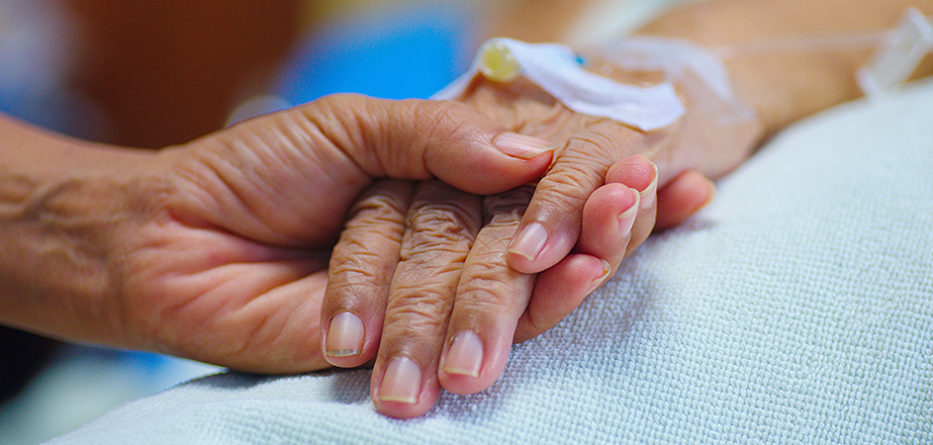
What it cannot do is accompany a frightened patient through uncertainty.
It cannot reassure a family facing a devastating diagnosis.
It cannot sit silently with someone approaching death.
Mercy remains embodied.
And this is precisely where Pellegrino, Morin, and Leo converge.
For Pellegrino, medicine is grounded in the moral encounter between healer and patient.
For Morin, human beings are irreducibly relational and embedded within networks of meaning.
For Leo, every person possesses a dignity that transcends utility, productivity, or algorithmic calculation.
Together, they point toward a vision of Catholic healthcare that is neither anti-technology nor technocratic. Technology is welcomed, but it remains subordinate to healing relationships. Efficiency matters, but it is not the highest good. Innovation is embraced, but only when it serves human flourishing.
The most important contribution of Daly’s recent work may be his retrieval of virtue as the missing category in contemporary healthcare ethics.
Complex systems require more than rules.
They require wisdom.
Uncertainty requires more than data.
It requires judgment.
Human vulnerability requires more than efficiency.
It requires mercy.
As Catholic health systems increasingly adopt AI tools, the question is not whether technology will shape the future of medicine. It will.
The question is whether medicine will continue to be shaped by virtuous persons committed to healing.
If Morin teaches us to see the complexity of the human condition, and Pope Leo teaches us to defend human dignity within that complexity, Daly and Pellegrino remind us that the ultimate safeguard is neither regulation nor technology alone. It is the moral character of those entrusted with the care of others.
In an age increasingly captivated by what machines can do, Catholic healthcare has a unique opportunity—and responsibility—to demonstrate what only persons can do.
And that may be its most important witness to the future.
Julia Trimboli, Catholic Healthcare Executive: Mission Governance and Ethics Specialist.