

The business of Sorry Day and Reconciliation Week is to remember grief as well as healing. This year the call to join it might be drowned out by the horror of the mass killing in Iran, Gaza and other parts of the world, and the almost impossible task of building peaceful relations between people who have suffered so terribly. Not to mention the wounds to our own society if that hostility continues. People become angry and sorry at what their people have suffered but find it hard to say sorry to one another.
To heal the fever of hatred is not simply a challenge to other nations but also to Australia where relations between people are under strain. People with close links with nations at war and their supporters are naturally angry. People who struggle to survive in our unequal society may easily see other people who are struggle as competitors. They may blame them for their own misery. This is a sorry state of affairs that needs healing.
That is why these two celebrations that invite us to be sorry for much in our own history, to say sorry to others for what our fellows have done, and to recognise that we share a common humanity, are so important.
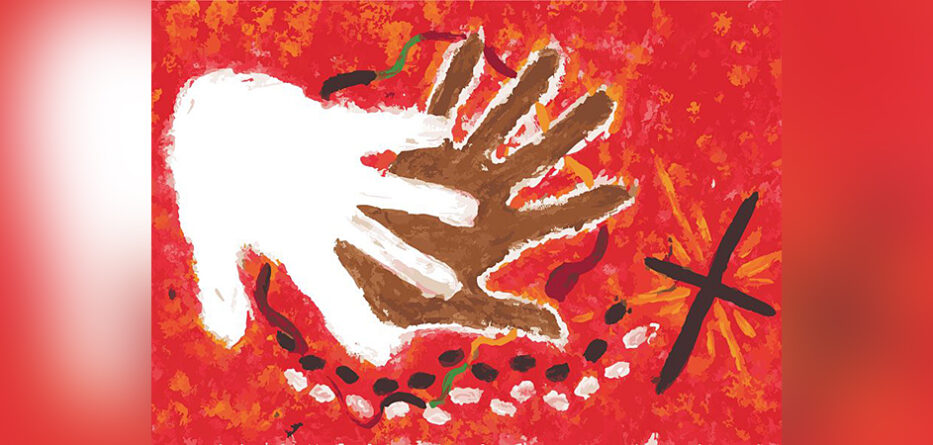
National sorry Day commemorates the launch of the 1997 Bringing Them Home Report on the forced removal of Indigenous children from their families. Reconciliation Week bookends two dates: the 1967 Referendum and the 1992 Nabo Judgment. The memory of these events and the celebration of the week promote reconciliation. The theme of Reconciliation Week this year is All In. It marks the need for everyone to participate in building respectful relationships and reminds us that reconciliation is not a spectator sport.
Sorry Day and Reconciliation Week are also very important days for our Church. At the heart of our faith is our reconciliation to God through Jesus’ death and rising. In them God showed that he forgave our sins and calls us together into a community with the mission to spread the good news. Our mission as Jesus’ followers is to witness to God’s love by seeking reconciliation with one another. This involves healing the wounds of the past and recognising the parts of our history that we have become ashamed to remember.
The days remind us that in Australia the scars of the people of the First Nations from their dispossession and alienation from their culture remain, as does the discrimination against them that arose out of inherited feelings of fear and guilt remain. The debt that Australia needs to pay to the descendants of our first peoples still needs to be paid.
The call to reconciliation is especially addressed to us as Christians. Our Christian ancestors were part of that history of dispossession and discrimination. They were also part of generous attempts to serve Indigenous people. Many of them were misguided, as we now realise. Sorry business now is all of our business.
Fr Andrew Hamilton SJ writes for Jesuit Communications and Jesuit Social Services.