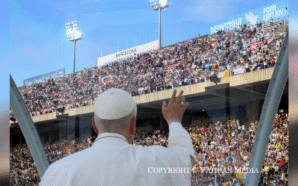


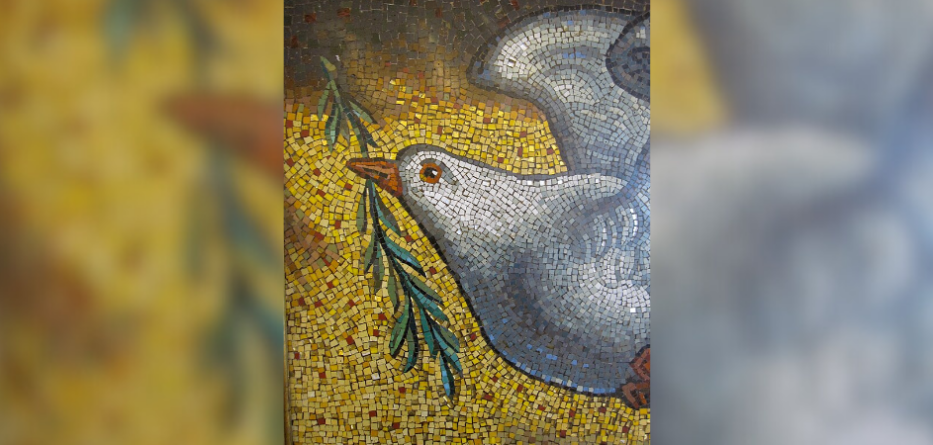
The International Day of Peace is sponsored by the United Nations. Each year the Pope also sends out a message to mark the occasion. Whereas The United Nations normally focuses on the need for peace between nations, the recent Popes have also written on the spiritual sources of peace in the human heart needed to guarantee international peace. This year the United Nations theme for the observance is ‘Invest in peace – for everyone, everywhere, Every Day.’
Pope Leo’s message opens with the Christian blessing, ‘Peace be with you’, and offers the theme ‘Towards an unarmed and disarming Peace’. The two themes are complementary – the Christian desire for peace must lead to working for peace within and between nations. Peace in nations can come only when there is a commitment by governments to give priority to peace over hostility.
In his address to Catholics Pope Leo grounds the commitment to peace in Christ’s mission to break down the walls of division. This is embodied in his preaching of love, forgiveness and generosity, leading to his acceptance of a cruel death and his rising from the dead. In its love is proved stronger than death. Christ called his followers to live and to preach the reconciliation which lay at the heart of the Gospel. His insistence was realistic. It acknowledged the conflict between darkness and light in the world but emphasises his victory over darkness.
The International Day of Peace is certainly timely in a world full of stories of war and rumours of war, of violence turned recklessly against civilians, and of the formation of different blocs united in mutual suspicion. Ukraine, Gaza, Iran, Myanmar and Sudan are the most published theatres of war, but hatred and violence plague many other. In Australia, too, domestic violence and aggression towards minority groups are an undertone in society.
Many Australian immigrants, too, have fled the violence of war in their own lands. They and their families have experienced the indiscriminate violence caused by bombs, shells and mines, the personalised violence of rape and bullets, and the tearing apart of family, village, culture and future hopes. Such experience and its affects can affect their lives and those of their descendants.
In recent years we have become more aware of how violence can affect people. We have learned how childhood beatings have continued to traumatise people in their later life, and have often led people to be similarly violent. We are also recognise the extent of domestic violence directed against women and the damage it causes to body and to spirit. We now understand better, too, the effects of images of masculinity that identify strength and self-assertion with physical violence.
In Jesus’ preaching, to be a peacemaker was not a soft option. It meant turning the other cheek if struck, returning good for evil, walking an extra mile if asked, and finally risking and accepting death inflicted by the intolerance of others. Nor is peacemaking to be taken for granted in our own day. Mahatma Gandhi and Martin Luther King, for example led a cause for which people accepted jailing in their search for a just world.
World peace begins at home in the quiet strengths within our personal relationships. They are such things as patience, readiness to forgive and respect for others. They are the soil in which peace can grow.
Fr Andrew Hamilton SJ writes for Jesuit Communications and Jesuit Social Services.