

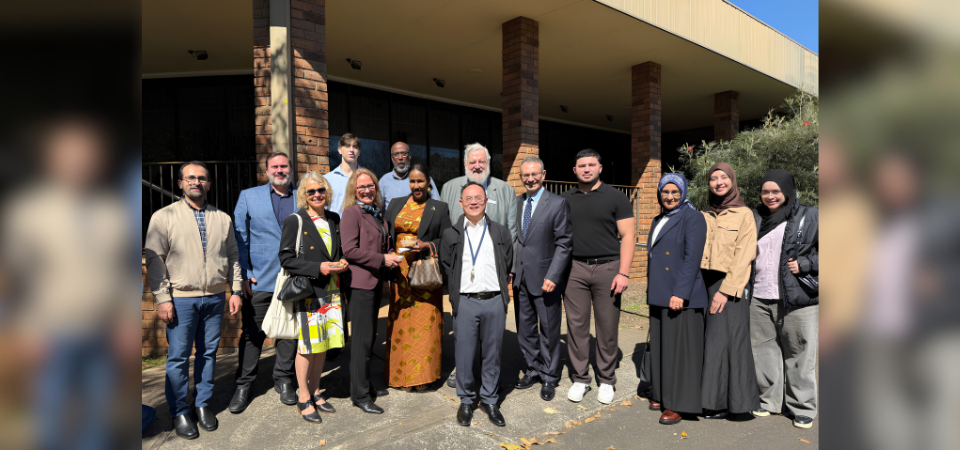
On 30 March 2026, something extraordinary happened in Baulkham Hills!! Twenty Muslims attended Sunday Mass!!
Affinity Intercultural Foundation had offered to visit any parish in Sydney and provide all the parishioners with Noah’s Pudding (more on this later). I passed on the invitation to Fr Joseph Lam, the parish priest of Baulkham Hills. He responded positively, consulted the Parish Council, who agreed eagerly, and the date was set. The Muslim guests came from Affinity Intercultural Foundation and Galaxy Foundation Sydney, two of the many social, educational, charitable, community and interfaith organisations around the world inspired by the late Turkish Muslim scholar, preacher, and leader, Fetullah Gülen.
The chair of the parish council welcomed the Muslim guests. Dr Çemen Polat responded. She explained that ancient Muslim Turkish folklore recounts that after 40 days, food supplies were running low on the ark. Noah gathered all the various remnants and mixed them together. The dish turned out to be sensational! It has been known ever since as “Noah’s Pudding”.
For Affinity, this dish is a powerful symbol of people of different backgrounds and faiths living together in harmony. In the dish, each ingredient retains its own identity and flavour. None surrenders its own identity to belong. Together, they become a sweet-tasting dish which is much more flavoursome than any one of the ingredients on its own. Similarly, in a multicultural and multireligious society, each community and each religion retain their own identity, and together they make a rich, vibrant, resilient society.
Belonging does not demand sameness. But diversity alone does not create community. Community grows when people reach out to each other, meet, encounter, listen, dialogue, and respect one another, across their myriad differences.
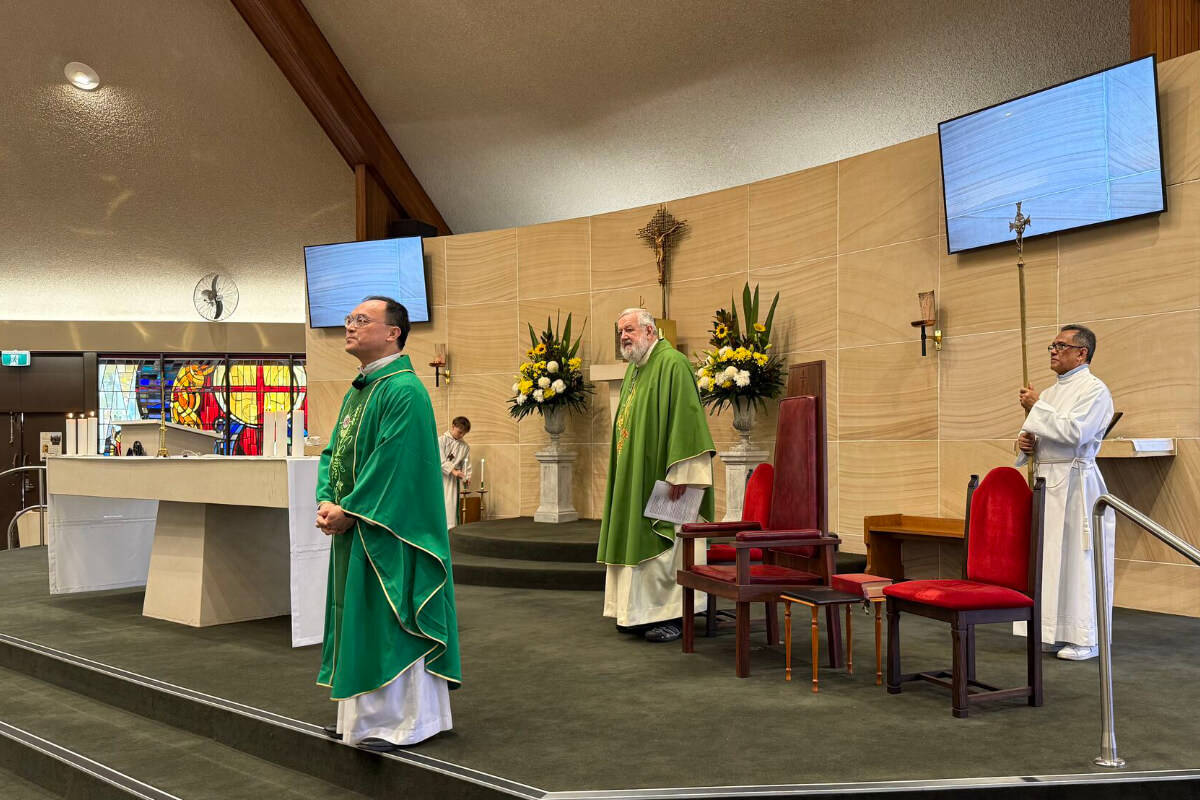
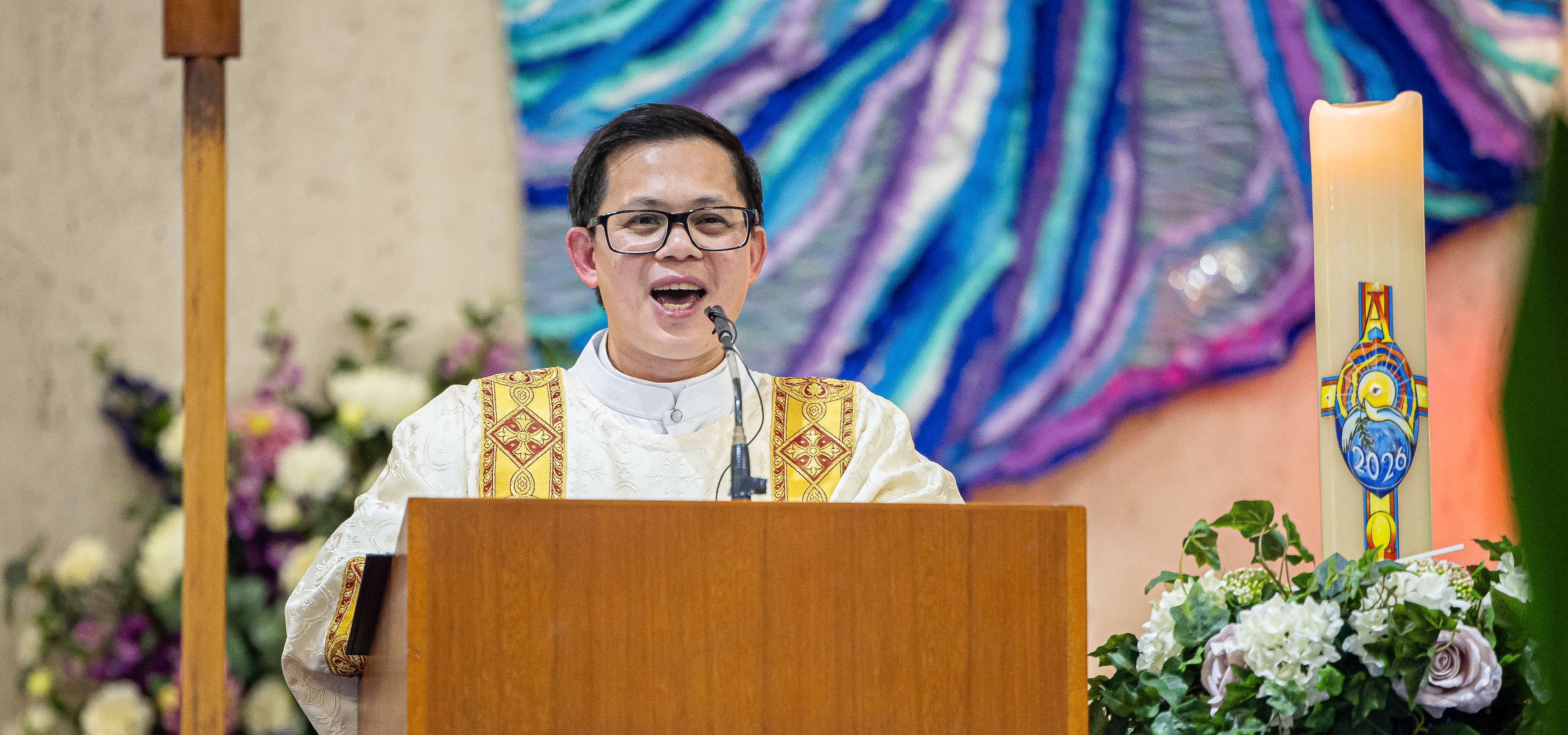
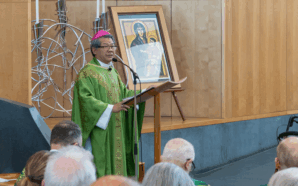
Fr Joseph Lam PP, Parish of Baulkham Hills and Fr Patrick McInerney, Director of the Columban Centre for Christian-Muslim Relations during the Mass. Image: Columban Centre for Christian-Muslim Relations.
The Muslim guests embodied community-in-diversity, coming from Afghan, Burmese, Cambodian, Chinese, Japanese, Somali, Turkish, and Turkmenistan backgrounds. The Catholics in Baulkham Hills had equally varied backgrounds. The stage was set for a rich intercultural, interfaith encounter.
Fr Joseph Lam led the Mass. He welcomed the guests, acknowledged their courage in coming to a Catholic church, many of them for the first time, admitted that some of us have reservations about each other, which we must face with honesty, always seeking mutual understanding, and treating each other at all times with mercy and compassion.
I concelebrated and preached the homily. I stressed the importance of Christian-Muslim Relations, quoting both popes and Muslim scholars. I acknowledged the fundamental differences between Christianity and Islam, and quoted Pope Leo: “… although we have different beliefs, different ways of worshipping, and different ways of living, we can live together in peace.” (15/04/26).
I drew out interfaith implications from the readings of the day.
- When we approach others with open minds and open hearts, and glimpse in them “truth”, “holiness”, “grace”, and a “secret presence of God”, as acknowledged by the Second Vatican Council, then, like ancient Jeremiah, and the disciples on the road to Emmaus, “our hearts will burn within us” in this secret presence of the invisible Christ Who accompanies us on the way.
- St Paul called the Romans to offer “your living bodies as a holy sacrifice, truly pleasing to God” (Rom 12:1). This call echoes the meaning of the Arabic word, “Islam”, which means ‘surrender to God’.
- In Matthew’s Gospel, Peter’s well-meaning human attempt to limit or constrict God’s ways is condemned as “satanic”. Rather, we must follow the self-sacrificing way of Jesus and open our minds and hearts to the vast horizons of God’s universal, all-embracing, all-inclusive love for all peoples and all creation.
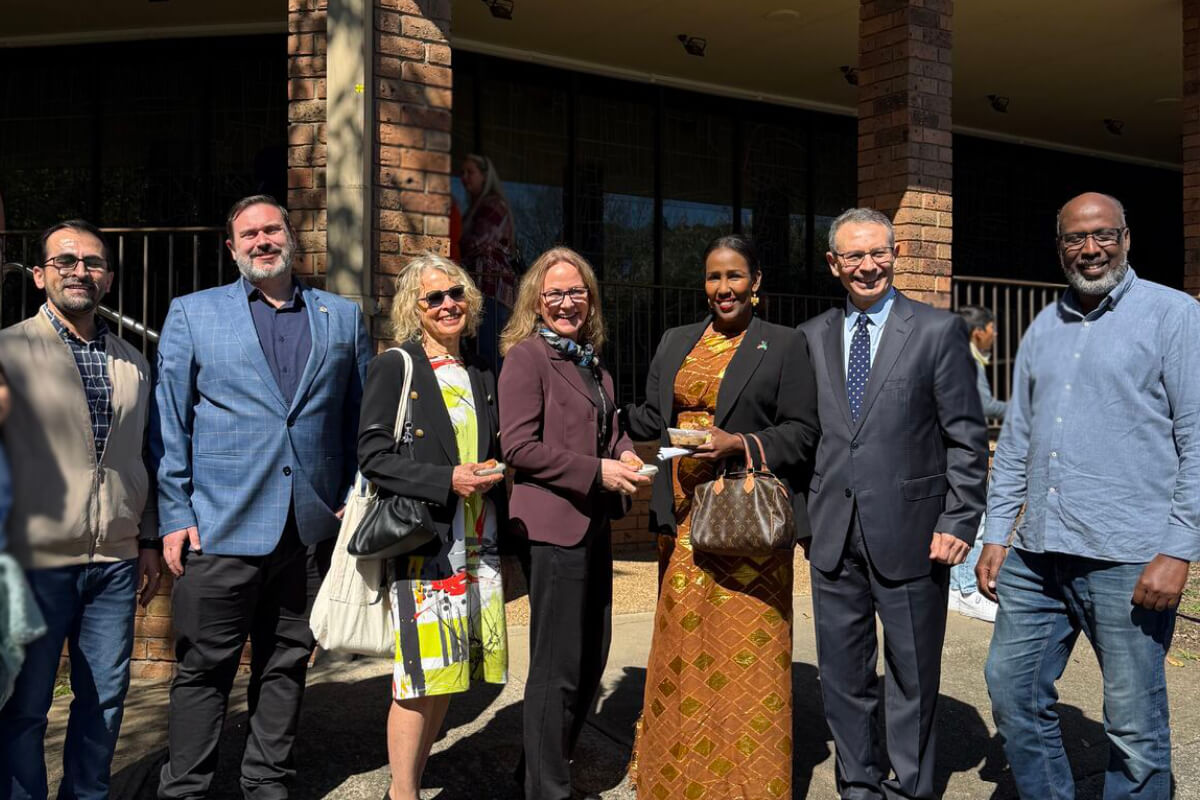
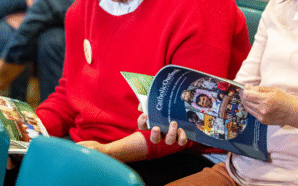
Muslim guests following Mass. Image: Columban Centre for Christian-Muslim Relations.
The sign of peace was especially meaningful, as priests and Muslims exchanged greetings, using the traditional Muslim greeting, “as-salaam alay-kum” (Peace be with you!).
After Mass, the Muslims turned the tables on us! Catholics and Muslims, we had been together around the Eucharistic table – of course, the Muslims did not receive Holy Communion, just as Christians do not participate in salat, the official ritual worship of Islam, when they visit a mosque – this is part of respecting our different identities. We had been their hosts; they had been our guests. Now they became our hosts; and we their guests.
The Muslims provided a container of Noah’s pudding for each parishioner, also baklava and biscuits. It was a veritable feast. It was more than food. It was festivity. Catholics and Muslims greeted one another, chatted, shared stories, and expressed appreciation for the visit, the mutual welcome, hospitality, warmth, and friendliness.
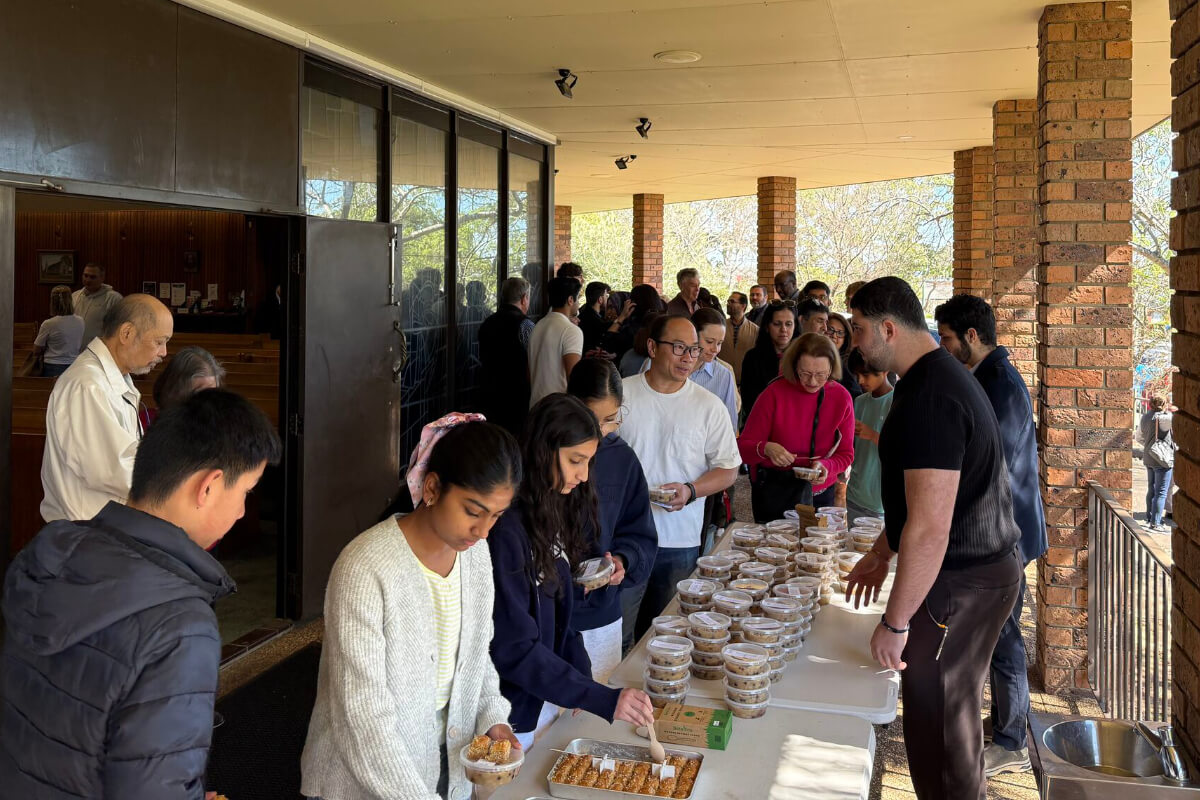
Parishioners lining up for Noah’s Pudding. Image: Columban Centre for Christian-Muslim Relations.
Ahmet Polat, Executive Director of Affinity and instigator of this interfaith encounter, reflected:
Across centuries, cultures and generations, Noah’s Pudding continues to remind us that when we come together with dignity, dialogue and generosity, our differences can enrich the shared life we build together.
The gathering of Muslims and Christians enjoying food and conversation together was a foretaste of the Kingdom, when peoples from all nations will be gathered together in peace and harmony in God’s presence.
I hope other parishes, schools, and community organisations will follow this example and create opportunities for Christians and Muslims to come together, meet, encounter, listen, and get to know each other better, respecting our differences, and, based on our shared values, working together for the common good.
This article was originally published by St Columbans Mission Society in Australia.
Rev Dr Patrick McInerney is the Columban Regional Director of Oceania and the Director of Columban Centre for Christian-Muslim Relations.