

We often hear the message of the Two Commandments of Love:
“You shall love the Lord your God with all your heart, with all your soul and with all your mind; then love your neighbor as yourself” (Mt 22:37)
And the Golden Rule:
“Do to others as you would have them do to you” (Mt 7:12).
To put them in practice, what is the most difficult or challenging thing to you? To me, it is, “love your enemies and pray for those who persecute you” (Mt 5:44).
In another word, it is the practice of forgiveness to others. Because forgiveness is one of the hardest demands of the Gospel, it requires prayer, grace, practise, and time.
Peter probably thinks he is generous enough to forgive others seven times. As we know, number 7 is the perfect number in Jewish culture.
Anyway, he remains setting the limitation of forgiveness, but Jesus responds, “Not seven times, but seventy-seven times.”
Jesus is not asking us to keep counting; He is asking us to stop counting.
So forgiveness for Christians is not only a choice in a special occasion for a special person, it is also our daily way of living and identity.
A servant owes his king an enormous debt. When the servant begs the king to give him time, the king gave much more than a servant expected, that is, the kind does not merely give him more time; he cancels the entire debt.
Cancelling the entire debt is also the restoration of relationship, and in God’s family, we together call, “our Father,” and we are brothers and sisters in Christ.
Every time we pray the Our Father, we say, “forgive us our trespasses, as we forgive those who trespass against us.”
If we receive God’s forgiveness with gratitude and love, we are motivated to forgive others and reconcile with him. If we take God’s forgiveness for granted, we may be like an unforgiving servant in today’s parable.
In this case, the servant, who received God’s mercy, refused to extend mercy to others. How can we understand the full meaning of God’s forgiveness while deliberately refusing to forgive others? Many people said that they can forgive but never forget.
God forgives and forgets. He forgave not only from his authority and his compassionate heart, he gave up his life to forgive.
One of the humble ways to help us forgive is to remember how much we ourselves have been forgiven by our God, our parents and others through our sins, hurt, anger, indifference.
Another way is to contemplate Jesus on the Cross, that in the mist of suffering, abandonment, betrayal of his loved ones, the forgiving and compassionate heart of Jesus shines brightly.
If we only focus on human emotions, it is not easy to forgive, particularly for those who hurt us and our loved ones; however, if we see further, with the eyes of God, for the salvation of all souls and see God is working to save them, we may forgive others and let it go easier.
If we focus too much on ourselves, we tend to have pride and resentment, even revenge; if we focus on God and the sake of others, we may have more humility, compassion which reflect God’s mercy and forgiveness.
Every time we celebrate the Sacrament of Reconciliation, we experience the embrace of the Father, who forgives our sins and restores our precious value to be created in the image and the likeness of God, and to be children of God’s family and be sisters and brothers in Christ.
That is the way of the Cross, self-emptiness. Forgiveness is also the way to freedom, accordingly the heavy bitterness will be replaced by the joyful taste of the Gospel.
Forgiveness is an encounter of compassion and charity.
May Jesus make our hearts like unto His, meek and humble of heart (Mt 11:29).
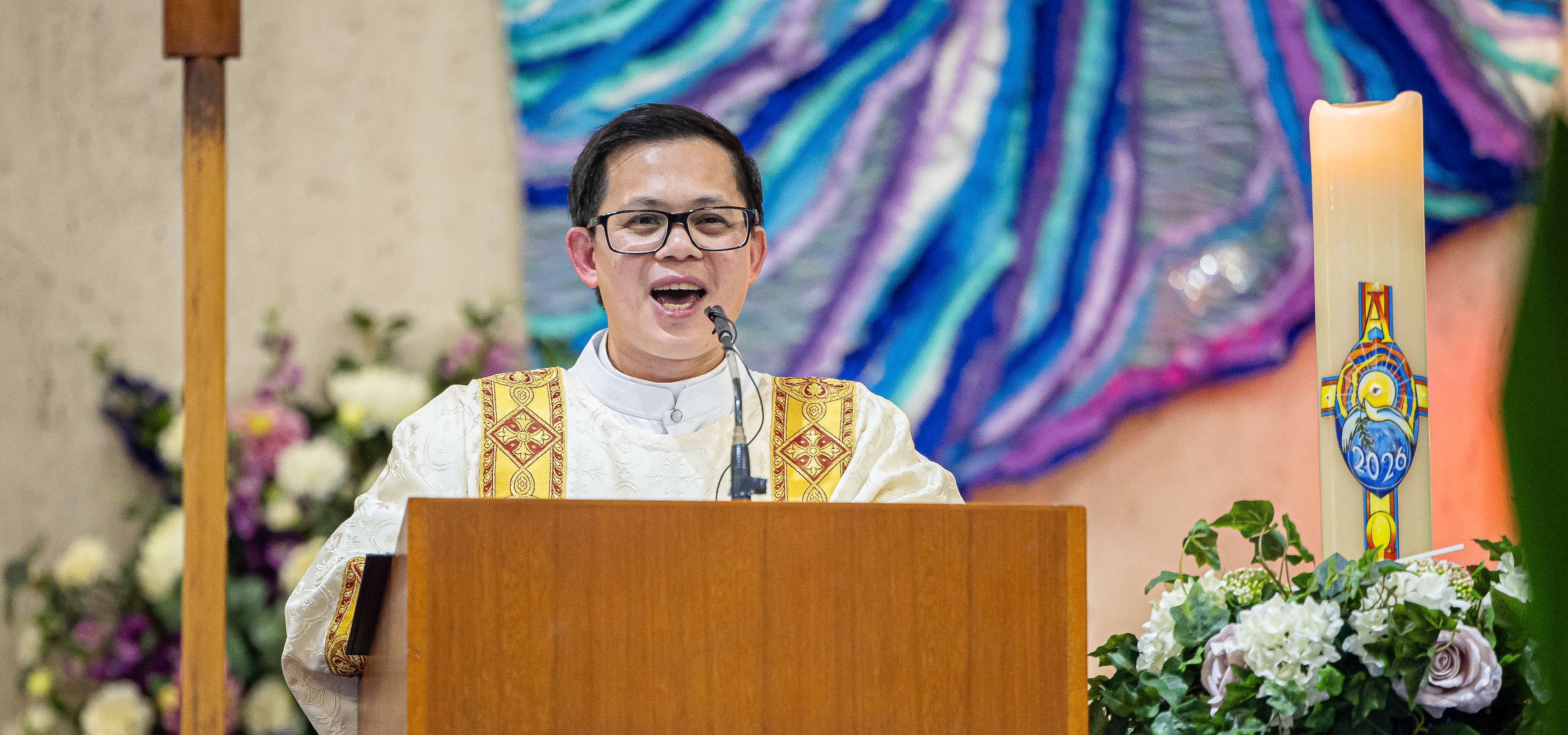
Paul Tran is the Deacon assisting at St Matthew’s Catholic Church Windsor.