


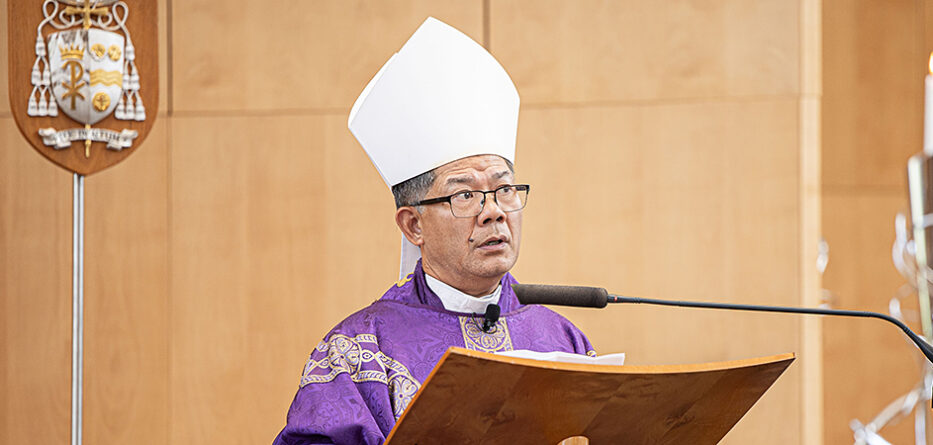
Most Reverend Vincent Long Van Nguyen OFM Conv DD STL, Bishop of Parramatta
Homily for the 1st Sunday in Lent, Year A
Readings: Genesis 2:7-9, 3:1-7; Romans 5:12-19; Matthew 4:1-11
22 February 2026
A time to be tested, renewed and transformed
Dear brothers and sisters,
With the celebration of Ash Wednesday, we have begun a spiritual journey of conversion, renewal and transformation. The 40 days of Lent remind us of the epic journey, known in the Bible as the exodus, that formed our ancestors in faith more than the destination itself. The 40 years in the wilderness helped them live as God intended. They were formed into an alternative society under God’s rule that was an antidote to the oppressive and exploitative system in Egypt. They were set apart from other nations by lives and relationships of fraternal concern, compassion and communion instead of self-preservation, exploitation and dominion.
Lent of course reminds us of the 40 days Jesus spent in the wilderness. Whereas the people of God faltered in the face of temptation, Jesus remained steadfast, firmly grounded and utterly committed to the way that God had envisaged for him. Lent therefore invites us to live the wilderness experience of Jesus, to walk the same long and hard road with him to Jerusalem and to embrace a discipleship of humility, weakness and vulnerability.
I was on the ABC radio during the week saying that I would be giving up alcohol among other acts of penance this Lent. I hope to persevere. But it is not just about giving up things, is it? Abstinence helps us to sharpen a deeper hunger within and seek its fulfilment beyond our sensory experience. Bodily hunger can lead us to compassion for the suffering, which in turn can lead us to a hunger for justice. Therefore, Lent is not just giving up but giving more of ourselves and becoming who we are capable of. Pope Leo in his first Lenten Exhortation stresses the importance of listening to God in prayer, of cultivating kindness to others and building a civilization of love in our communities.
The Word today speaks of God who accompanies us on a journey of transformation. In the first reading, Adam and Eve underwent the test of trust in the form of the forbidden fruit. The serpent sows a doubt about the trustworthiness of God and appeals to their propensity for power and control. What follows is the betrayal of trust and a breakdown of relationships in all directions. Their choice of selfishness alienated them not only from God but also from all that God had made. But their fall is not the end of the story. God eases their shame and promises that evil will not prevail. He would transform them to be what he created them to be in the first place.
The Gospel becomes the Good News story when read against the background of the fall of our first parents. Like Adam and Eve, Jesus is tested. But unlike them, he overcomes temptation and shows us the way out of our original slavery to evil. In effect, the story today is a prelude to total self-giving accomplished on the cross. It puts in bold relief Jesus’ decisive embrace of obedience through suffering and death over against our default desire for security, power and self-preservation.
First, the temptation to turn stones into bread is essentially the temptation to opt for the quick fix and the easy way out. We have all been tempted in this way many a time. We want to be in control and to have everything at our disposal. Jesus shows us an alternative. Only God can fulfill a deeper hunger in us. The second temptation is to be the superhero. Jesus does not buy into this illusion. He does not throw himself down from the parapet of the temple or later, the cross. He shows us the way of enduring love. He is the antihero who rode on the back of the donkey and immersed himself totally in the coalface realities of pain, suffering and social isolation for the sake of the kingdom.
Finally, Jesus is tempted to have power and glory. The seduction of greatness is one that not only the early disciples of Jesus found it hard to resist. It is a perennial temptation that Christians individually and collectively have succumbed to. In fact, the history of imperial Christendom shows that power, dominance, privilege, control and clericalism have often characterised our attitudes and practices more than service, self-sacrifice, vulnerability and powerlessness of the humble Servant. Our call today is to be the kingdom builders whose priority is not to expand and dominate but to mend and strengthen communities and relationships.
Dear friends,
The lesson that Jesus taught us in the desert is his decisive embrace of obedience through suffering and death. He shows us that we can privilege solidarity over selfishness, self-giving over self-preservation, love over fear. The clue about how to live an alternative life in the world and to overcome evil is the cross. It is to accept the risk of self as opposed to the desire for selfishness. The paradox becomes apparent: to live like Jesus is requires the expenditure of self for the sake of others.
Lent is our time to deepen our own baptismal commitment, to follow the way of Jesus and to live our mission with courage. May the God who led Jesus into the desert to test, renew and transform him also enable us to do the same. May we learn not only to abstain from bodily food but also to give more of ourselves and become who we are capable of, just as Jesus has shown us the way.