

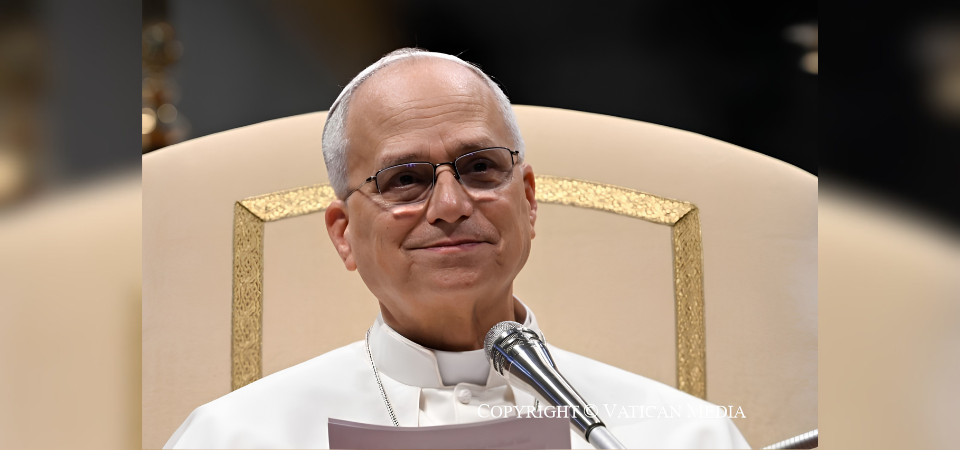
In his short address to the Society of St. Vincent de Paul on Aug. 28, Pope Leo XIV said something that should be unremarkable but isn’t: “Saint Vincent de Paul demonstrated that prayer and social justice are not merely complementary but are in fact inseparable.”
In our polarized culture, many secular advocates of social justice learn their ideology in college classrooms where “prayer” is often seen as an example of what Karl Marx called “the opiate of the people,” something necessarily conservative and opposed to progress.
On the other hand, if you watch Fox News on any given night, you will know that “social justice” functions as a cuss word, an insult to rugged individualism and meritocracy, something anti-American and probably communist.
Yet the pope said prayer and social justice are inseparable, and so they are. Leo went on to recall the joint encyclical Dilexi Te that Pope Francis had begun and he finished, saying, “as I recalled in Dilexi Te, Saint Augustine taught the Christocentric nature of care for the poor and held that God will not be outdone in generosity to those who serve them. We therefore believe that caring for others, when motivated by love, not only helps those in need, but also opens the heart of the giver to God’s grace (cf. no. 46).”
I confess that when Dilexi Te first came out, I read it quickly, too quickly. Paragraph 46, which the pope cited last week, did not make a huge impression on me. Returning to the document now, it is worth considering the paragraphs that precede 46 as well, which draw on the writings of St. Ambrose and, unsurprisingly, St. Augustine, who was Ambrose’s star pupil.
Leo recalls one of St. Ambrose’s most famous sayings: “What you give to the poor is not your property, but theirs. Why have you appropriated what was given for common use?” That isn’t communism or socialism, both of which have roots in a materialistic understanding of the human person and society. It is radical Christian witness, a call to conform ourselves to Christ. That also makes Ambrose’s words the exact opposite of the expressive individualism that characterizes so much of the activism and thought on the contemporary left.
To continue reading this article, click here.
With thanks to National Catholic Reporter and Michael Sean Winters, where this article originally appeared.