

For a 2,000+ year old institution, 40 years seems but the blink of an eye. For the people of Western Sydney and the Blue Mountains, the 40-year anniversary of the Diocese of Parramatta marks four decades of growth, of fruition and of God’s work taking place through the thousands of clergy, consecrated and lay people who have served this great Diocese.
Ever old, ever new
We mark the “official” beginning of the Diocese as 1986 but there is a reason that Parramatta is called the “cradle of Catholicism” in Australia – the roots of Catholicism in this region can be traced back to the arrival of the First Fleet in 1788, when the seeds of faith were first sown.
The history and importance of Parramatta cannot be overstated. From the deep connection of the Darug and Gundugurra people to the land and waterways, to its vital part in Australia’s colonial history, Parramatta is an ongoing source of religious, cultural and environmental significance.

Newspaper clippings from The Catholic Weekly from 1986. Image: supplied
We are the home of the first Catholic school, one of the first places that Mass was celebrated, where the first religious women (Sisters of Charity) in Australia were based and where the first public religious profession took place by Sr M. Xavier Williams RSC of the Sisters of Charity. It is home to the first Catholic orphanage and the many other ‘firsts’ from different religious communities, including the first Convent of Mercy by the North Sydney Sisters of Mercy and the founding of the Sisters of Mercy in 1888.
From the 1900s to 1950s the Catholic population significantly grew, particularly after WWII with an influx of Catholic migrants from diverse countries in Europe, Asia and Africa. Many migrant communities founded their own churches here. For example, the Maronite Church was founded in Harris Park in 1970 and continues to grow to this day.
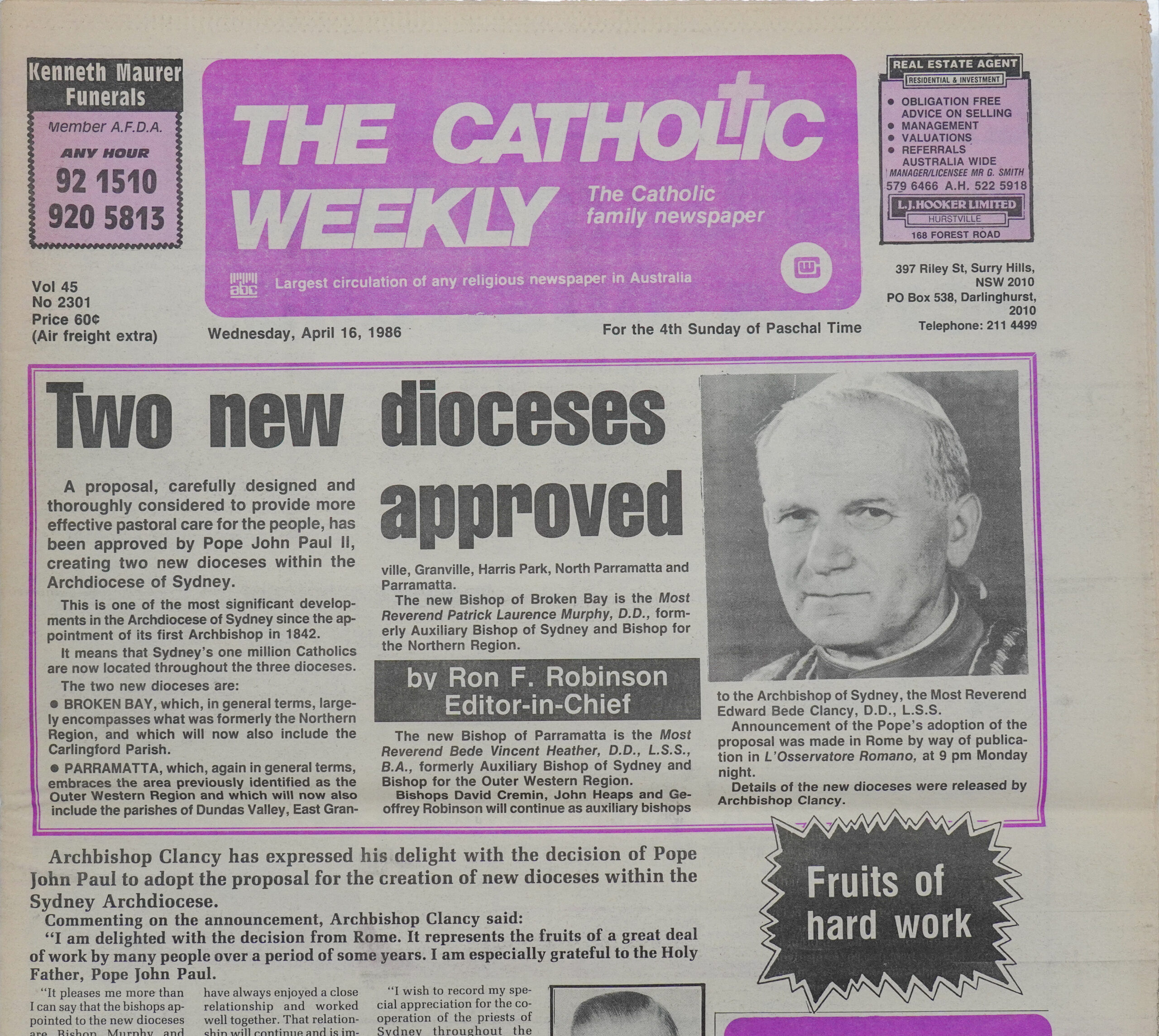
Newspaper clippings from The Catholic Weekly from 1986. Image: supplied
A place of our own
In response to the post-war immigration and baby boom, it was proposed to the Holy Father, Pope St John Paul II, that Sydney be divided into three – the Archdiocese of Sydney, and the Diocese of Parramatta and Broken Bay. In 1986, the Holy Father approved this request, and in November that year completed his historic six-day tour of Australia – the most comprehensive visit by a reigning Pope.
In less than a week, he visited every state and territory, travelled more than 11,000kms and attended 38 functions, including his notable addresses at the Sydney Cricket Ground, the MCG in Melbourne, the Opera House and in particular his seminal address to Aboriginal and Torres Strait Islander people in Alice Springs.
Of significance to Parramatta was his arrival by helicopter to the western suburbs, touring Blacktown Showground and Seven Hills in his popemobile and addressing workers at the Transfield Factory. He is remembered through a special monument in St Patrick’s Cathedral forecourt that was unveiled in 2015.
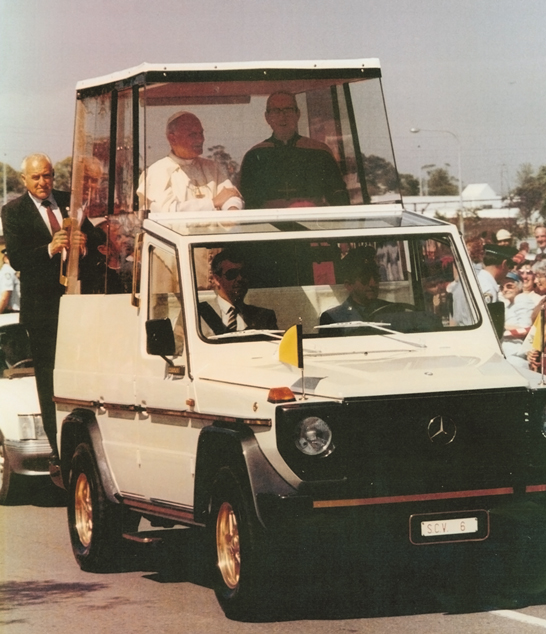
Pope St John Paul II in the popemobile with Bishop Bede Heather, the first Bishop of Parramatta, in 1986. Image: Supplied
A growing spirit
Four decades, four bishops and a doubling of the population. In 1986, the approximate population of Western Sydney was between 1.3 and 1.5 million people. That number is now over 3 million, and growing at one of the fastest rates in the country.
New suburbs are still being created, migrant families from new countries are continuing to put down roots, and faith is being lived out in kitchens, classrooms, hospital wards, and parish halls.
Growing to 45 parishes, 130+ clergy, 230+ religious, 80 schools, 55 daycare centres and before and after school services, the Diocese has grown by learning to listen. It learned the languages of newly arrived families and the unspoken prayers of those doing it tough. It listened to the sadness of those who witnessed the Cathedral’s historic burning. It learned that Mass might sound different from parish to parish – but that reverence, joy, and the longing for God remain unmistakably the same. It continues to listen to the vulnerability and fragility of many, through the everyday moments in parishes or services helping the marginalised such as Catholic Care, right through to our first Synod held in 2023 where accompaniment and walking with others became the focus for our future.
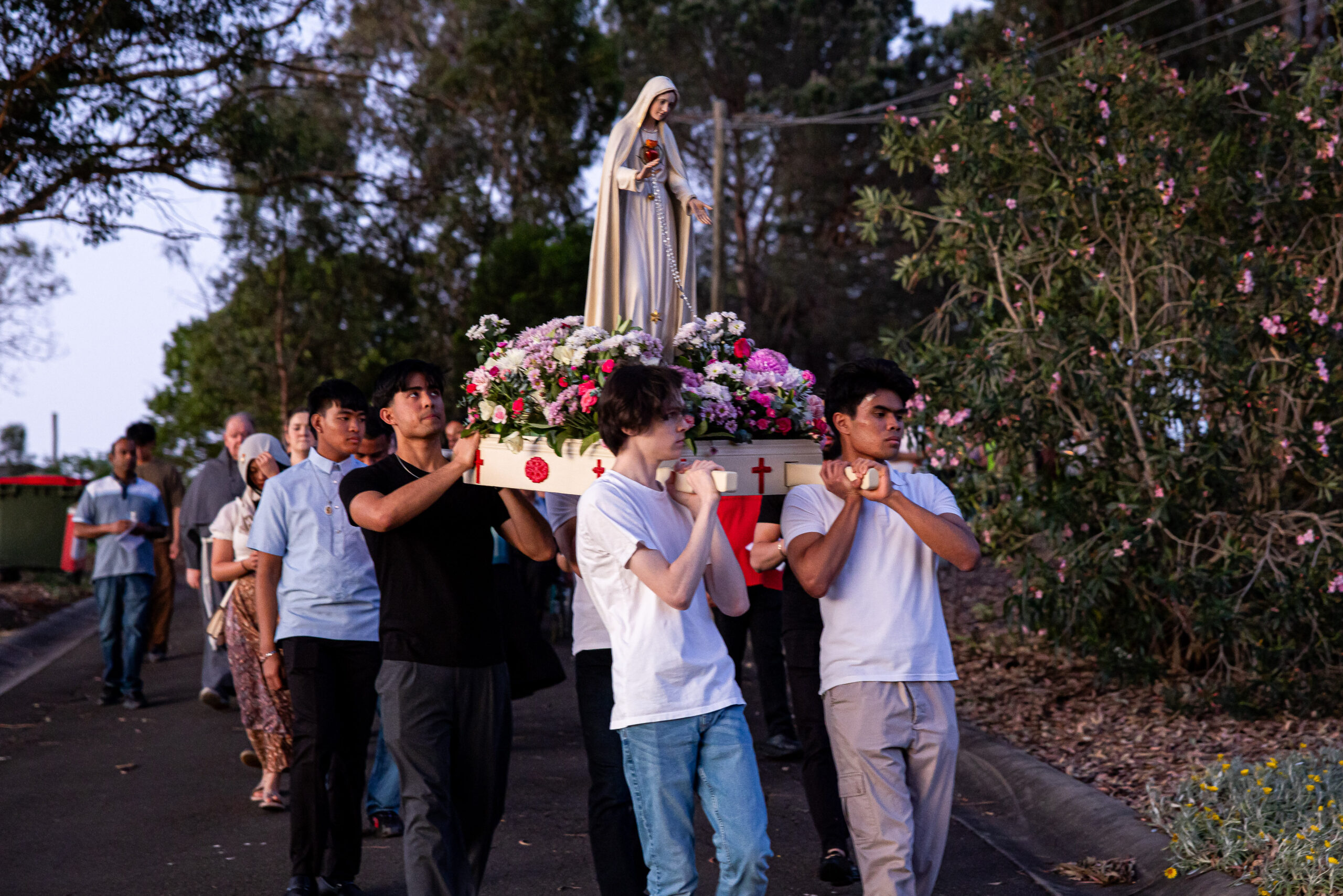
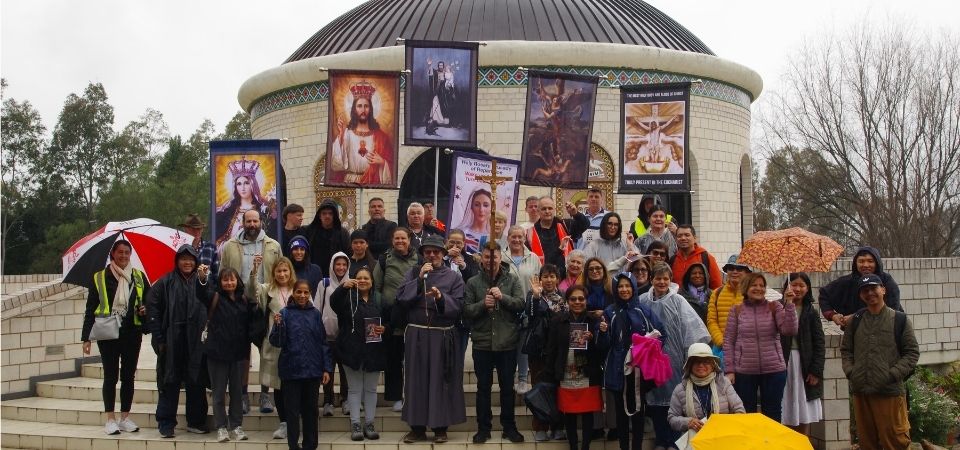
Our Lady of the Rosary youth parishioner Lester Villanueva (left) carries a statue of Our Lady of the Rosary during the Marian procession to the Franciscan Shrine of Holy Innocents, Kellyville. Image: Alphonsus Fok/Diocese of Parramatta
Over four decades, the Diocese has been shaped by teachers and catechists, religious and clergy, volunteers and grandparents, the young and old – many of whom never expected to be “builders of a diocese”, yet became exactly that. They taught the faith in schools and living rooms, defended dignity in times of uncertainty, and quietly kept showing up, even when it was hard.
And we should not forget the ongoing inspiring leadership of all our popes after St John Paul II in the last four decades.
From the gentle deep wisdom of Pope Benedict XVI, to the prophetic vision of Pope Francis and his outreach to those on the margins, to the courageous peace-making mission of our current Holy Father Pope Leo XIV.
Forty years on, our Diocese is still energetic. We are still the ‘youngest’ in terms of foundation, but also our median age; we are the most diverse and multicultural and have the highest percentage of Catholics in Australia.
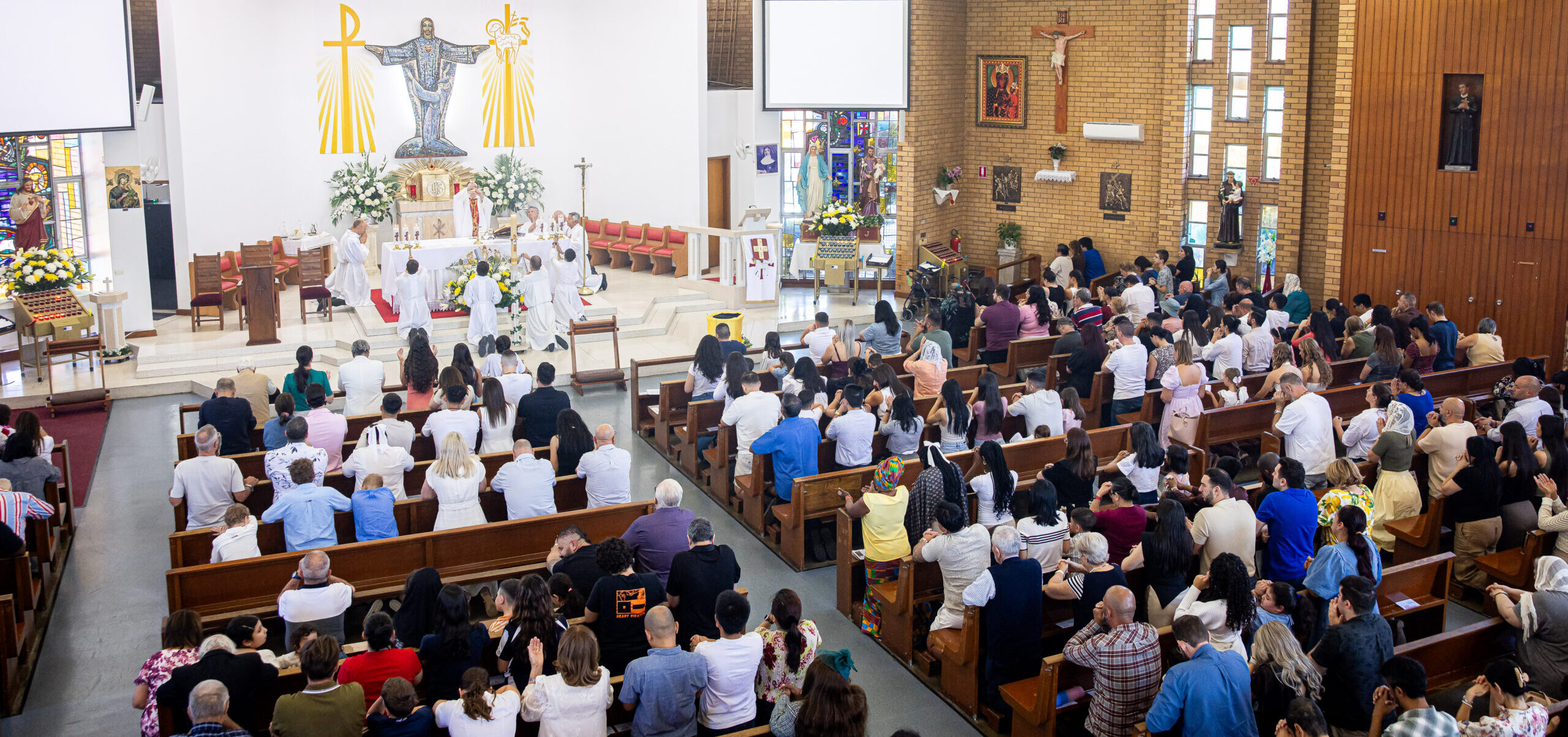
2025 Easter Sunday Mass at St Margaret Mary’s Parish, Merrylands. Image: Alphonsus Fok/ Diocese of Parramatta
Our Diocese is now wiser, more diverse, and deeply aware that the mission is far from finished. The same Spirit who moved us at the beginning continues to nudge, challenge, and surprise, inviting the people of God to step forward together.
We will always look back with nostalgia but simultaneously shine a little brighter for what comes next. Because if the past 40 years have taught us anything, it’s this: in Western Sydney and the Blue Mountains, faith doesn’t just survive. By God’s grace, it grows.
This article was originally published in the 2026 Lent & Easter | Autumn edition of the Catholic Outlook Magazine. You can read the digital version here or pick up a copy in your local parish.