

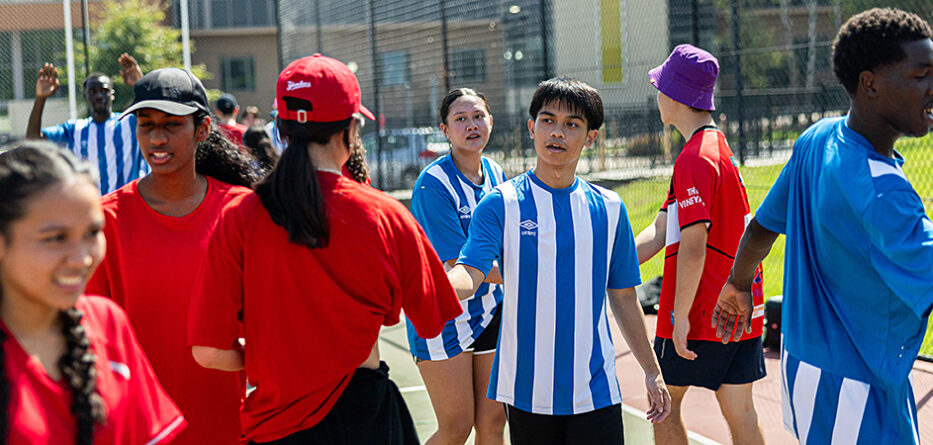
Let us pray that sports be an instrument of peace, encounter, and dialogue among cultures and nations, and that they promote values such as respect, solidarity, and personal growth.
At its best sport is play. When they play, children explore and delight in the grace of bodily movement. They learn what it means to be human and how to relate to one another. They are fully engaged in their play but know that they will return from its highs and lows to daily life. Play, including sport, is part of life and of learning what really matters. It is about what we value. That is why Pope Leo places sport in the world of values in this month’s Prayer Intention.
Of course, as in all human activities, the values of sport can be good and bad. At its purest, sport is amateur, a word derived by the Latin word for a lover. It is played for the love of the game. When we think of sports, however, we usually think of professional sport in which people play for money paid ultimately by media and gambling companies. For clubs and players sport is a business in which one’s career depends on performance.
The values of sport are mixed. It can promote peace, encounter and dialogue between different groups. In Australia families wearing the colours of opposing clubs often travel together on the train, separate to join their own supporters, barrack passionately at the game, and then chat together with supporters of the other team in the train on the way home. Professional sport can be a place for dialogue and encounter.
Equally, however, sport can spark conflict and hatred and feed prejudice. The soccer games between Celtic with its Catholic origins and Rangers with its Protestant roots in Glasgow were for many years an expression of religious hatred. In Australia, too, incidents of domestic violence are said to rise during the football season. Tensions in families and in cities can flare up in games between rival teams
Sport can certainly encourage values, high and low. Many professional competitions work hard to cut out fighting on the field and abuse of umpires by the players because what children see in professional sport they will imitate in in junior completions. Equally, sport can encourage respect for others even at cost to oneself, as once John Landy sacrificed his opportunity to break a world record for the mile by stopping to help another fallen runner to his feet. There are many other gestures of solidarity in sport. Players on opposing teams hug an opponent whose relative had died. Some will take time to console players in the losing team after a Final. Such gestures express what matters most in life. Many years ago a successful English football manager was asked if he saw football as a matter of life and death. He answered, ‘No, it is much more important than that’. The answer was humorous because it was obvious that no adult, least of all the manager responsible for a group of young players, believed that it was true.
Sport can build solidarity and respect and enable personal growth, but all these qualities draw people to humility, not boasting. They help us recognise the gift of play and to realise that there is something more than work or play in generous and contented human lives.
Fr Andrew Hamilton SJ writes for Jesuit Communications and Jesuit Social Services.