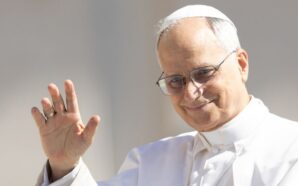


Leo XIV, a native of Chicago, can use his American upbringing to enhance significantly his papal ministry, but he must be careful to avoid the pitfalls also inherent in being a Yankee in Saint Peter’s Court.
The United States of America is very different today from the country where Pope Leo XIV was born in 1955 and where he grew up in the 1960s and 70s. Since Donald Trump’s presidential victories in 2016 and 2024, a poisonous culture of grievance and incivility has gripped roughly half of the people, especially under-educated white males, who live in the “land of the free and home of the brave”.
Trump did not create this mess, but he intentionally and cynically baited and encouraged people to embrace racism, misogyny, white supremacy, hatred, and fear of sexual minorities, along with other evils that have long simmered beneath the surface of a country many generations of immigrants helped build into one of the most powerful nations on earth.
Do not listen to the lament that has become the tired and loathsome refrain of many insecure white (and supposedly) heterosexual men in the Trump era. Despite their expressed grievance that they are discriminated against because of some wokeness they believe is holding their country hostage, it remains a fact that no one on Planet Earth is more privileged than a white male fortunate enough to be born in the USA and given opportunities that exist nowhere else in the world to build a good and successful life.
No one understands this better than our current pope, Robert Francis Prevost. He was born and raised in a middle-class suburb of South Chicago, and the chance to realize and make the most of the American dream dangled tantalizingly before him and his generation.
Many of his peers strived to pursue this through careers that promised financial success. However, he chose a very different path, dedicating his life to serving others. He joined the Order of Saint Augustine and, not long after completing his university and seminary studies, he left his native land to serve as a missionary priest in Peru, where Pope Francis named him a bishop in 2014.
A blessing to be a different sort of American cleric
On this Fourth of July weekend, as the United States celebrates its 249th anniversary of independence, it’s important to remember that since World War II, the election of a cardinal from a superpower was generally seen as impossible, or at least unlikely. This has been especially true for US cardinals, who, like many Catholic priests in America, are viewed from abroad as being particularly (sometimes even excessively) patriotic. It’s unclear what role patriotism plays in Pope Leo’s life, but one thing is certain: he is nothing like the other US cardinals.
It cannot be stressed enough that he is, and has never been, part of the American Catholic hierarchy. Nor did he ever serve as a bishop in the United States. Thus, he’s never been a member of that elite “club” of clerical CEOs known as the US Conference of Catholic Bishops (USCCB).
This, along with the fact that he is also a Peruvian citizen, must have given the cardinals who gathered in the Sistine Chapel after Pope Francis’s death the confidence to elect him earlier this May 8 as the successor of the late Jesuit pope. Leo’s distance from a highly discredited conference of Catholic bishops that quietly opposed Francis’s pastoral priorities and actively courted favor with wealthy and politically conservative lay Catholics is a huge blessing for him and the entire global Church.
A blessing to be a native speaker of today’s “lingua franca”
One of the key skills an American brings to the Roman papacy is fluency in English, which is currently the world’s undisputed “lingua franca.” Whenever Leo issues a message with global significance, especially if it’s directed at the international geopolitical community, he must do so in English.
It seems he has been hesitant to speak his native language too much so far, probably out of respect for the many people in the Vatican, especially the Italians, who are not fluent in this language. But since he has confirmed that he is also fluent in Italian, he must not hold back or make excuses for not using the most widely spoken language in the world. He is blessed to be a native English speaker, and it would be truly irresponsible not to use this gift.
He is also fluent in Spanish, which is the first or second language for most Catholics worldwide. Therefore, he—and the people who work for and with him—must prioritize using these two languages.
Leo must firmly resist any pressure from within the Roman Curia to keep Italian as the Curia’s (and, consequently, the worldwide hierarchy’s) preferred language. Giving in would mean falling into the trap of allowing Italians to continue playing a dominant role in the global Church affairs.
A curse or a blessing to be from a country of wealthy Catholic benefactors?
Some people may find it hard to believe, but since Leo’s election, there have been numerous suggestions that one of the reasons the cardinals chose him was to help sway wealthy American Catholics to fill the coffers of a Vatican that is becoming increasingly cash-strapped. It doesn’t seem that the current pope is interested or tempted by this, but he will face pressure from certain quarters to do so.
But peddling influence cuts both ways. Those same wealthy benefactors from the United States, who lean right politically and are more traditional-minded ecclesiastically, will likely try to gain inside access to their fellow countryman, the pope, and his closest aides in order to play a part in shaping his pontificate.
But Leo appears to be firm and self-confident enough to resist any such attempts to influence or control him. Nonetheless, this is likely to be an issue. However, the pope’s deeper identity is that of an American missionary priest, and he is more inclined to encourage those benefactors to fund projects aimed at helping the poor in developing countries around the world, not the Holy See.
A curse to be cast as a counterweight to Trump
No doubt, there are some in the Church who like to see the new pope become a counterbalance to Donald Trump, much like they believed John Paul II was a counterbalance to the communist system in Eastern and Central Europe.
They saw the Polish pope as a kind of superhero who played a crucial role in helping to toppling Communism. Pope Leo said from the very beginning of his papacy that one of his main priorities is to help bring peace and unity within the Church and the world.
However, there has been no indication that he believes this includes working against the divisions the current US president is creating, or that he plans to counter the sort of “Trumpledown effect” that encourages other problems around the globe, such as hyper-nationalism and tendencies toward fascism.
The Bishop of Rome is the earthly leader of a global Catholic community, no matter what country of origin. He must resist external pressures or voices inside his head that would try to tempt him into believing he can change the course of history just because his native country is tethered to or is the driving engine of his era’s dominant political system.
Having a pope born in the USA is likely to bring various blessings or curses (“disappointments” is probably the better word) to Catholics around the world, depending on one’s theological or ecclesiological views and preferences. But those of the flock in his native country will be watching especially carefully to see whether he can meet their expectations.
That goes for reformed-minded Vatican II types who tend to be more politically progressive, as well as the more traditionalist Catholics who are politically conservative and even supportive of Trump.
Leo, it seems, is trying to help satisfy and unite those on both sides of this widening divide. It would be a great blessing for all of us if he could succeed. But this noble and monumental task, unfortunately, might already be doomed to fail.
With thanks to the Union of Catholic Asian (UCA) News and Robert Mickens, where this article originally appeared.