

Homily for the 16th Sunday in Ordinary Time
Wisdom 12:13, 16-19; Psalm 86; Romans 8:26-27; Matthew 13:24-30
Listen at soundcloud.com
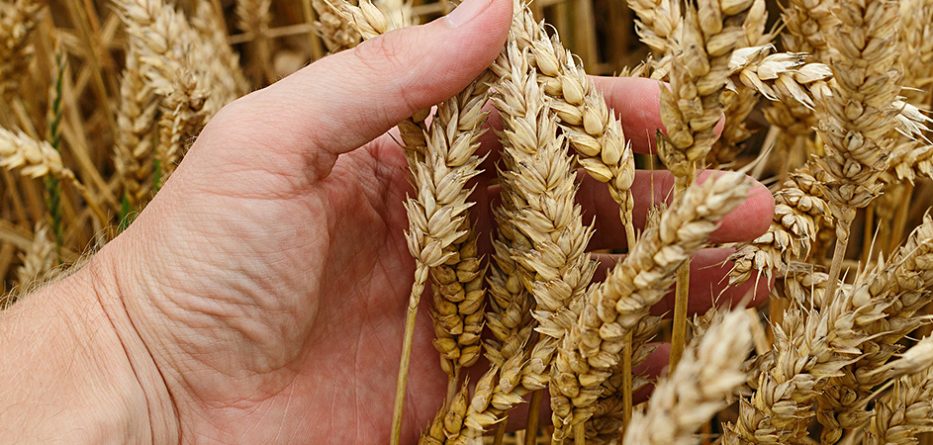
Last week we heard the parable of the sower. This week we hear the next parable in Matthew Chapter 13 with Jesus explaining what the kingdom of heaven is like: it’s the parable of the good wheat and the bad weeds.
The farmer sowed good seed but then weeds appeared amongst the wheat. The weeds did not appear by accident. They were planted by an enemy while the farmer and his workers slept. The workers were minded to pull out the weeds immediately. But the farmer knew the wisdom of allowing nature to take its course, permitting the weeds to grow alongside the wheat until harvest time. Then and only then, the weeds could be collected and burned and the wheat stored in the barn. Scripture scholar Daniel Harrington tells us:
The problem faced in the parable is the fact that some Jews accept and others reject the gospel. The issue before the Christians is, How do we react to this reality? The parable, which surely has allegorical features, counsels patience and tolerance in the present. The assumption behind this counsel is the confidence that at the final judgment there will be a separation between the just and the unjust along with appropriate rewards and punishments.[1]
Patience and tolerance in the present, confident that in the future, at the final judgment, there will be a separation of the just and unjust. We leave the judgment to God, knowing as the Book of Wisdom tells us in today’s first reading that God’s might is the source of justice:
But though you are master of might, you judge with clemency,
and with much lenience you govern us;
for power, whenever you will, attends you.
And you taught your people, by these deeds,
that those who are just must be kind;
and you gave your children good ground for hope
that you would permit repentance for their sins.
We are called to be patient and tolerant here and now, especially in relation to things we cannot change, then ultimately trusting in God’s merciful judgment. There is a time for leaving the weeds be; there is a time for pulling out the weeds. On these things we will be judged. We 21st century Australians are not focused on the problem confronting the second century Matthean community of some Jews accepting the gospel and others not. But we have our own share of problems unique to our times.
Our anxieties about when to take out the weeds and when to leave them be have been highlighted this past week by the national conversation about AI. Even those of us who are not experts in Artificial Intelligence know that there are some operators who are like the enemies in the parable planting weeds under cover of night. There are some like the workers who are anxious to weed out the problems here and now. There are others like the farmer who has the patience and tolerance to wait out the exploding new growth which includes the good and the bad, harvesting the good fruit at the opportune time.
Our prime minister gave a major speech on AI during the week. He said: ‘The fact that we cannot stop change, does not render us powerless, far from it. Our power, our agency, our choice lies in embracing change and shaping it. Not just adopting or accommodating AI. Designing it, making it, building the capability right here.’ He went on to say: ‘[T]he real issues AI presents are not technical ones – they are economic ones, legal ones, social ones, and as Pope Leo has made clear in his superb first Papal Encyclical, Magnifica Humanitas, there are also moral and spiritual ones.’[2]
It’s refreshing to be in a situation where our prime minister sees fit to quote our pope on a pressing issue as we all engage in the discernment about when to regulate and restrict new developments, taking out the weeds, and when to allow new developments to occur, though we do not know the consequences – allowing the wheat and weeds to grow together until harvest time. Pope Leo nicely highlights the moral and spiritual issues confronting us with AI when he gives us this invitation:
I invite everyone to contemplate, in the face of the Son of God, the grandeur of humanity that shines a light also on the era of AI. In Christ, we are called to cooperate in the work of creation, rather than be disinterested observers of technological processes that limit our freedom and responsibility. The dignity inscribed in each of us by the Holy Spirit can also be seen in our capacity to reflect critically, choose and love freely, and form authentic relationships. No computational system, however sophisticated, can create a heart that gives itself, or a conscience that discerns good from evil. Even when machines excel in efficiency, a human face that asks to be gazed upon remains the centre of our history. This human face is the fullness toward which history is moving.[3]
Lord, you are good and forgiving.
You, O Lord, are good and forgiving,
abounding in kindness to all who call upon you.
Hearken, O Lord, to my prayer
and attend to the sound of my pleading.
Lord, you are good and forgiving
You, O Lord, are a God merciful and gracious,
slow to anger, abounding in kindness and fidelity.
Turn toward me, and have pity on me;
give your strength to your servant.
Lord, you are good and forgiving.
Fr Frank Brennan SJ AO, Adjunct Professor of Thomas More Law School at ACU and Adjunct Research Professor at the Australian Centre for Christianity and Culture, is a former Rector of Newman College, University of Melbourne, and CEO of Catholic Social Services Australia (CSSA). His latest books include Pope Francis: the Disruptive Pilgrims Guide (ATF Theology, 2025), and Equality, Reconciliation and Social Cohesion: The Inspiration of Sir William Deane (Connor Court, 2026).
[1] Daniel J. Harrington, The Gospel of Matthew, Sacra Pagina Series (Collegeville, MN: Liturgical Press, 2007), 208.
[2] Anthony Albaese, ‘AI in Australia’s Interests’, 15 July 2026, available at https://www.pm.gov.au/media/ai-australias-interests-0
[3] Pope Leo XIV, Encyclical Magnifica Humanitas, #233