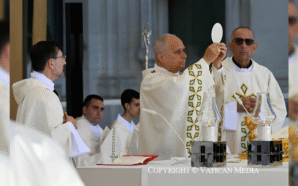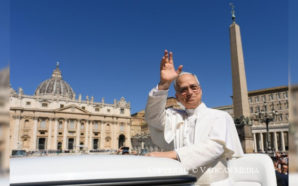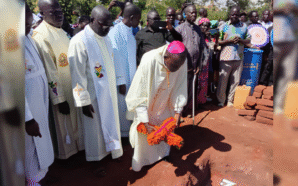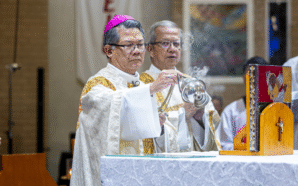


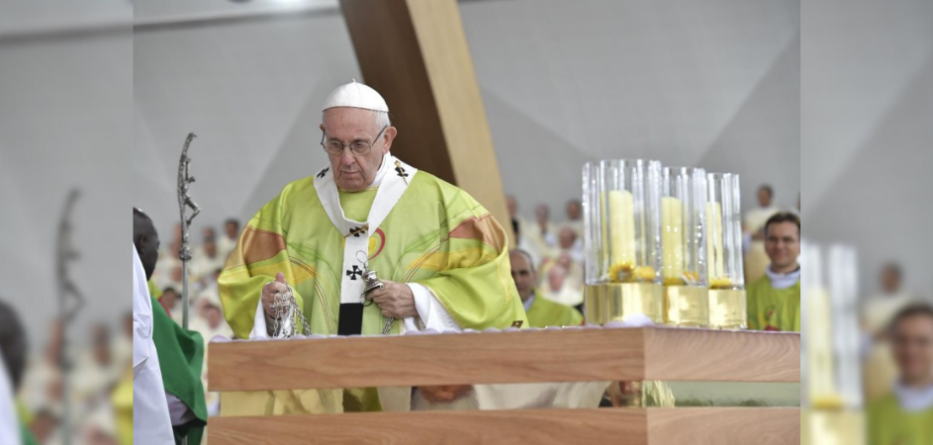
Pope Francis did not come to the papacy with a liturgical agenda. Nevertheless, he became a gifted pastoral leader and custodian of the Church’s liturgy, making numerous decisions that would affect the course of liturgical renewal around the world. He was able to do this because he possessed three fundamental convictions about liturgy: first, that liturgy is the place of encounter with the living Christ, who truly speaks to everyone; second, that the liturgical reforms of Vatican II were not an interruption of tradition but its faithful continuation; third, that liturgical inculturation and popular piety should not be seen as a threat to the liturgy but rather as partners in its flourishing. These convictions aided his discernment of critical questions and provided a basis for action that was both incremental and creative. Here are a few examples.
One of Francis’s first liturgical directives was to change the rubric of the Missal that guided who might take part in the Holy Thursday ritual of the washing of the feet. Because of Francis, women can now be included, not “unofficially,” but with full right. This might seem like a small thing, but as a symbolic statement it was huge. No one knew this better than Francis’s prefect of the Dicastery for Divine Worship, Cardinal Robert Sarah, who delayed for months before carrying out the pope’s simple directive. At stake in this small change was the question of how we experience the living Christ in the liturgy—is the liturgical gesture of foot-washing a roleplay of the Last Supper, or an expression of humble service? Francis’s decision opened the action in such a way that this ritual might truly speak to everyone.
In a similar way, Pope Francis’s motu proprio concerning liturgical translation, Magnum principium, reversed the narrow view proposed by both of his most recent predecessors that the Vatican was the best judge of how the liturgy should be translated into various languages. Francis returned ultimate control to the local bishops’ conferences, as the Second Vatican Council directed. Although this decision came wrapped in procedural issues, at stake was something deeper: the “great principle” (the magnum principium) of active participation that is central to the Constitution on the Sacred Liturgy. If the language of the liturgy is to be a medium of encounter with the risen Christ, it must not impede that encounter with translations that are awkward and difficult to hear in one’s native language, and the local authorities are the best judge of how to fulfill that mandate.
In his apostolic letter on liturgical formation, Desiderio desideravi, Pope Francis expressed his core conviction about the encounter with the living Jesus plainly: “Christian faith is either an encounter with Him alive, or it does not exist. The Liturgy guarantees for us the possibility of such an encounter” (DD, 10–11). He meant this not only regarding Christ’s presence in the consecrated bread and wine, but in all aspects of the celebration.
One of the points of tension in the Church since the Second Vatican Council has been the liturgical reform, which has been embraced by the majority of Catholics but rejected by traditionalists. In attempting to reconcile those Catholics for whom the liturgical reform was a stumbling block, Pope John Paul II offered concessions to use the older rites under limited circumstances. Pope Benedict broadened these permissions greatly. Rather than promoting reconciliation, however, the freedom to use the older rites served to console and strengthen the most intransigent critics of the liturgical reform and of Vatican II itself.
Tradition can develop creatively while remaining faithful, as Francis’s decision concerning the instituted ministries demonstrated.
Pope Francis could have continued to indulge those who objected to the liturgical reforms of Vatican II, but he didn’t. Instead, he recognized that the use of the older rites was deepening divisions in the Church and he moved to restrict them. This was not merely a matter of politics for Francis; it was a matter of principle. In his motu proprio Traditionis custodes (“Custodians of the Tradition”), he hammered home his core conviction that the liturgical reforms of Vatican II were not an interruption of tradition but its faithful continuation. The task at hand was not to foster an “opt-out” of the liturgical reform, but to guide the entire Church to understand and embrace the reform wholeheartedly. Desiderio desideravi developed this theme, calling for a genuine liturgical formation of the whole people of God and offering prompts for reflection that might jumpstart the process.
One of the most successful initiatives of the Second Vatican Council was its recovery of the Word of God as a constitutive element in all liturgical celebrations. Again, as in the case of the liturgical reform as a whole, Francis perceived this development not as a past endeavor of ambiguous value, but as a trajectory of renewal that continues and ought to be cherished and promoted. Accordingly, he established the Sunday of the Word of God in the liturgical calendar, and linked it to two other reforms he made: admission of women to the instituted ministry of lector, and the creation of an instituted ministry of catechist. He also instructed the Dicastery for Divine Worship to craft public rites for admission to these instituted ministries, to be presided over by the local bishop. Francis, as bishop of Rome, presided over these rites at St. Peter’s Basilica each year on the Sunday of the Word of God.
The Constitution on the Sacred Liturgy called for reforms that would embody both “sound tradition and legitimate progress.” When Pope Francis admitted women to the instituted ministries of lector and acolyte, commentators aptly invoked the principle of sound tradition and legitimate progress in describing what he had done. Tradition can develop creatively while remaining faithful, as Francis’s decision concerning the instituted ministries demonstrated.
Pope Francis did more to advance the cause of liturgical inculturation than any of his recent predecessors. With his approval, work on crafting an Amazonian rite began, and official permission was given for liturgical adaptations to the liturgy for the Mayan people of Mexico. The “Liturgy of the Land of the Holy Spirit,” celebrated for fifty years among the aboriginal people of Australia but never recognized in Rome, has also moved forward toward official recognition. Prior to Francis, the last official recognition of an inculturated liturgy was the Roman Missal of Zaire, approved in 1988.
At Vatican II, the Constitution on the Sacred Liturgy affirmed the Church’s commitment to look favorably upon those elements of human culture that are compatible with the Gospel, and it opened the door to admitting such cultural expressions to the liturgy. After some initial attempts, however, this Vatican II mandate was resisted by the central authorities in Rome and developments stalled. Pope Francis, armed with both a missionary spirit and confidence in the beneficial effects of popular piety in sustaining the Catholic faith, has essentially invited the Church to walk through the door that Vatican II opened, with discernment and care but also with boldness.
The dust-up over the Pachamama statuette at the Synod on the Amazon in 2019 illustrates Francis’s aplomb in his dealings with popular piety and cultural diversity. He blessed a folk-art representation of a pregnant Amazonian woman that the Amazonian delegation to the Synod had identified as an image of the Virgin Mary. The art piece scandalized traditionalist Catholics but did not alarm Francis in the least. Rather, he found scandal in their hostile reaction to the Amazonians’ expression of faith. Clearly, Francis believed that popular piety should not be seen as a threat to the liturgy but as a partner in its flourishing.
Where does the Church stand now on these liturgical questions? Francis’s decisions regarding liturgy in some cases are enshrined in canon law, but the attitudinal adjustments needed to make these gains durable are still a work in progress. The American bishops are in no hurry to admit women to the instituted ministries, and they have resisted revisiting their troubled liturgical translations, though some other English-speaking conferences have called for a comprehensive re-evaluation. Traditionalist Catholics are biding their time, hoping that the next pope will overturn Francis’s limitations on the celebration of the older rites, and opponents of inculturation remain skeptical. The resistance to Pope Francis’s leadership in liturgy echoes what we have seen on other fronts—such as care for creation, honoring the humanity of migrants, and solidarity with the poor. It will be critical therefore for the next pope to take up these issues where Francis left off, with the same courage and confidence he displayed.
Reproduced with permission by Commonweal.