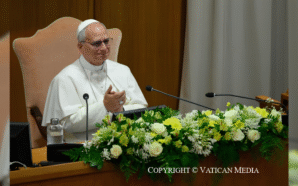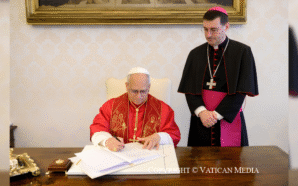


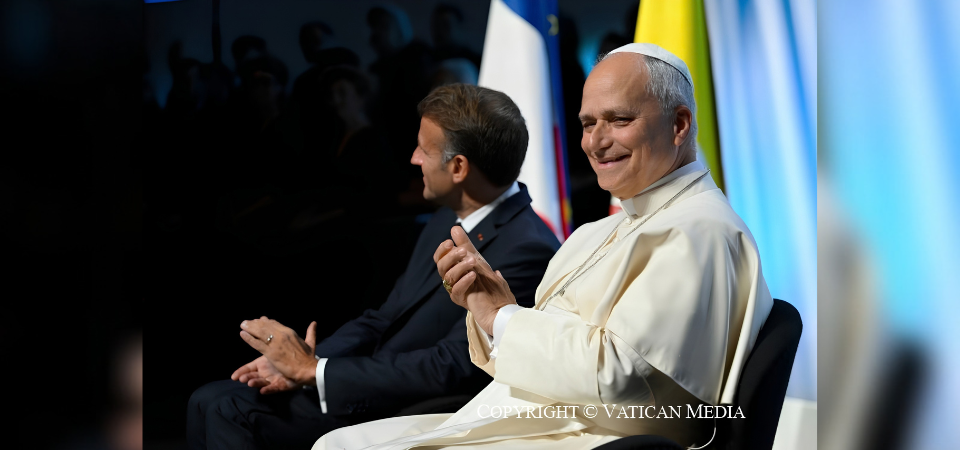
Catholics are still processing Pope Leo XIV’s amazing trip to France. The images of the crowds lining the Champs-Élysées, of the excited young people at the Stade de France and the thousands singing the “Salve Regina” outside Notre Dame cathedral, of the Holy Father at the grotto in Lourdes, all these form a profound impression of the continued significance of Catholicism to French culture and of this pope’s ability to harness that significance.
On Wednesday, I looked at his address to the bishops of France meeting in Lourdes, and how that reflected his approach to the governance of the church. Today, I want to step back a bit and look at the emerging Leonine style of pastoral leadership as seen by surveying his other talks.
Leo’s religious sermons emphasized spiritual themes. At the huge Mass at the Place de la Concorde, the Holy Father’s theme was a very Augustinian one: God as the answer to human restlessness and desire.
“What is my deepest thirst? What am I really seeking in life? We all long for happiness, love and fulfillment. But from what source do we seek to quench our thirst?” the pope asked. “Are we content with material goods, immediate satisfactions, the countless little idols that promise us everything but leave our hearts empty? We have been baptized and received the living water of which the Gospel speaks, but have we truly encountered Christ personally? In essence, the human person is a being of desire, and only God can fill the emptiness within us.”
In his sermon at Lourdes, Leo highlighted another side of his Augustinian roots. In speaking of the promise of eternal life of which the Blessed Mother spoke to St. Bernadette, Leo said, “For the obstacle to grace and eternal life — the only obstacle to this love — is sin, whereby we turn in upon ourselves, refusing God and shutting ourselves up in our own darkness. … We must therefore use our freedom to say yes to Christ, relying on his grace, like Mary. This is a yes that we renew until our final breath — ‘now and at the hour of our death’ — as we say in the Hail Mary.” He devoted several paragraphs to the theme of repentance, but always linked it to the ongoing call to conversion and the hope of eternal life. Very Augustinian.
To continue reading this article, click here.
With thanks to National Catholic Reporter and Michael Sean Winters, where this article originally appeared.