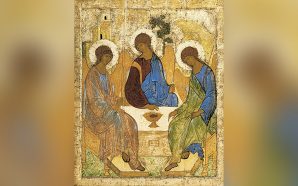


Biblical stories are usually read as narratives written from a male perspective, with the main roles assigned to men: patriarchs, judges, kings, prophets. In reality, however, female genius is creatively present in the pages of Scripture, which narrates more than patriarchal stories. At decisive moments in the biblical story, it is the women who make the difference, intervening to untie the knots and resolve issues along the path of the history of salvation.
We will focus here on three biblical women who play a crucial role within the narrative arc of the two Testaments. They were present at decisive transitions from one generation to the next, bringing about a qualitative change in the paths of others. The women in focus are Rebecca and Bathsheba in the Old Testament and the Syrophoenician woman in the Gospels.
Rebecca, a matriarch with her two sons
“Isaac was old and his eyes were dim so that he could not see. He called his elder son Esau and said to him, ‘My son’; and he answered, ‘Here I am’” (Gen 27:1). Genesis 27 focuses on the conferring of the blessing of Isaac on one of his sons in a clear generational succession from one patriarch to the next. Isaac is now old and ill, and he wants to give his blessing to his elder son, Esau, whom he loves because of the game he provides for him (cf. Genesis 25:28).
In this context, Rebecca emerges as the undisputed focus of the episode.[1] Behind the scenes, she weaves a plot to manage events in the way she wants them to go. With determination and great skill, the matriarch seems to move all the other characters like pieces on a chessboard.[2] After listening to the conversation between Isaac and the elder son, and realizing the gravity of the moment, she intervenes with cunning. While Esau is out hunting for his father, she summons the younger son Jacob to secure the heir’s blessing.
She makes him carry out her plan – “Now therefore, my son, obey my word as I command you” (Gen 27:8) – in the face of Jacob’s hesitation and fear. The younger son pretends to be the hairy Esau, wearing his clothes and covering himself with goatskins, to steal the blessing from his elderly father Isaac that was due to the elder brother.
Rebecca deceives her old husband with his weakened senses and taking advantage of his preferences, preparing a dish that Isaac loves, two kids taken from the flock. She hands them on to Jacob to give to his father. The one who loses out is the unsuspecting Esau, who is out hunting on his father’s behalf, hoping to receive the longed-for blessing on his return.
Why did Rebecca choose Jacob over her other son? In chapter 25 of the book of Genesis she receives an oracle from the Lord: “The elder shall serve the younger.” Rebecca probably chose to favor Jacob because of the oracle, but an attentive reader of Gen 25:23 will discover how ambiguous the Hebrew text is and how difficult it is to interpret. In fact, it is possible to translate it as: “the elder shall serve the younger,” or: “the younger shall serve the elder.”[3] Rebecca’s freedom to decide and interpret the oracle according to her heart is played out in this ambiguity.
The matriarch probably pondered these words at length, comparing them with her knowledge of her two sons. A decisive element in understanding her preference is offered to us in the story immediately preceding chapter 27: “When Esau was forty years old, he married Judith, daughter of Beeri the Hittite, and Basemath daughter of Elon the Hittite; and they made life bitter for Isaac and Rebekah” (Gen 26:34-35). Esau’s Hittite marriages grieve Isaac and Rebecca and probably give the matriarch reason to doubt Esau’s suitability to become heir to his father’s blessing, prompting her to confirm her interpretation of the oracle and act in favor of her younger son.[4]
In the account of Genesis 27, Rebecca seems to be able to maneuver all the other characters, knowing their weak points (such as Isaac’s blindness), having the appropriate items to hand (Esau’s clothes for Jacob to wear, the young goats from the flock) and knowing food preferences (the meal she prepares for Isaac). Unfortunately, her plan did not take into account Esau’s reaction. Once he realized he had been thoroughly deceived, he decided to take revenge on Jacob. “Esau hated Jacob because of the blessing with which his father had blessed him, and Esau said to himself, ‘The days of mourning for my father are approaching; then I will kill my brother Jacob’” (Gen 27:41).
When the situation seems to be definitively compromised and the plan seems to have misfired, Rebecca acts with clarity and ingenuity, moving to avoid a tragic ending for her two sons. She first intervenes with Jacob, ordering him to go to Haran, leaving his homeland for a while, and then with Isaac. Rebecca enters through her husband’s door – the shared bitterness regarding the Hittite wives of Esau – and leaves through her own, sending her younger son to Haran to find a wife among his father’s relatives, thus avoiding a violent confrontation between the two brothers.
In the course of this journey, which will prove to be longer and more challenging than expected, the path of Jacob’s growth and maturation will begin. From this moment on, he will be the new focus of the biblical course of events, following after Abraham and Isaac.
Rebecca’s love and preference for Jacob would seem to be an element that pushes her to plan a project that is as daring as it is reckless. Several times in the book of Genesis, the preferences of men are the factors that dramatically advance the narrative (see, for example, Jacob preferring Rachel to Leah, or Jacob himself loving Joseph more than his other sons. At the same time, we must consider how the long reflection on the oracle of the Lord and the Hittite marriages of Esau contributed decisively to Rebecca’s intervention in favor of Jacob, so that the blessing would be passed on to him, because she was convinced that through him it would be more secure and better preserved on its way from one generation to the next.
According to the exegete Robert Alter, Rebecca is like many other women in the Bible, “who are not satisfied with a vegetative existence, spent in a corner of the house, but, if frustrated by the male world, do not hesitate to take their destiny and even that of the nation into their own hands.”[5]
Bathsheba, the political acumen of a ‘kingmaker’
The account featuring Bathsheba has many elements of similarity and continuity with Genesis 27.
This time the setting is at the beginning of the first book of Kings. At the end of the second book of Samuel, the story of David is still unfinished, as if somehow suspended. The narrative arc of David’s life extends into the first two chapters of the first book of Kings.[6] With the end of David’s reign, the characters who had played a leading role throughout his story also leave the scene, sometimes dramatically. A cycle closes and the narrative turns a page decisively.
In his adult life King David had problematic relationships with his children, and was characterized as an absent and distant father.[7] His eldest son Amnon, a brutal abuser, raped his own sister, while his father silently observed (cf. 2 Sam 13:21). After some time, Amnon experiences the terrible revenge of his other brother, Absalom, who wants to avenge the outrage suffered by his sister. Absalom later rebels against his father and dies tragically. At the end of his life David, old and sick, is uncertain about his descendants and their succession to him as ruler. Nathan’s prophecy, however, of a throne that will last forever for the house of David remains (see 2 Sam 7). In this power vacuum, Adonijah, one of the king’s sons, tries to seize power. Faced with this prospect, the prophet Nathan took action, actively supporting Solomon, with the decisive help of Bathsheba, the young prince’s mother.
Solomon, son of David and of the woman who had been Uriah’s wife, appears for the first time in the Bible in 2 Sam 12:24-25, when the reader discovers that the newborn child is loved by the Lord, who sends the prophet Nathan to change his name to Jedidiah, “beloved of the Lord.” The Lord has shown favoritism, but it is not this factor that Nathan will use to favor Solomon as successor to the throne.
His plan is to address the king, reminding him of a promise he made – which, however, is not mentioned in the biblical account – that Solomon would reign after David. Nathan and Bathsheba act in unison to persuade the elderly king to summon up the last of his former vigor and act decisively to enforce his decisions. The reader is left wondering whether the king’s oath to Solomon was really made or whether this element was created by the prophet to confuse the king and win him over to his plan.
The character of Bathsheba is surprising: rather than simply repeating Nathan’s stratagems, she shows herself to be creative and prepared to take the initiative, ensuring that her son becomes king. The reader is surprised to discover that the woman’s speech is very sharp and elaborate, decidedly longer and more sophisticated than Nathan’s suggestion.[8]
The queen’s repetition is creative. She does not simply repeat the prophet’s words and suggestions, but develops them with great skill and finesse, addressing the king directly, reminding David of his oath and adding an element that makes it even more solemn, because the king’s commitment to Solomon is to be made in the name of the Lord: “My lord, you swore to your servant by the Lord your God, saying: Your son Solomon shall succeed me as king, and he shall sit on my throne. But now suddenly Adonijah has become king, though you, my lord the king, do not know it” (1 Kings 1:17-18).
So, despite the king’s formal oath, not only is Adonijah already reigning, but David himself has been tricked, because he knows nothing about it. Bathsheba tells, with a degree of hyperbole, that all the king’s sons were invited to Adonijah’s celebration, almost a coronation, while “Solomon your servant” (v. 19), he alone, the legitimate heir, was excluded. This vivid description serves to arouse a vigorous reaction in David. In fact, in this hyperbolic description Adonijah is clearly made out to be a usurper, whereas Solomon is the faithful servant.
Bathsheba provocatively challenges David, calling his honor into question in front of all the people. Everyone is now waiting for the king to determine who will reign on the throne after him (v. 20). Why has the king’s will not been respected? In other words: can the king break his oath in front of all the people? If he does not act, Bathsheba reminds him, then the fate of the mother and child will be sealed. When the king dies, Solomon and Bathsheba will be considered guilty by Adonijah and will pay for their claim with their lives. Bathsheba’s action proves decisive, and David has Solomon anointed as king.
Subsequently, the queen also plays a leading role in the phase of consolidating her son’s reign. Adonijah is now not a contender for the throne, but he would like to marry Abishag, his father’s concubine in his old age. He asks Bathsheba to intercede with the king. By asking for Abishag, who was so close to the deceased king, does he perhaps want to open a path to reclaim the throne? The precedent of Absalom, who used David’s concubines in front of all the people to affirm his claim to the kingdom, is not a positive one (cf. 2 Sam 16:20-22). Perhaps Adonijah’s request was simply a request for a consolation prize after the loss of the kingdom, but it could also be a miscalculation and a serious sign of political naivety. Adonijah’s action lends itself to either interpretation, a possible disruptive factor for the new reign.
Bathsheba surprisingly agrees to speak to Solomon, but does she know that Adonijah risks his life if she makes this request to the king? Here a note of ambiguity is added, a nuance that can only be understood by reading the text in Hebrew. Bathsheba replies to Adonijah by telling him that she will speak to the king “for him,” or “about him,” or even “against him” (1 Kings 2:18). All three translations are possible. This ambiguity highlights how Bathsheba may have understood the danger of Adonijah’s request, and therefore, with caution and wisdom, she will try to defuse a possible trap.
The text emphasizes that Bathsheba went to King Solomon “to speak to him on behalf of Adonijah” (v. 19). This expression could also be translated as “to speak in favor of the king against Adonijah”; here too there is a certain ambiguity, which emerges from the Hebrew text. Then the meeting between the king and Bathsheba is described in detail and in a solemn manner: the new king gets up to go and meet his mother, and even prostrates himself before her.[9] Solomon sits on his throne and has a throne placed on his right for his mother.
On the one hand, Bathsheba says she has “a small matter” to discuss with the king; on the other hand, she makes the daring request of Adonijah to the king – “Let Abishag the Shunammite be given to your brother Adonijah as his wife” (1 Kings 2:21) – which immediately provokes a vigorous reaction from Solomon, who acts decisively to eliminate his brother and all his other opponents. Perhaps Bathsheba intentionally expresses herself in a direct manner to increase a sense of anxiety in the king, who feels the request could be dangerous. Solomon’s reaction could reveal Bathsheba’s ability to provoke this sort of response in her son, which she had anticipated by the way she had spoken. In any case, Solomon’s reaction indicates that he clearly interpreted Adonijah’s request as tantamount to a threat to be eliminated.
The reader will remember Bathsheba mainly because she was seduced by David when she was young, even though she was married to Uriah the Hittite. In the episodes we have examined, she is a character who decisively carries the narrative forward. She proves capable of creatively interpreting Nathan’s suggestions and knows which elements to emphasize to obtain the favor of the old king in order to save Solomon’s life and have him anointed king. With skillful Realpolitik, she engages in dialogue with Adonijah, exposing his imprudent requests before King Solomon. In fact, she contributes decisively to the tragic end of Adonijah and the consolidation of her son’s reign, overturning a situation that seemed to be potentially dangerous for her son.
Rebecca and Bathsheba are women who play important roles and are decisive for the development of the biblical narrative. They are ready to leave the stage and make room for others after having made their contribution. Rebecca is a crucial figure. According to Paul Beauchamp, “Jacob’s blessing is first and foremost a victory for the woman, for Rebecca, wife and mother,”[10] a figure of wisdom, a weaver and fertile in resourcefulness
In 1 Kings 1-2 we find the patriarchal narrative extended to the political events involving the people of Israel and its kings. In this new context, another woman, a wife and mother, is prominent. Rebecca’s role is repeated in Bathsheba, who with wisdom and cunning manages the transition of the kingdom to her son Solomon. She is the cause of promotion and glory for Solomon, and she secures a double defeat for Adonijah, in chapters 1 and 2 of the first book of Kings. Bathsheba is the first woman to appear in the story of Solomon; the other women that come after her will have a very different role and will lead the king away from the Law, turning his heart away from the Lord (cf. 1 Kings 11:4).
The woman who changed Jesus’ mind
In the New Testament too we find numerous female characters who play an important role in the narrative.[11] Here we will focus on the Syrophoenician woman, who, with great cunning and finesse, presses Jesus to such an extent that he changes his mind (cf. Mark 7:24-30; Matt 15:21-28).
Especially in the narrative approach of Mark’s Gospel, but in some ways also in Matthew’s, the Syrophoenician woman plays an important role, marking a turning point toward the opening of the mission of the Christ of Israel (cf. Matt 15:24) to the pagan world. In the first chapters of the Gospel of Mark, Jesus works in Galilee, addressing Israel, but after the encounter with this woman he will also perform healings among the pagans (cf. Mark 8:31-37).
In Mark 7:24 we are told that Jesus secretly enters the region of Tyre and Sidon, but he cannot remain hidden for long: a woman “a Gentile, of Syrophoenician origin” (Mark 7:26), ethnically and religiously different, goes to meet him and decisively challenges him, begging him to cast out the devil that is tormenting her daughter.
The modern reader may be surprised by the firmness with which Jesus categorically refuses this request. He shows his preference for “the children,” the people of the promise, saying to the woman: “Let the children be fed first, for it is not fair to take the children’s food and throw it to the little dogs” (Mark 7:27). In the parallel account in Matthew, this refusal is even more clear in some ways, and not even the intervention of the disciples in favor of this stubborn and troublesome woman is able to move the Master: Jesus himself makes a clear distinction between children and little dogs. The woman’s use of the diminutive “little dogs” is a term of endearment, whereas the real weight of the name when addressed to pagans has a mostly negative meaning.[12]
The woman’s response is surprising. First of all she calls Jesus “Sir” (v. 28). This is a recognition that comes from the mouth of a pagan woman, and it is the only time in the Gospel of Mark that this term is applied to Jesus. Then the woman uses the same words and the same example as Jesus, altering them in her favor: “Sir, even the little dogs under the table eat the children’s crumbs” (v. 28).
The Syrophoenician woman takes Jesus at his word and gives the Lord’s discourse a familiar nuance, linked to everyday life. The Greek language renders these nuances well: while Jesus spoke of children from a legal point of view (tekna), she uses a diminutive form (paidia)[13] with lightness and creativity, showing no bitterness or disappointment at Jesus’ seeming rejection.
The faith and audacity of this woman are recognized and rewarded by the Lord, and it is because of her courage and her words (v. 29) that he heals her daughter. But there is more. In both Mark and Matthew, the episode is placed between the two multiplications of loaves. In Mark 6:30-44 Jesus breaks bread for the children near the Sea of Galilee; after the encounter with the Syrophoenician woman, in Mark 8:1-10, he multiplies the loaves again, this time in a pagan land,[14] on the other side of the lake, taking care to feed the little dogs that are under the table.
The woman encourages Jesus to change his perspective and look also under the table, where the children are, paying attention to the little dogs that are there waiting for the crumbs of his grace.[15] According to Rudolf Pesch, “the Syrophoenician woman completely won over Jesus’ reservations about the pagans.”[16] It is as if this encounter contributed to giving a new horizon to his mission.
In the pagan region of Tyre and Sidon, Jesus, a true Israelite, crossed a social, geographical and religious barrier[17] and moved toward the fulfillment of a universal mission. This perspective will be recalled in the eschatological discourse, in which he will express the need for the Gospel to be proclaimed to all peoples (cf. Mark 13:10), up to the revelation of Golgotha, when it will be the pagan Roman centurion who will recognize in that man on the cross the Son of God (cf. Mark 15:39).
Conclusion
The texts we have considered show great liveliness and freshness, above all thanks to the way the biblical narrator presents and makes the characters interact. In particular, we have observed how women emerge as principal characters.
Rebecca and Bathsheba are not mere extras in a male story, but active agents. Their intervention is decisive at crucial junctures in the biblical narrative and their presence is established in crucial passages that mark the succession of generations of patriarchs and kings. It is the autonomy and freedom, the ingenuity, determination and affection of these two women that will influence the course of events, taking the narrative forward in new directions.
In the First Testament, there are numerous female figures who play a decisive role in the biblical story: Sarah, Rebecca, Rachel, Rahab, Deborah and Jael, Judith and Esther, Ruth and Abigail, just to name a few.
In the other Testament, the instance of the Syrophoenician woman is that of one who courageously confronts Jesus, unafraid of the social, religious and cultural barriers that seem to stand between them. Indeed, she uses Jesus’ words to transcend his objections. The foreigner takes the Lord’s words seriously and, turning them to her advantage, uses God against God, just as Moses had done (cf. Exod 32:7-14),[18] helping to open up new paths on the journey to salvation.
Reproduced with permission by La Civilta Cattolica.
DOI: https://doi.org/10.32009/22072446.0225.12
[1]. Cf. M. Reiss, “The God of Abraham, Rebekah and Jacob”, in The Jewish Bible Quarterly 32 (2004) 91-97.
[2]. Cf. G. Matalon, “Rebekah’s Hoax”, in The Jewish Bible Quarterly 36 (2008) 243-250.
[3]. Cf. R. Alter, Genesis. Translation and Commentary, New York – London, W. W. Norton & Company, 1996, 127.
[4]. Cf. J. P. Fokkelman, Narrative Art in Genesis. Specimens of Stylistic and Structural Analysis, Eugene, Wipf and Stock, 1991, 86-122.
[5]. R. Alter, L’ arte della narrativa biblica, Brescia, Queriniana, 1990, 177.
[6]. Cf. J.-P. Sonnet, “Fossi morto al tuo posto! La coerenza narrativa del ciclo di Davide (1 Sam 16-1 Re 2)”, in Id., L’alleanza della lettura. Questioni di poetica narrativa nella Bibbia ebraica, Rome, Gregorian & Biblical Press, 2011, 135-160.
[7]. For more information on the subject, cf. J.-P. Sonnet, “Fossi morto al tuo posto!…”, op. cit.
[8]. For more information on 1 Kings 1-2, cf. A. Wenin, “Bethsabée, épouse de David et mère de Salomon. Une étude narrative du personage”, in C. Lichtert – D. Nocquet (eds), Le Roi Salomon. Un héritage en question, Brussels, Lessius, 2008, 207-228.
[9]. The Septuagint has “kissed her,” playing down the impact of the king’s prostration before his mother.
[10]. P. Beauchamp, L’Uno e l’Altro Testamento. 2. Compiere le Scritture, Milan, Glossa, 2001, 262.
[11]. One of these female figures is undoubtedly Mary. We can see the intelligence and assertiveness of the mother of Jesus behind the first sign recounted in the Gospel of John (John 2:1-12). The first nucleus of the nascent Church is gathered under the cross, where Mary is present and is appointed by the Son as mother of the beloved disciple (John 19:25-27). Again, in the Gospel of Luke it is Mary’s “yes” to the angel’s words that makes possible the Incarnation of the Son of God, which calls into play the freedom and willingness of the humble girl of Nazareth (Luke 1:26-38).
[12]. Cf. S. Légasse, Marco, Roma, Borla, 2000, 378 f.
[13]. Ibid., 280.
[14]. “Since no change of location is communicated to us, [Mark] suggests to the listener and reader to continue to imagine the setting in the territory of the Decapolis, that is, in a predominantly pagan territory. Now Jesus feeds even the pagans” (R. Pesch, Il Vangelo di Marco. I. Introduzione e commento ai capp. 1,1–8,26, Brescia, Paideia, 1980, 621).
[15]. Cf. J.-P. Sonnet, “Réflecteurs et/ou catalyseurs du Messie. De la fonction de certains personnages secondaires dans le récit de Marc”, in B. Pinçon (ed.), Regards croisés sur la Bible. Études sur le point de vue, Paris, Cerf, 2007, 365-377.
[16]. R. Pesch, Il Vangelo di Marco…, op. cit., 620.
[17]. Cf. J.-P. Sonnet, “Réflecteurs et/ou catalyseurs du Messie…”, op. cit., 373.
[18]. https://www.vatican.va/content/benedict-xvi/en/audiences/2011/documents/hf_ben-xvi_aud_20110601.html