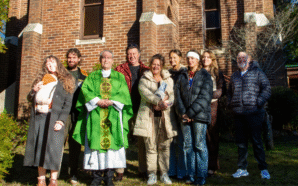


Recently, a sister and I had a yarn with some Wiimpatja friends in Wilcannia. She reminisced about a strong Elder who had offered them her bed late at night when they had nowhere to sleep. One of the Wiimpatja men immediately became reflective. “I’ve noticed,” he said seriously, “that the poor and disadvantaged are the ones who always give. We don’t let you go hungry or homeless. The rich won’t help.” He named a reality learned through experience; wise words indeed.
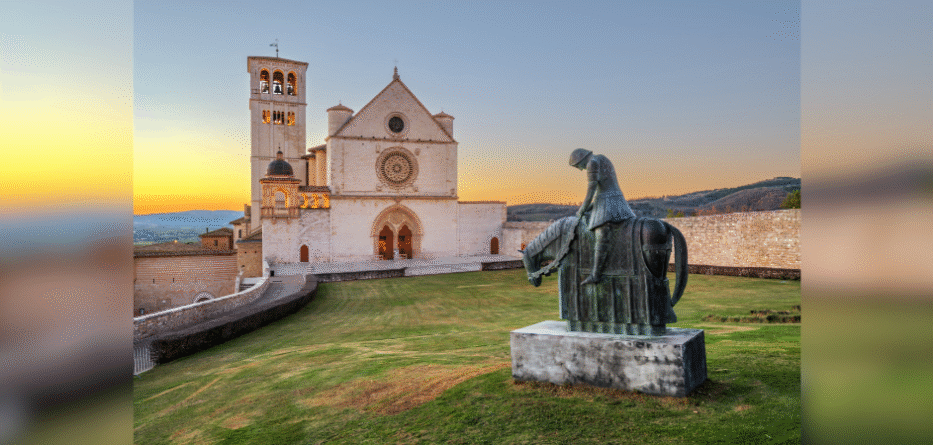
Those travelling sisters were inspired by St Francis of Assisi, trying to live with few possessions and trusting in God’s providence. Many who take this journey discover that there is more to gospel poverty than frugal living. It is about sharing with others, not because we are good, but because we are taught by those on the margins or unchosen poverty. As Pope Leo says in Dilexi Te:
In the poor, [St Francis] saw brothers and sisters, living images of the Lord. His mission was to be with them, and he did so through a solidarity that overcame distances and a compassionate love. (DT #64)
Such solidarity deepens our relationships and expands our sense of home.
Finding Francis
“Who is your favourite saint?”, we were asked in preparation for World Youth Day. I had many contenders… St Cecilia, my Confirmation saint. St Mary MacKillop, whose first school I attended in Penola. St John, my favourite apostle. But I settled on the one who has stayed consistent since then. I loved St Francis for his radical life, his passion for Lady Poverty, his commitment to the simplicity of the gospel. I immersed myself in the romantic and dramatic portrayals – Franco Zeffirelli’s 1972 film Brother Sun, Sister Moon; Carlos Carretto’s 1983 book I, Francis; and later Nikos Kazantzakis’s 1962 book Saint Francis. It is a story that never grows old.
In the early 13th century, Francesco di Pietro di Bernardone was a young man committed to high living and romantic chivalry. However, he underwent a religious conversion – turning away from his comfortable apathy and towards solidarity with those who were poor. Facing opposition with courage, he dreamed of a new way of being Christian, rebuilding the Church both literally and spiritually.
The man now known as St Francis was a rebel of his day, but wielded peace to resist persecution and abuses. As a young man he gathered others to join him in gospel simplicity, begging and preaching for their sustenance. They did not rely on positions of authority, but their lives of integrity guaranteed their authenticity. St Francis remained a simple monk, ordained a deacon but never a priest.
A Green Francis
Yet there is more to the story; something about St Francis makes his example completely modern; his legacy not only endures, but grows. I was the last to catch up, but St Francis is most famous and beloved as patron of animals and the environment. Taking the gospel to the extreme meant identifying with Jesus in his wounds – stigmata – and also in his relationships. As the Wiimpatja man reflected, suffering with those who are poor also means sharing their joy.
St Francis’ famed humility led him to awe at his Creator and companionship with creation. Such solidarity deepens our relationships and expands our sense of home. In his powerful Canticle of the Sun prayer, we affirm Brother Sun, Sister Moon, Brother Wind, Sister Water, Sister Mother Earth. We thank God for their bounty; we cry to God in their pain.
Pope Francis, the first named after St Francis, promoted this spirituality and made it our own in Laudato Si’ and Laudate Deum. In expanding our sense of home, we realise that we share this Earth; it is our Common Home. This brings both renewal and responsibility. Laudato Si’ begins with the beautiful words of the Canticle, then leads to real lifestyle change in solidarity with those who are poor and vulnerable. We are called to “hear both the cry of the earth and the cry of the poor” and know that the Earth herself is “among the most abandoned and maltreated of our poor” [# 49, 2].
Laudate Deum also begins with St Francis’ psalm-like prayer: “Praise God for all his creatures”. However, it continues with the urgency of the climate crisis, the damage humans have caused, and the limits of technological or political fixes. Pope Francis calls all people to draw from “the motivations born of their faith” [#61]. Like St Francis, we are invited to love God’s created riches. From that place of love, we must unite our individual caring efforts to those tackling the local and global issues, including degradation, waste, human expendability and extinction.
Therefore, inspired by St Francis’ Jubilee, may we listen to the wisdom born of suffering and the hope born of sharing. Praise God!
Elizabeth Young is a Sister of Mercy, Catechist and Parish Life Coordinator in Wilcannia, Barkindji country, far-west NSW.
This article was originally published in the 2026 Season of Creation| Spring edition of the Catholic Outlook Magazine. You can read it online here or pick up a copy in your local parish.