


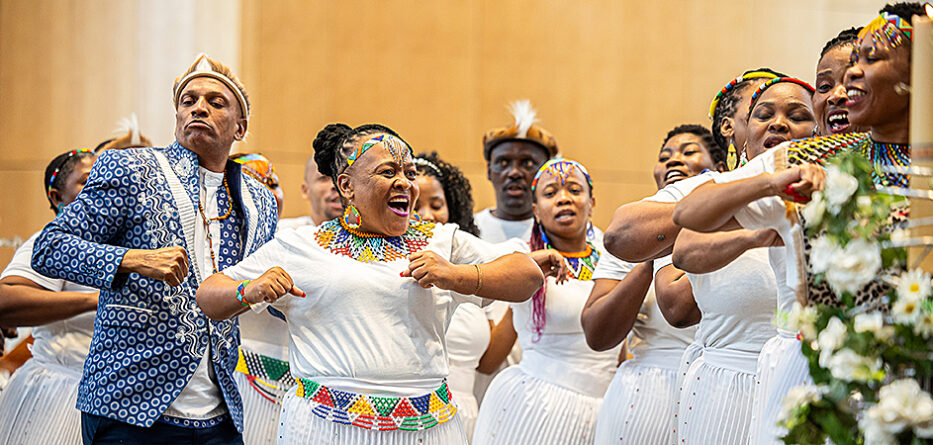
The African diaspora is a diverse and complex phenomenon that goes beyond simple migratory movements and reflects a history marked by cultural exchanges and struggles for identity. Around the world, Africans and their descendants have helped shape societies, often in difficult contexts, demonstrating their resilience and ability to innovate.
This definition excludes the descendants of the slave trade and focuses on Africans who left their homeland voluntarily or under duress. The African diaspora therefore includes communities from sub-Saharan Africa who settled in Europe, North America, Asia, the Antilles, and the Caribbean. These groups continue to play a fundamental role in the diversity and socio-cultural dynamics of their host countries. Furthermore, the definition includes Africans who have settled elsewhere in Africa outside their country of origin, highlighting a migration that continues to influence the contemporary world.
Itinerary
Since the declarations of independence in the 1960s, African emigration to Europe and North America has intensified. Initially perceived as a hindrance to the continent’s development, it has gradually come to be seen in a more positive light. In fact, African diaspora communities have proven to be key players in local development, contributing through financial transfers, investments, and the sharing of skills. In a world marked by globalization and transnational mobility, these partnerships play a strategic role, especially in North-South relations and in promoting international solidarity. In general, these interactions revolve around three main areas: local development, business, and science. Faced with precarious living conditions or driven by personal or collective aspirations, many Africans leave their countries in search of better, often idealized prospects.
Since the 1970s,[1] Africa has witnessed a significant brain drain, characterized by the departure of skilled professionals to Europe and North America in search of recognition and better opportunities. The economic crisis of the 1980s, exacerbated by structural adjustment programs imposed by the World Bank and the IMF, also prompted many with entrepreneurial skills to emigrate. The following decades were marked by new waves of migration due to ecological, political and economic factors, while migration flows from Africa to North America increased.
Since the end of the 20th century, African emigration has become a global phenomenon, leading to the dispersion, in voluntary or forced exile, of populations from different social backgrounds. The concept of diaspora therefore addresses this reality of migrants who, despite the physical distance, maintain a strong connection with their country of origin. Expatriate associations are generally organized by country, region or locality, fostering a culture of solidarity and commitment. Their integration into host societies varies, depending on the context, ranging from full integration to situations of precariousness and exclusion. Whatever their living conditions, African diaspora communities remain an active extension of the civil society of their homeland and act as a driving force on the economic, political and cultural levels.
These communities play an important role in local development, particularly through the economy. Alone or in collaboration with associations in Northern countries, they take initiatives to support their communities of origin by sending goods, financing local projects, and transferring institutionalized funds. On the other hand, skilled workers in exile contribute to the economic dynamism of their host countries. In addition, current technological advances enable diaspora communities to actively participate in strengthening Africa’s scientific and technological advances. The African continent could accelerate its development by mobilizing financial and human resources, thereby reducing its dependence on external aid and trade with Northern countries. To emerge from this permanent crisis, it is essential that leaders recognize this opportunity and make the diaspora community a strategic driver. This implies valuing the ingenuity of its members and repositioning Africa in the global context by joining movements that promote more equitable globalization.[2]
Obstacles Encountered by African Diaspora Communities
Members of African diaspora communities face complex challenges, including racism, discrimination and social isolation.[3] These problems affect not only their daily lives, but also their future, their opportunities, and their ability to influence the societies in which they live. The marginalization they sometimes experience fuels permanent inequalities, feeding a cycle of marginalization and rejection. For African populations in the diaspora, the difficulties of integration are linked to racism and discrimination. These phenomena are not limited to isolated incidents, but are part of well-established systems.
Racism often becomes systemic, even influencing the police, the justice system, education, and the labor market. The most obvious example is random identity checks by the police. Several investigations have shown that black or Arab men are stopped for checks 20 times more often than white men.[4] Another example of systemic racism is discrimination in access to housing for immigrants, which affects as much as 45 percent of the diaspora population. These immigrants report that it is always very difficult for them to find housing.[5] Diaspora communities regularly face stereotypes, social exclusion, economic discrimination, and violence, all of which are obstacles to both their integration and recognition. A 45-year-old woman who has spent most of her life in Europe, mainly in France, testified to this reality. Arriving in the 1990s, she attended schools where she was often the only African child. While some classmates showed curiosity or reserve about her diversity, she experienced mainly discrimination and judgmental looks from adults. Jokes about her frizzy hair or skin color after a swim were frequent. Repeated comments such as “X, you certainly don’t need to tan…” betrayed a subtle rejection of her distinctiveidentity. Although personal, such experiences are far from isolated. They highlight how racism and discrimination creep into everyday life, often insidiously from childhood, with a continuous yet real presence.
These challenges require collective awareness and the adoption of policies that combat injustice, so that every individual can live without fear of being judged or rejected because of their origins. It is in this sense that the “EU Action Plan against Racism 2020-2025”[6] should be interpreted. It has shown that ethnic origin is the main reason for discrimination in access to employment, housing, education, goods and services. The Plan provides for a number of operational tools, including more effective enforcement of European law, greater diversity in EU staff, and strengthened action at national level in member states. In this context, diaspora communities have a moral role to play in combating racism and discrimination by launching initiatives to raise awareness, denounce injustices, and put pressure on European governments to adopt more inclusive policies.
Similarly, public policies such as the UK’s Equality Act 2010 seek to protect the rights of minorities.[7] But their effectiveness often depends on civic engagement and pressure from associations and activists. Diaspora communities are at the forefront of this mobilization, through social media campaigns, demonstrations, and the creation of organizations that demand greater justice.
Contributions of African Diaspora Communities
African diaspora communities contribute in various areas, both in their host countries and in their countries of origin. They exert a fundamental influence in the countries where they reside, having a profound impact on sectors such as the economy, culture, politics, social and technological innovation.[8]
In terms of economics and entrepreneurship, members of the diaspora are creating businesses, investing capital in strategic sectors, and contributing significantly to the economic growth of their host countries. Numerous African entrepreneurs have successfully launched companies in the fashion, technology and finance sectors. In terms of remittances, diaspora communities send large sums of money to their countries of origin every year. According to a report published in December 2023, remittances to sub-Saharan Africa reached $54 billion, with a considerable increase in flows to Mozambique (+48.5 percent), Rwanda (+16.8 percent), and Ethiopia (+16 percent).[9] In 2024, remittances from migrants to developing countries were expected to reach $685 billion, exceeding the total of foreign direct investment (FDI) and official development assistance (ODA).[10]
Diaspora communities also invest in the countries where they reside. In the field of technological innovation, African engineers and developers play an important role in the development of new technologies, particularly in the areas of fintech and artificial intelligence.
It should also be remembered that these communities contribute significantly to the enrichment of the global cultural scene through artistic expressions such as music, literature, cinema, and the visual arts. They therefore occupy a central place in the cultural landscape of their host nations, contributing greatly to enriching the national heritage and challenging the traditional narratives regarding culture and identity. Through literature, cinema and music, they offer an innovative vision of the societies in which they live, giving voice to the experience of migration and diasporic belonging. This acts as a vehicle for intercultural communication, promoting a deeper understanding and redefinition of coexistence in a multicultural context.[11]
Singers such as Gims, Burna Boy, and Aya Nakamura contribute to the global spread of African music. African directors and actors participate in international film productions, offering African narratives. Writers such as Chimamanda Ngozi Adichie[12] and Léonora Miano[13] explore issues related to identity and the diaspora experience.
Diaspora communities exert a significant influence on public policy: Ngozi Okonjo-Iweala, a renowned Nigerian economist and current Director-General of the World Trade Organization (WTO), has influenced global economic policy; Mamadou Diouf, a Senegalese historian and professor at Columbia University, has contributed to the debates on African policy and international relations; Tidjane Thiam, originally from Côte d’Ivoire and former CEO of Crédit Suisse, has influenced European economic and financial policies; Leymah Gbowee, originally from Liberia, a peace and social justice activist, has played an important role in reconciliation and development processes; Mo Ibrahim, an entrepreneur and philanthropist of Sudanese origin, created the Mo Ibrahim Foundation to promote good governance in Africa.
Diaspora communities actively participate in social initiatives, including those in the political and civic engagement spheres. In this context, they promote inclusive policies and the recognition of immigrants’ rights. They create associations aimed at promoting integration and inter-community solidarity.[14] Some members of these communities hold political office and have an impact on decision-making processes at the governmental level. In addition, African intellectuals and academics make a significant contribution to research and education in their countries of residence. They teach at prestigious universities and contribute to scientific progress, while promoting collaboration between African and international institutions. They support young African talent through educational programs and scholarships.[15]
With regard to cultural integration in host countries, it is important to note that communities adopt a hybrid approach: they assimilate the traditions of the host country while continuing to preserve their own cultural heritage. This dynamic generates a unique diasporic identity, characterized by the coexistence of African and local influences. Despite the integration process, members of the diaspora are able to preserve their traditions through elements such as language, cuisine, religious practices, and cultural celebrations. They create community spaces that encourage the acquisition and transmission of their current heritage to future generations. It is essential to preserve culture in order to maintain a link with African roots, while adapting to the values of the host country.[16]
A fundamental issue that is of great interest to Africans in the diaspora must also be addressed: the return to their country of origin. As researcher Moussa Hissein Moussa points out, returning home is a complex decision, dictated by both intrinsic and extrinsic reasons. Intrinsic reasons are linked to the search for economic and professional opportunities. Improved working conditions and the enhancement of skills encourage some individuals to enter the labor market in order to fulfill their potential and contribute to economic development. An environment conducive to entrepreneurship and innovation can also play a decisive role in this regard.
Extrinsic reasons are associated with a strong sense of patriotism and the desire to participate in progress, despite economic and political obstacles.
Some members of diasporic communities decide to return to their country of origin out of conviction, motivated by a strong sense of patriotism that drives them to engage in projects aimed at improving local society and the economy. This decision is strongly influenced by the economic context and political stability of the country of origin. A secure environment rich in opportunities for growth can encourage emigrants to return to their homeland, while prolonged instability can hinder it.
Ultimately, the African diaspora plays a fundamental role in the continent’s development process. When properly supported, the return of migrants to their homeland can provide a decisive boost to economic growth and social change in their countries.[17]
Conclusion
The complex and diverse African diaspora communities play a central role in their host societies and countries of origin. Their global spread promotes cultural exchange and identity, although they face significant challenges such as racism and social exclusion. Despite this, these communities remain a driving force in various fields, from the arts to the sciences. Their focus on their roots translates into cultural and associative actions that strengthen their ties with Africa. In addition, these communities contribute to promoting the continent on the international stage. Their future depends on the recognition of their impact and the improvement of the ability to achieve integration that allows for their full development.
In any case, diaspora communities do not stop in the face of obstacles, but are a real catalyst for development in various fields, ranging from the arts and literature to business and science. Thanks to their commitment and deep connection to their roots, they maintain significant relationships with their continent of origin, participating in cultural events, engaging in community life, and supporting development projects. At the same time, they play an essential role in promoting Africa’s role, building bridges between different countries.
The future of diasporic communities depends on recognizing their contribution and creating more inclusive conditions that favor their full development both in host countries and in their interactions with Africa. More than just scattered communities, they represent a collective body that, despite the obstacles it faces, continues to generate wealth, innovation and hope. African diaspora communities are defined not only by their geographical dispersion, but also by their strong attachment to their identity, their past, and their future.
Reproduced with permission from La Civiltà Cattolica.
[1]. It was a time of military regimes and the rise of dictatorships in Africa: in Zaire, the Central African Empire, Uganda, Equatorial Guinea and elsewhere.
[2]. Cf. Y. Assogba, “Diaspora, mondialisation et développement de l’Afrique”, in Nouvelles pratiques sociales 15 (2002/1) 98-110 (www.erudit.org/fr/revues/nps/2002-v15-n1-nps683/008263ar).
[3]. Cf. V. Fourreau, “Les Européens d’origine africaine toujours très discriminés,” October 26, 2023, in https://fr.statista.com/infographie/31138/discrimination-personnes-origine-africaine-europe
[4]. Cf. “Enquête sur l’accès aux droits – volume 1 – Relations police/population: le cas des contrôles d’identité,” January 20, 2017, in https://tinyurl.com/j4b4n36x
[5]. Cf. “Enquête sur l’accès aux droits – volume 5 – Les discriminations dans l’accès au logement,” December 14, 2017, in https://tinyurl.com/yy95wvmr
[6]. Cf. European Commission, “EU Anti-racism Action Plan 2020-2025”, in https://tinyurl.com/yw5umyre
[7]. Cf. “Equality Act 2010”, in www.legislation.gov.uk/ukpga/2010/15/introduction
[8]. Cf. I. Amadou Dia, “Mobilisation et engagement de la diaspora au service du développement du pays d’origine: contraintes et opportunités et implications en termes de politiques”, in www.acsrm-au.org/wp-content/uploads/2024/01/mobilisation_engage_diasp_dev_IAD.pdf
[9]. Cf. World Bank Group, “Remittance Flows Continue to Grow in 2023 Albeit at Slower Pace”, December 18, 2023, in https://www.worldbank.org/en/news/press-release/2023/12/18/remittance-flows-grow-2023-slower-pace-migration-development-brief
[10]. Cf. D. Ratha – S. Plaza – E. Ju Kim, “In 2024, remittance flows to low- and middle-income countries are expected to reach $685 billion, larger than FDI and ODA combined,” December18, 2024, in https://blogs.worldbank.org/en/peoplemove/in-2024–remittance-flows-to-low–and-middle-income-countries-ar
[11]. Cf. “AXE III: Enjeux et représentations culturelles”, in https://diaspafrique.hypotheses.org/axes-de-recherche/axe-iii-enjeux-et-representations-culturelles
[12]. Cf. Radiofrance, “L’écrivaine Chimamanda Ngozi Adichie: ‘Ce qui m’intéresse c’est la vie des femmes, pas la théorie féministe’”, March 27, 2025, in https://tinyurl.com/2mxsuf7e
[13]. Cf. A. Bal Ba, “Léonora MIANO, écrivaine quête de guérison”, January 12, 2025, in https://tinyurl.com/35hxp993
[14]. One example of these associations is the Black Cultural Archives (BCA). cf. https://blackculturalarchives.org
[15].Cf. “Les 10 plus grandes diasporas africaines dans le monde”, in https://oeildafrique.com/enquetes/les-10-plus-grandes-diasporas-africaines-dans-le-monde
[16]. Cf. D. Gakunzi, “La diaspora africaine en Europe”, November 30, 2017, in www.parisglobalforum.org/2017/11/30/diaspora-africaine-europe
[17]. Cf. M. Hissein Moussa, “La Diaspora Africaine et la Question de Retour: Motivations, Défis, Piège, Enjeux”, in https://tinyurl.com/yk3xrw78