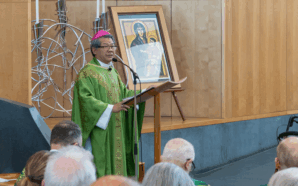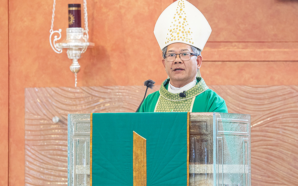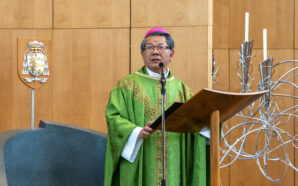


Most Reverend Vincent Long Van Nguyen OFM Conv DD STL, Bishop of Parramatta
Homily for the 25th Sunday in Ordinary Time Year C
Readings: Amos 8:4-7; 1Tim 2:1-8; Luke 16:10-13
Imitating the divine goodness instead of self-interest
Dear friends,
We live in a world where the pursuit of individual gain, wealth and success has led to an increasingly lobsided social reality. The gap between the rich and the poor has never been wider. Even in Australia, we pride ourselves on being one of the most egalitarian societies; yet we too have gradually succumbed to the conquest of inequality. The asset value of the top 10% Australians has more than tripled in the last 20 years. Meanwhile, cost-of-living pressures have hit people living in poverty and those on lower incomes, as they struggle to afford basic goods and services.
It is not just the poor who bear the brunt of the lobsided social reality. It is the planet itself which is being wounded because of the relentless pursuit of riches. Surely, we cannot go on living as if we were deaf to the cry of the poor and the cry of the earth. Surely, we cannot be complicit in perpetuating the social architecture that favours the privileged and disenfranchises the dispossessed.
This month marks the beginning of the Season of Creation which Pope Leo celebrated in the Vatican Gardens is an invitation for us to reflect on our commitment to build a more just and better world. Our worship today is an affirmation of this commitment. We are not powerless against the destructive forces of greed, exploitation and violence, for God in Christ empowers us to work towards the new heaven and the new earth.
The Word of God this Sunday draws us to a new way of living and being, both individually and collectively as a community of believers. Put quite simply, to follow Christ is to embrace an alternative mode of existence radically different from the natural instincts for self-survival, self-interest and the worldly pursuit of success, power and glory.
In the first reading, we listen to the prophet Amos who lived during the time of tremendous upheaval. As the saying goes, the fish rots from the head, it was corruption and greed by the echelons of the society, which led to the disintegration of Israel and the exile. Amos preaches against these forces. He sternly denounces their unjust practices that go against the heart of their religion: the lowering of the bushel, the raising of the shekel and the tampering with the scales etc…. By putting personal gain over against the welfare of others, they betray the very purpose of the Exodus, which was their liberation from slavery and oppression. They betray the very God who freed them and formed them into a new society of justice, solidarity and equality.
Amos warns Israel that a society that is not aligned to God’s purposes is not sustainable. The Northern Kingdom where Amos ministered was particularly susceptible to undue foreign influences, including religious and moral malpractices. Amos urges them to follow the dictates of God’s law. He calls them not to conform to imperial model but to become an alternative society under God’s rule, a community of hospitality, compassion, justice and neighbourliness.
The Gospel confirms this message, albeit in a way that may not be so obvious to us. Jesus tells the parable of the dishonest servant who has failed his duty of stewardship. He faces the prospect of unemployment, reduced status and even ridicule. He has a light-bulb moment and comes to his senses. He begins to summon the master’s debtors and rearranges their repayment plans. By writing down their debts, he actually makes the claim that his master cannot fault him: that the master forgives those who owe him, that he is generous and magnanimous. For staking his future on this defining virtue of his master, the dishonest servant was praised. Jesus concludes the parable by calling on his disciples to stake their loyalty on him. He proclaims that they cannot serve God and money at the same time. Rather, they must use the latter to serve the former. God and his kingdom must be our ultimate pursuit.
Dear brothers and sisters,
The Word of God challenges us about our relationship with God and with one another. We may be rich or poor, successful or barely surviving. The important measure is whether or not God and his kingdom are the driving force of our existence as it was shown in the life of Jesus. In the world in which people prioritise personal well-being, security and wealth over the care of the vulnerable, we are called to negotiate the hard road of what Pope Francis calls human fraternity, compassion and communion. Those hard choices often go against the popular culture as well as the grain of our very human nature.
Let us pray that we may prioritize the common good and reflect the divine goodness instead of self-interest. Rather than going with the flow, may we have the courage to embrace the way of Jesus and serve the reign of God at all costs.