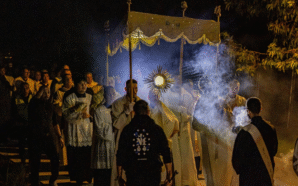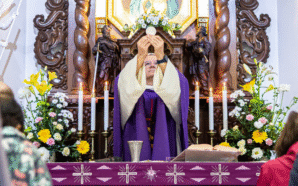


In the lead up to World Youth Day 2027 in Korea, a documentary team interviewed locals from the Diocese of Parramatta to understand the impact of World Youth Day Sydney 2008 for Australia’s youth and the Catholic Church.
The video, produced by Korean Catholic media company CPBC, features interviews with many people in the Catholic Church in Sydney who were involved in WYD in Sydney and those who became involved in youth ministry after the global event, including many from the Diocese of Parramatta.
One of those featured in the 48-minute, Korean-language production is Sebastian Duhau, a Mission Enhancement Team Facilitator with Catholic Youth Parramatta.
While he didn’t attend WYD in Sydney, Sebastian did join his local youth group at St Andrew the Apostle, at Marayong, not long after the event, and has been involved in youth ministry in the Diocese ever since. This has included being Australia’s youth auditor at the General Synod of Bishops on Young People, Faith and Vocational Discernment, in the Vatican in 2018.

Sebastian Duhau working away at the Synod. Image: Vatican News.
He told the documentary that “WYD absolutely changed the landscape of what youth ministry looked like, what Church looked like in Australia.
“The leaders in our Church choose to let go of the way that things have always been done to allow young people to be in a space, and help to transform that space,” he said.
As well as interviewing Sebastian, the Korean film showed other youth leaders from the Diocese discussing the strength of youth ministry today, as well as showing young people at the most recent Australian Catholic Youth Festival (ACYF) in Melbourne – one of the biggest youth events that was born out of WYD in Sydney.
One young person at the Melbourne ACYF told the film that at these big events where young Catholics gathered, their connection with the Church and their faith was rejuvenated.
Sebastian said the importance of the film for Korean audiences was that it shows the long-term benefits of holding a WYD, especially for those who might be sceptical about the cost and the disruption in a country like Korea where Catholics are in the minority.
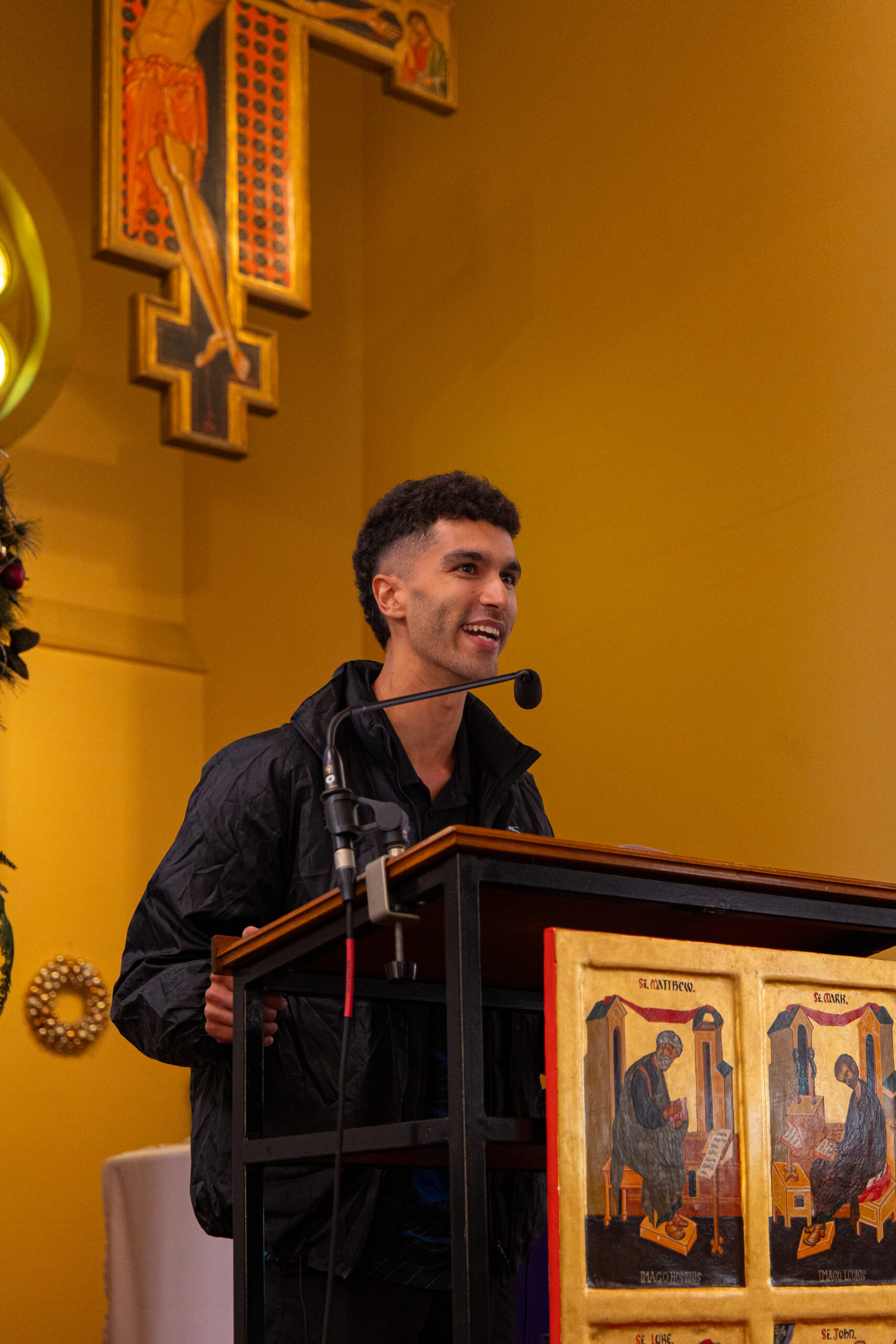
Sebastian Duhau speaks to ACYF pilgrims following Mass at All Saints Parish, Fitzroy last year. Image: Diocese of Parramatta
“They’re trying to figure out, ‘okay 18 years on from our WYD in 2027 what’s our country going to be like as a result? What’s our Church going to be like? What are our young people and our faith going to look like?’” Sebastian said of the film.
He said the film crew were especially interested in the question of what youth ministry itself was all about. And that was a sign that they grasped the importance of WYD, he said, because it was more than just a one-week event.
“The fact that holding WYD is even prompting the question, what is youth ministry and what does that mean for the way we do Church with young people, and why is that different from the way we do Church everywhere else? That’s huge,” Sebastian said.
“World Youth Day, even if it’s a transformative experience, can’t sustain someone’s faith, or someone’s experience of God, for the rest of their lives, they need somewhere to land beyond that.”
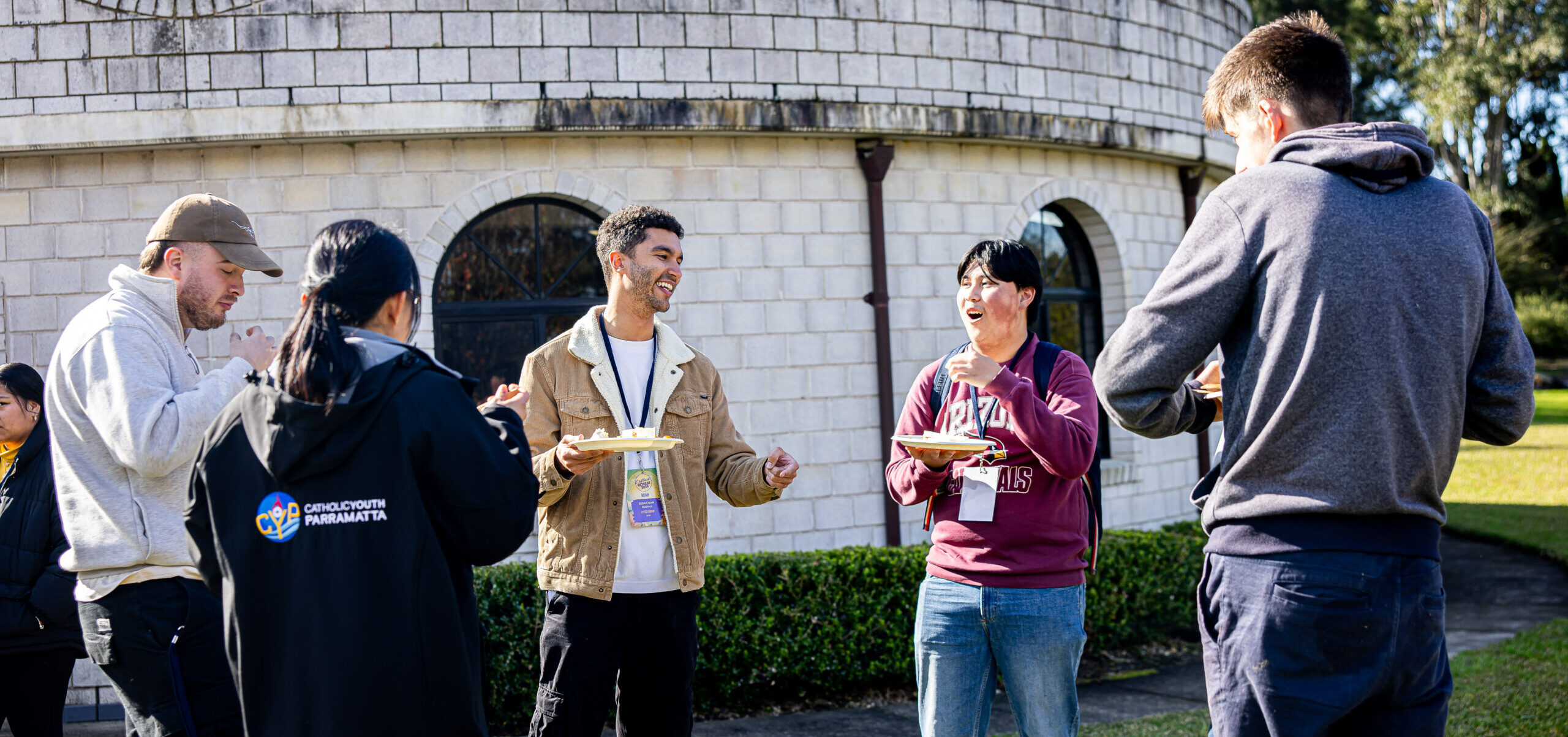
Sebastian Duhau with youth during the LIFTED Retreat for people aged 16-18 at the Shrine of Holy Innocents, Kellyville. Image: Alphonsus Fok/Diocese of Parramatta
This included supportive parishes and communities that welcome young people back, youth teams in a diocese that can foster spaces for young people to continue to gather and walk alongside each other so that the spark from WYD doesn’t diminish.
“If WYD existed on its own, and there was nothing else around it, it wouldn’t have the impact that it has,” Sebastian said.
But he stressed that there was no fixed method for youth ministry, and that it is different in each country, even in each diocese and parish, depending on “the needs and realities of those young people that it exists for”.
He hopes that the audience for the film in Korea – especially those in decision-making roles in the church – don’t think “this is what youth ministry looks like in Australia; this is what we have to replicate here”.
“I’d hope they say, ‘okay this is what youth ministry looks like in Australia and this is why it looks that way. But what are young people in Korea like and what does youth ministry need to look like here?’”