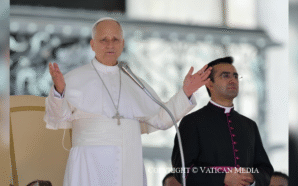



“A New Gaze: Paying Attention in the Age of Clickbait” is the theme Leo XIV has chosen for the 61st World Communications Day, to be observed in 2027.
The Pope has reached for a term of art, though nearly everyone knows it by now: clickbait, bait laid out to attract a click.
He means a technique for online communication that relies on sensational, ambiguous, or inflated headlines and images to get people to click a link. It is a hook dropped into the stream to snatch a moment from whoever happens to be scrolling past.
How often have we clicked because something on the screen managed to capture our attention?
And attention is the word that matters here. The competition among news outlets, television channels, and social media has become a competition for attention, which is now the truly precious commodity. The platforms measure it, hold on to it, and sell it back.
What drives a presence online and in the media is less the desire to share, inform, or connect than the need to entertain, pique interest, and thereby rack up views and ratings.
And yet real attention is closer to a compass than to a stopwatch. It finds north; it points the way toward a destination, toward whatever truly matters to us. The word comes from the Latin ad-tendere, “to stretch toward.”
Simone Weil called attention the rarest and purest form of generosity. The trouble is that “the lack of genuine attention, fueled by digital culture, has accustomed us to a routine of rapid reactions and to superficial relationships.”
Algorithms select for us whatever our clicks suggest we like, and in the end we shut ourselves inside a bubble of clicks that never changes. Nothing new gets in.
Leo, then, has decided to go after the root of the polarization between parties and factions, the refusal to talk, our inability to hear out people who see things differently, and the habit of winning by shouting.
His answer is an alternative, which he calls a “conversion of our gaze.”
He asks communicators, journalists among them, to safeguard attention rather than capture it, and to trust their readers’ intelligence without feeling obliged to seduce whoever lends them a moment of it.
A good headline strikes us by its intelligence, not its volume.
Shouting burns through attention and leaves us exhausted.
Converting the gaze requires a daily discipline of pauses, of notifications switched off, of pieces read through to the last line, and that discipline gives the eye back its freedom to choose where to rest.
We have to learn again to look, listen, and feel with the whole person, not only with a thumb frantically flicking across a screen.
With thanks to Global Catholic and Antonio Spadaro SJ, where this article originally appeared.