

The Catholic Church and all those within it have a responsibility to respond to the call from Pope Leo XIV to be active participants in the development of artificial intelligence, so they can influence its future direction in favour of human dignity, a visiting academic has told a public lecture in Parramatta.
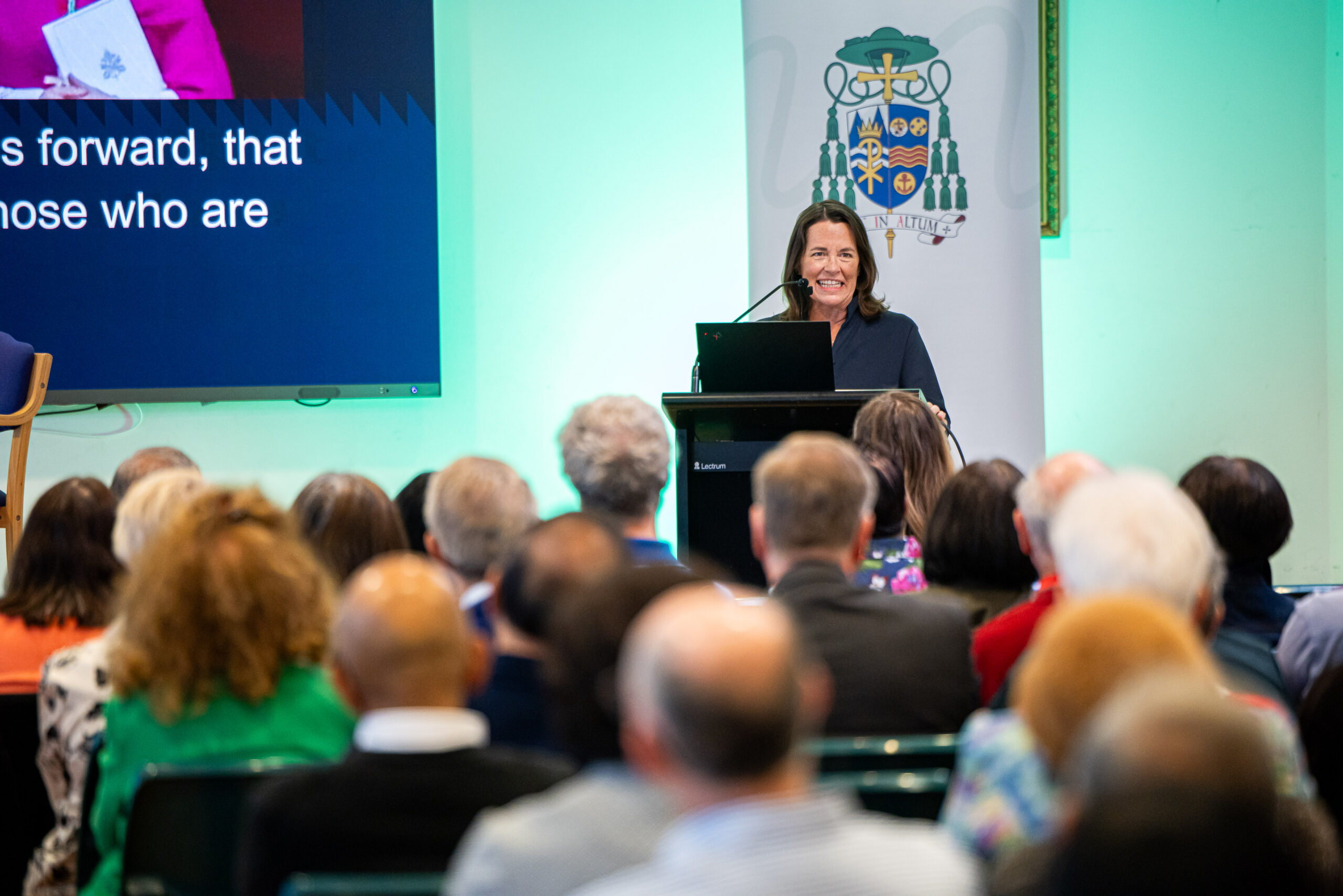
Kim Daniels, the director of the Initiative on Catholic Social Thought and Public Life at Georgetown University in the US, and an adjunct professor in its Department of Theology and Religious Studies, gave the Bishop Vincent Presents Series lecture to an audience of about 200 at the Cloister Hall of St Patrick’s Cathedral, Parramatta, on 13 October, on the topic “AI, Pope Leo and the future of human dignity”.
She told the gathering that Pope Leo’s first encyclical Magnifica Humanitas had laid out a moral framework for the use of AI – one that helps people become more “humane and fraternal while respecting our common home” – by not accepting the vision of many tech leaders who present the fast-evolving technology as something inevitable that people just have to accept.
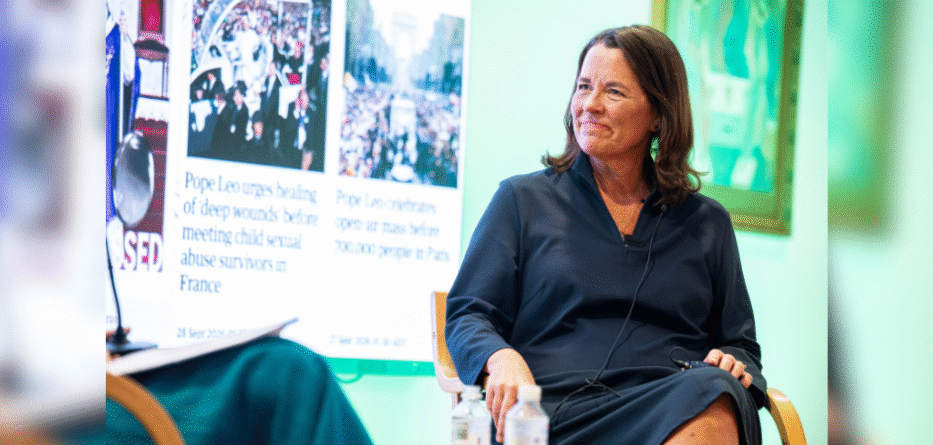
Kim Daniels. Image: Alphonsus Fok/ Diocese of Parramatta
To do this Pope Leo is calling for Catholics to “take responsibility” by asking in which direction humanity was going, and “what goal do we wish to orient ourselves”?
Ms Daniels said these were questions all people needed to answer together “in our families and parishes, in our schools and workplaces, in our local communities, and through the ordinary work of democratic life – voting, organising, speaking up and holding leaders accountable”.
“The future of human dignity in an age of AI depends on all of us having a say in how this technology is built and how it’s used, beginning with the poor,” Ms Daniels said.
When it comes to AI, she laid out three ways in which people could respond to Pope Leo’s call to participate in public life in the service of upholding human dignity.
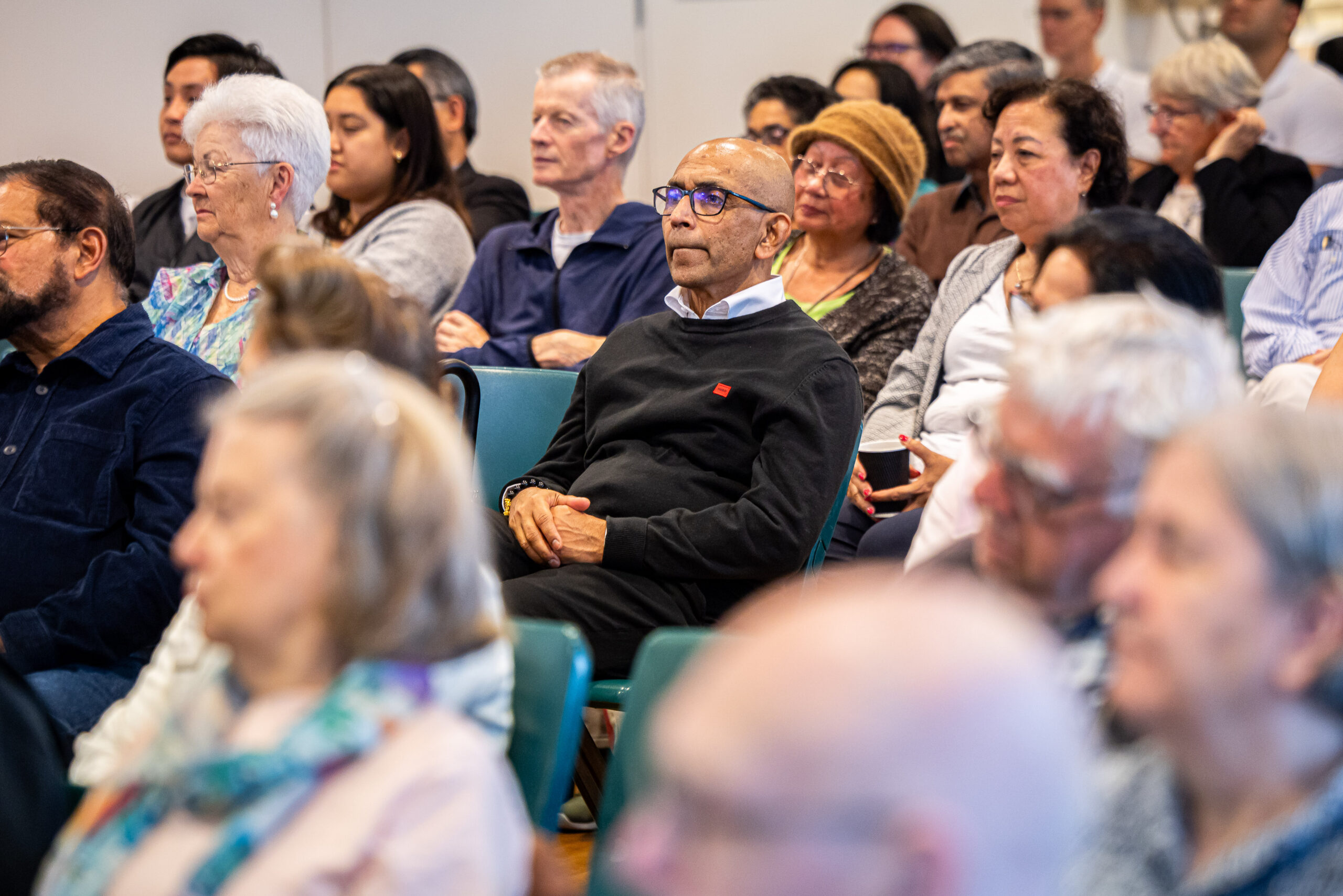
Image: Alphonsus Fok/ Diocese of Parramatta
Widen the table
The first is to “widen the table” so that those making the important decisions about AI are not just a small number of business and government leaders. Rather, all citizens and community groups and institutions in society need a voice in its development.
“Pope Leo says a more moral AI is not enough if that morality is determined by a few,” Ms Daniels said.
“What’s needed is a more active political involvement that is capable of slowing things down…and of protecting the opportunities for communities still to be able to participate and ask questions.”
This involvement in politics was “a good thing”, necessary even. “Pope Leo, quoting Pope Pius II, calls politics the highest form of charity,” she said.
“It’s easy to feel discouraged, to feel that AI is too big and too technical for ordinary people like us. But Leo calls us to resist that feeling.”
She said people should be paying attention to how AI is built and governed and to support rules or laws that promote a human-centred approach to this.
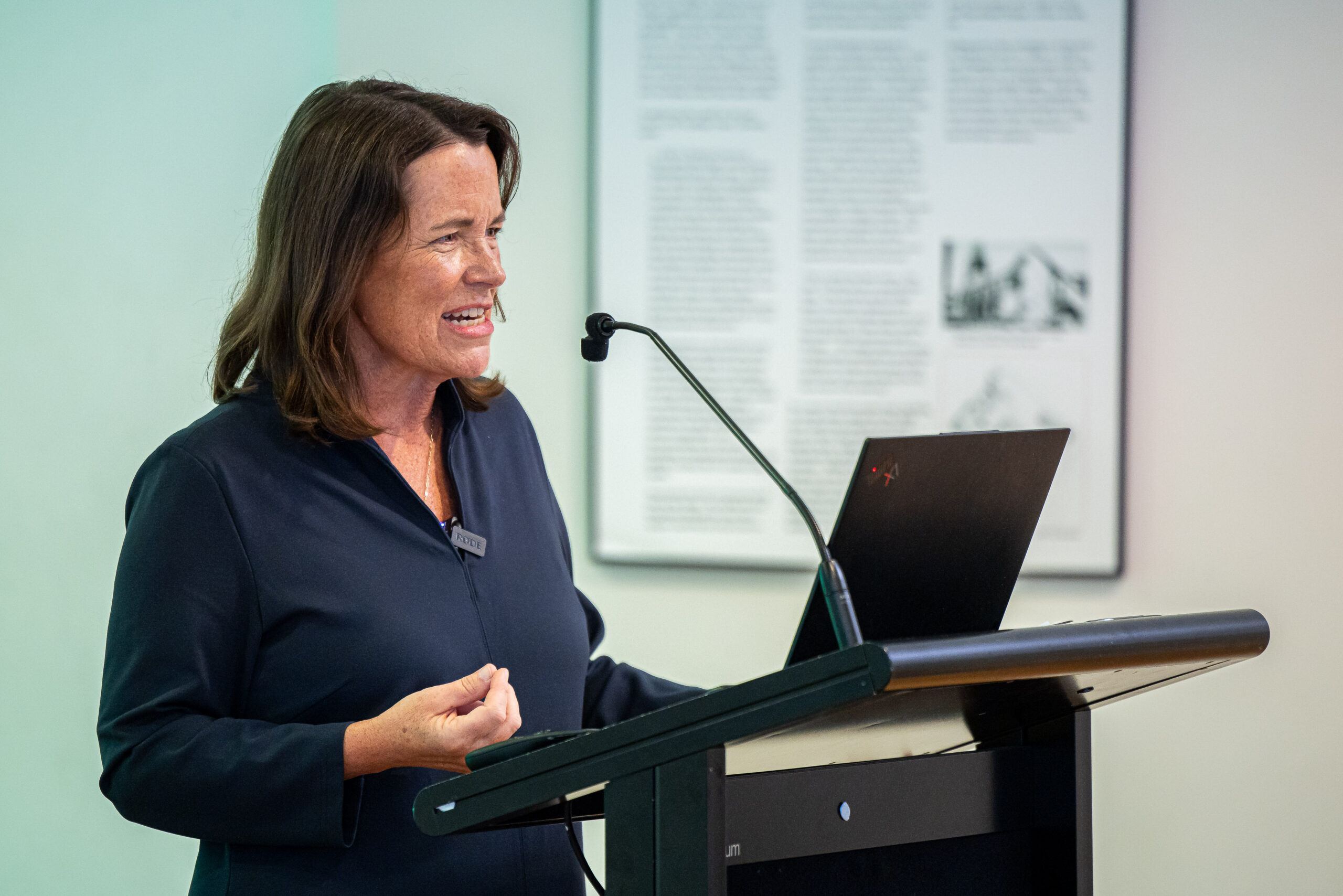
Image: Alphonsus Fok/ Diocese of Parramatta
Strengthen institutions
The second way to advance human dignity in response to the AI revolution, Ms Daniels said, was to strengthen institutions. These are essential to protecting human dignity and an important way of participating in public life.
“Leo reminds us that humanity is capable of creating institutions that protect our shared lives,” she said.
“He points to the Red Cross, the United Nations, the Universal Declaration of Human Rights…he says in each of these cases the desire for good took concrete shape in public contexts, laws and institutions and practices capable of limiting the abuse of power and defending the vulnerable.”
But given how fast this technology is developing – often faster than these organisations can adjust to – Pope Leo is calling for the strengthening of “intermediary organisations” such as “serious journalism and forums for debate” where these issues can be canvassed, she said. This is often best done at a local level.
“Leo said that in an age of digital triumph, politics that serves the common good requires a return to the analog, reaching people personally ‘in the places where they live, in parishes and schools and Catholic agencies’.”
But we need to talk to one another in a way that enables us to create a “shared vision” of AI without rancour across the political divide. Ms Daniels said the Church is in a unique position to do this, given it “sits on either side of today’s partisan fights”.
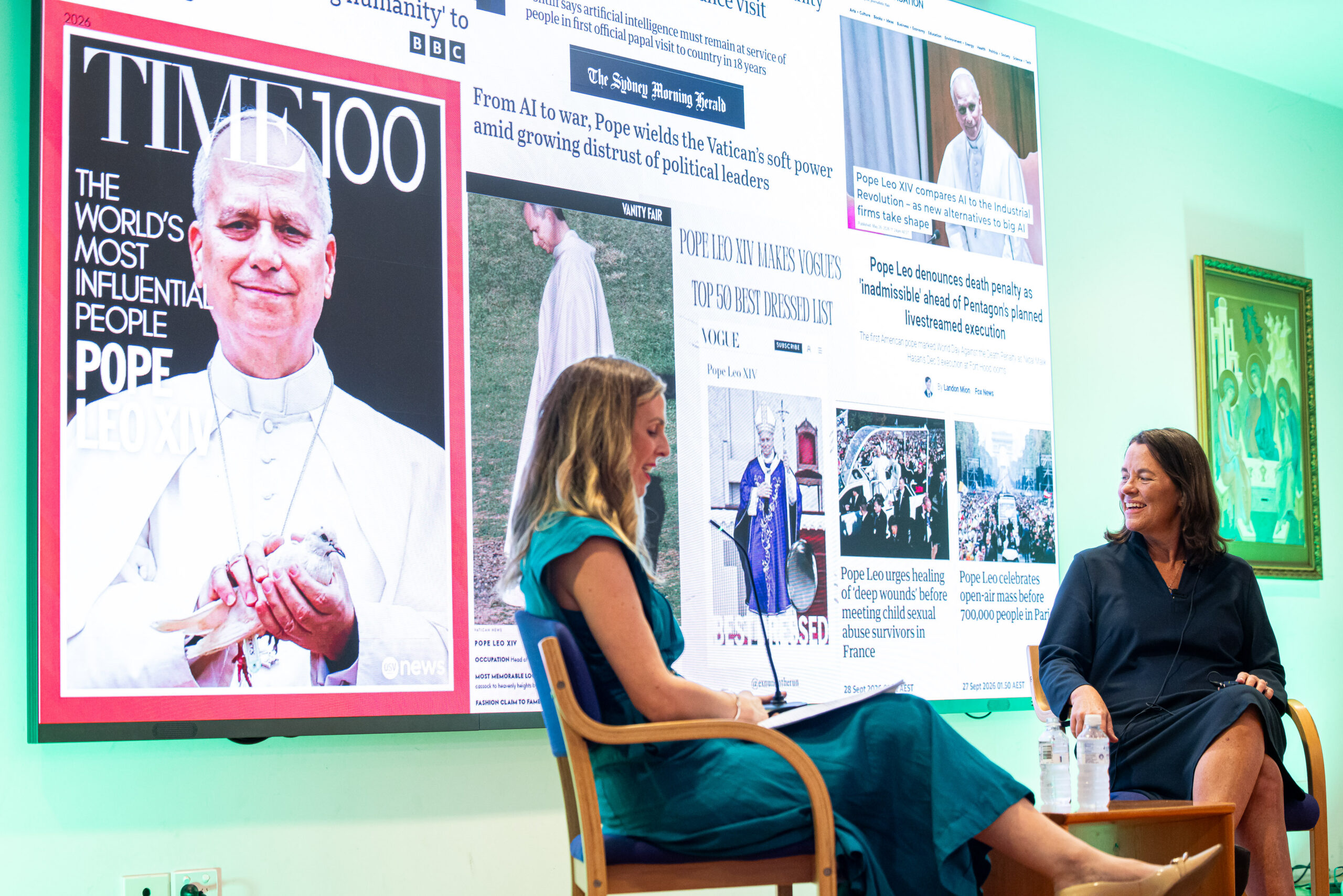
Kim Daniels speaks to Anita Sulentic, MC and Moderator on the night. Image: Alphonsus Fok/ Diocese of Parramatta
Protecting human work
The third way Ms Daniels said societies can advance human dignity in response to AI is by honouring and protecting human work.
It is only by keeping the human elements of work that we are able to keep our societies flourishing, she said, as more and more of our lives are lived through screens and phones.
“No technology can substitute for the teacher who patiently teaches a young child to read, the neighbour who sits with a suffering friend, the son who feeds an elderly parent, or the nurse who comforts a scared patient,” she said.
“AI is revealing the essential nature of this work, precisely because a computer system, however advanced, cannot do these things in a way that a human being can.
“Jesus washed the feet of people, Jesus took care of people…that’s what we are called to do. And this is the worldview we need to bring to this conversation.”
Al can’t know what it means to work, or love, or what friendship is, or responsibility, Ms Daniels said. Nor does it have a moral conscience.
“Keeping a human in the loop when it comes to decisions about credit, housing, public benefits, bail offers a chance for accountability with someone who can explain a decision, justify it, and repair or face responsibility for any harm.”
Work also keeps us involved in our communities, and by devaluing work we weaken our ability to take part in public life, she said.
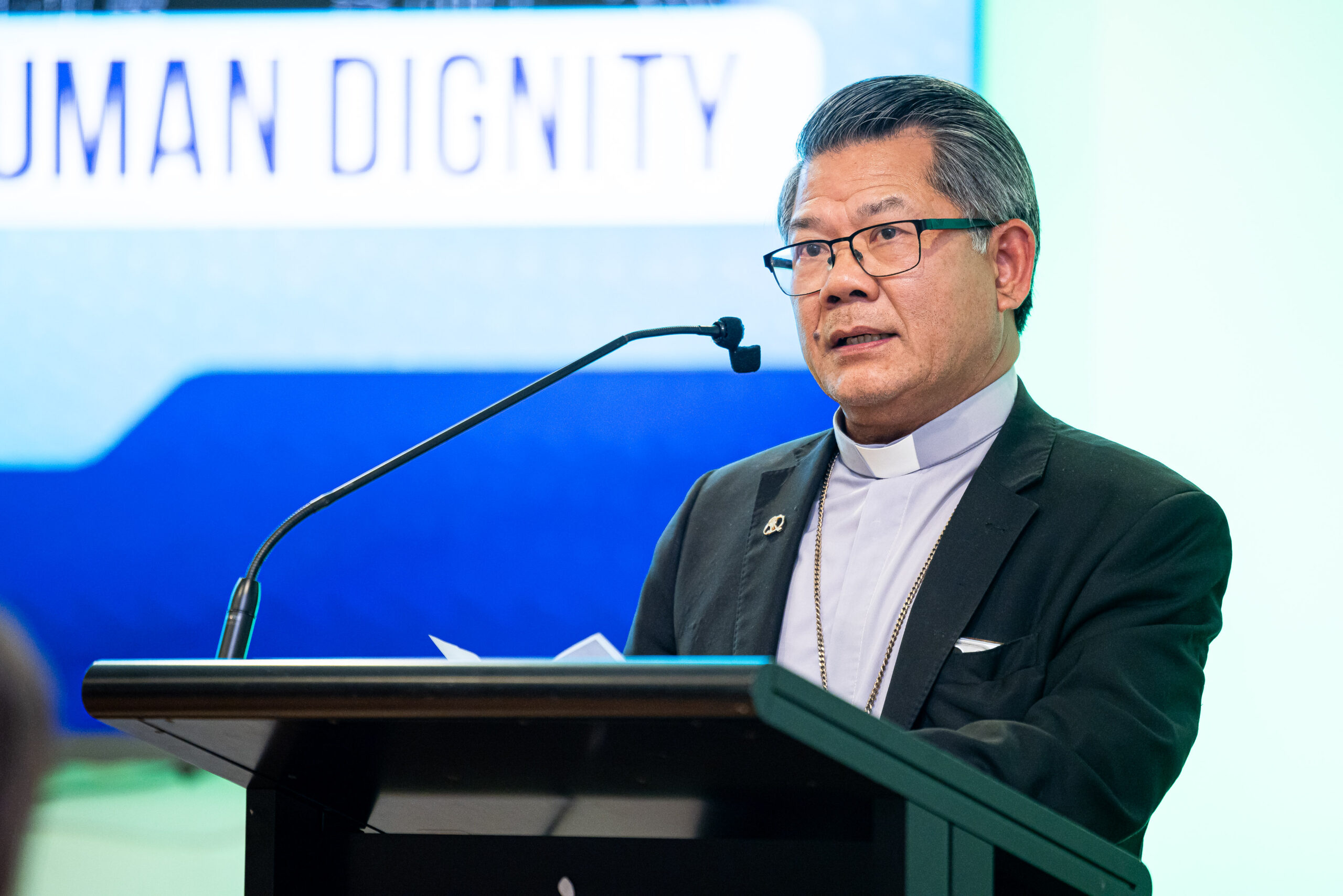
Bishop Vincent Long OFM Conv, Bishop of Parramatta. Image: Alphonsus Fok/ Diocese of Parramatta
Duty to remain ‘profoundly human’
Ultimately, Pope Leo is asking us “to look at the world from a lower position through the eyes of those who suffer, rather than from the mighty. That’s where the future of human dignity is going to be decided.
“Leo reminds us that in the era of artificial intelligence, when human dignity is threatened by new forms of dehumanisation, ours is the pressing duty to remain profoundly human.”
After the lecture, Bishop Vincent Long OFM Conv, thanked Ms Daniels for giving “us unique insights and new depths” in the discussion on AI and the future of human dignity.
“We are all the wiser and richer thanks to her wisdom distilled from her deep faith, international experience and most of all her passion for the Gospel,” he said.
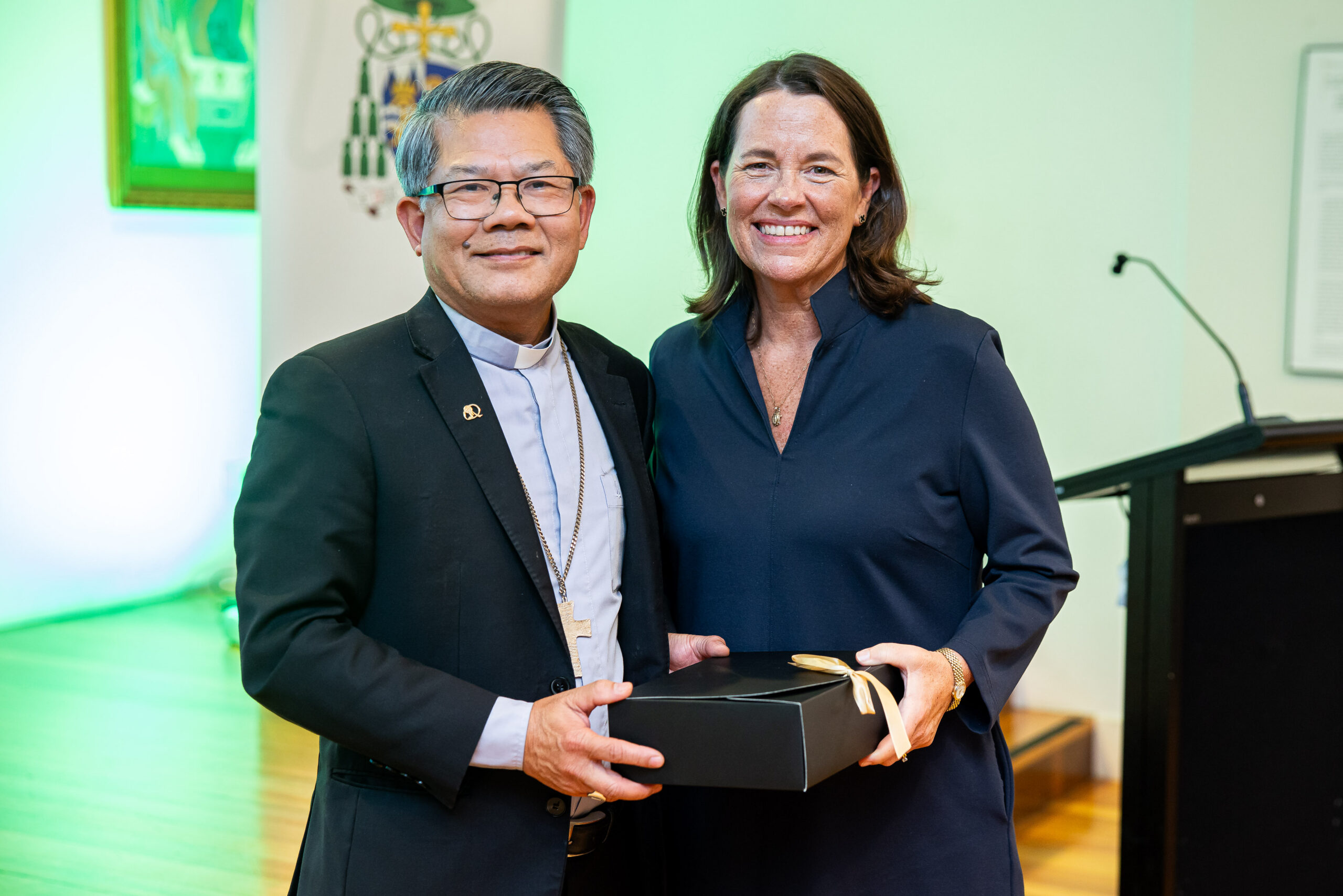
Bishop Vincent with Kim Daniels. Image: Alphonsus Fok/ Diocese of Parramatta
This lecture is an example of the Diocesan Pastoral Plan priority of Mission, Formation, Listening Dialogue and Discernment, and Community. Visit Synodality to learn more.
Watch Kim Daniels’ lecture on our YouTube channel.
View the photo gallery from the lecture on Flickr, or below.